Hey | Welcome to this week's edition of AlphaSignal.
Whether you are a researcher, engineer, developer, or data scientist, our summaries ensure you're always up-to-date with the latest breakthroughs in AI.
Let's get into it!
Lior |
|
|
|
IN TODAY'S EMAIL | Read Time: 4 min 06 sec |
|
|
|
RELEASES AND ANNOUNCEMENTS | --------------------- Stability AI released Stable Code 3B, a 3-billion parameter LLM for code completion. It's 60% smaller than CodeLLaMA 7B, runs on standard laptops, and supports 18 languages with enhanced Fill in the Middle and context size up to 100k tokens.
--------------------- Nightshade, a tool from University of Chicago's Glaze Project, alters images at pixel level using PyTorch, misleading AI models during training. It's designed to protect artists' works from unauthorized AI training, promoting legal image licensing.
--------------------- ElevenLabs, an AI voice startup, secured $80M Series B, for advanced voice cloning/synthesis research, introducing new products like Dubbing Studio and a marketplace for monetizing AI-cloned voices, targeting a broad range of industries. Dubbing Studio now lets you take localization further with hands-on control over transcript, translation, timing, and more.
--------------------- Stability AI's Stable LM 2 1.6B, a 1.6 billion parameter language model, outperforms models like Microsoft's Phi-2 (2.7B) and TinyLlama 1.1B, trained on multilingual data, with improved fine-tuning via the final pre-training checkpoint release.
--------------------- RunwayML introduced Multi Motion Brush in Gen-2, enabling users to animate five distinct areas in a video, controlling movement along x, y, z axes, and adding ambient noise. It builds on Motion Brush, enhancing AI video generation with precise, independent motion control for multiple areas. |
|
|
|
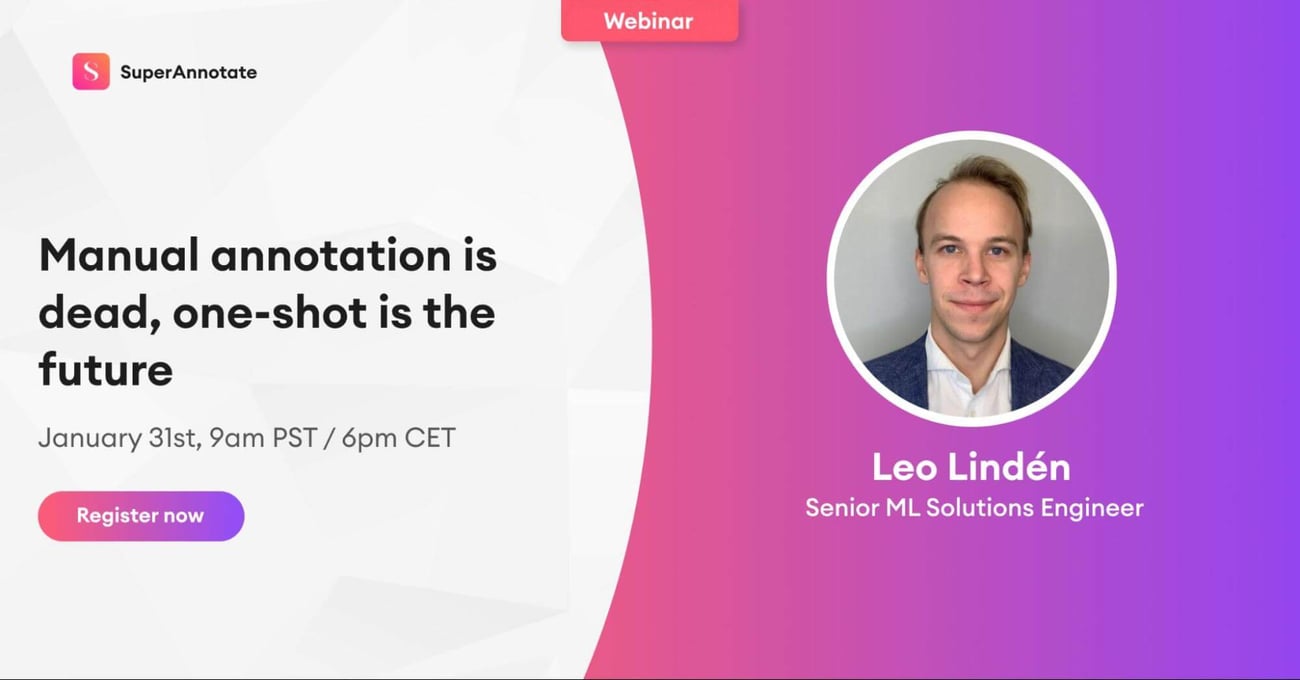 | Free Webinar: Manual annotation is dead, one-shot is the future | Efficiency in dataset preparation is key to accelerating AI innovation. Traditional manual data annotation is notoriously time-intensive, often bottlenecking the development process.
One-shot learning simplifies this step. It allows you to extend a single manual annotation to an entire dataset.
It empowers AI teams to shift their focus from tedious data prep to the rewarding aspects of AI development, bringing cutting-edge products to the market faster.
This webinar will dive into how One-shot learning works and how you can leverage it in your data workflow. | | Register now (free) | partner with us |
|
|
|
NEWS | Meta Begins Training Llama-3 and Aims for Open-Source AGI |  | What's New? | In a new video Meta's CEO, Mark Zuckerberg, announced that they're training a new model, Llama 3, with ambitions to lead in open-source Artificial General Intelligence (AGI).
Llama 3 is expected to match or surpass GPT-4's capabilities, particularly in code generation, reasoning, and planning, signaling a substantial leap from the current GPT-3.5 benchmarks in open-source AI.
Meta is merging their two major AI research divisions, FAIR and GenAI, to accelerate this initiative.
“Our long-term vision is to build general intelligence, open source it responsibly, and make it widely available so everyone can benefit,” wrote Zuckerberg in a caption. In the video, he said that “it’s become clear that the next generation of services required is building full general intelligence, building the best AI assistants, AIs for creators, AIs for businesses and more that needs advances in every area of AI from reasoning to planning to coding to memory and other cognitive abilities.”
On the infrastructure front, Meta's gearing up massively. They're scaling up with 350,000 Nvidia H100 GPUs, projecting nearly 600,000 H100 equivalent units of compute power, which includes other GPUs as well. This infrastructure will support the development and training of Llama 3 and future models. | | Watch the video |
|
|
|
NEWS | Sam Altman Seeks To Raise Billions For Network of AI Chip Factorie
| 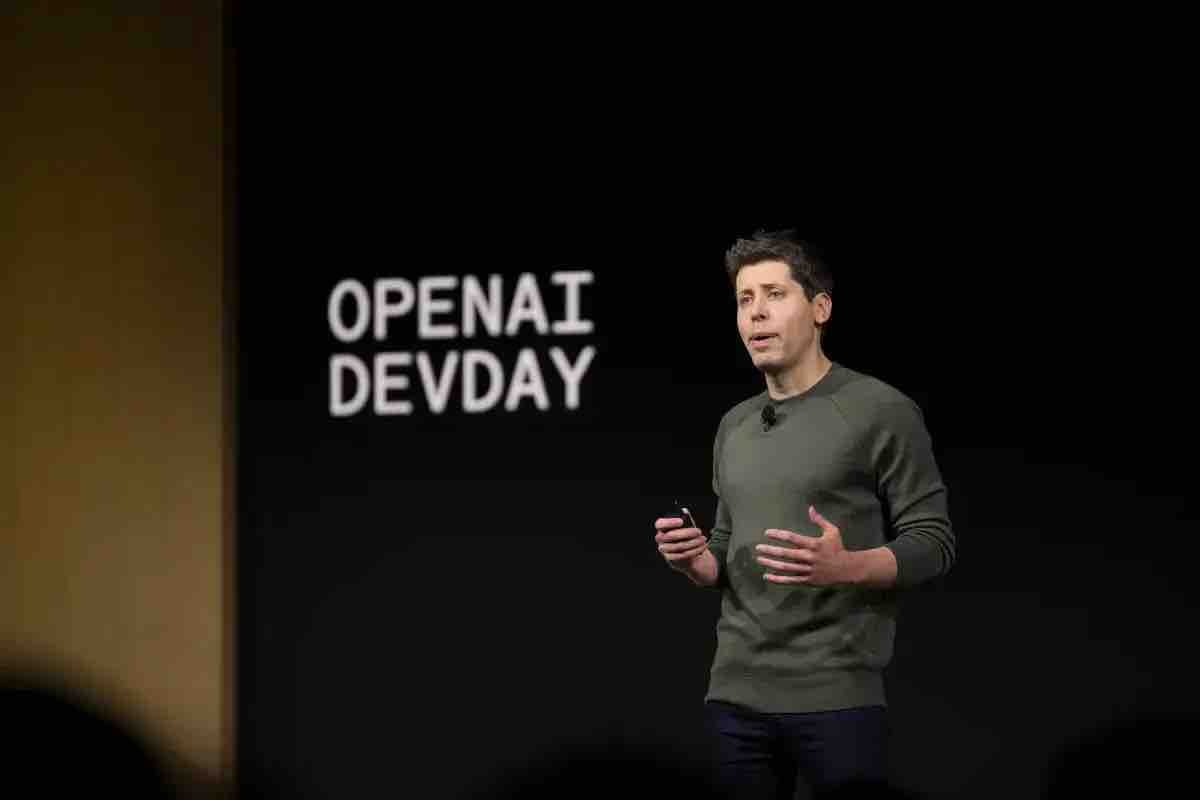 | What's New? | Sam Altman, CEO of OpenAI, is reportedly in talks with Middle Eastern investors and TSMC to start a venture for developing AI-specific semiconductors.
This step is a major shift from OpenAI's current reliance on Nvidia's GPUs, which are pivotal in training large AI models like GPT-4 and DALL-E. Nvidia's GPUs, especially the H100 series, have been the backbone for AI computations but are costly and in high demand.
Altman's proposed venture aims to create a network of semiconductor factories dedicated to AI chips. This initiative could mitigate the bottleneck in chip supply anticipated with the boom in AI applications.
Given the complexity and cost of semiconductor fabrication, this is a substantial move, particularly considering the tens of billions required for setting up a single fab.
The technical implications are significant. If successful, this could lead to more customized and possibly more efficient AI chips, tailored specifically for the needs of advanced models.
It also signals a potential shift in the AI hardware landscape, challenging Nvidia's current dominance and possibly influencing future AI model development and deployment strategies. | | Read more |
|
|
|
| | Want to promote your company, product, job, or event to 150,000+ AI researchers and engineers? You can reach out here. | |
|
|
|
|
