|
Hey,
Your daily briefing is ready. You can finally take a break from the AI firehose.
Our algos spent the night splitting signal from noise and pulled the top news, models, papers, and repos.
Here’s the must-read:
|
|
Together with:
|

|
|

|
Today's Author
Lior Alexander. Founder of AlphaSignal and former ML Engineer.
Previously built ML systems at Iguazio, Guesty, Enphase, Mila.
|
|
Top News
|
|
|
|
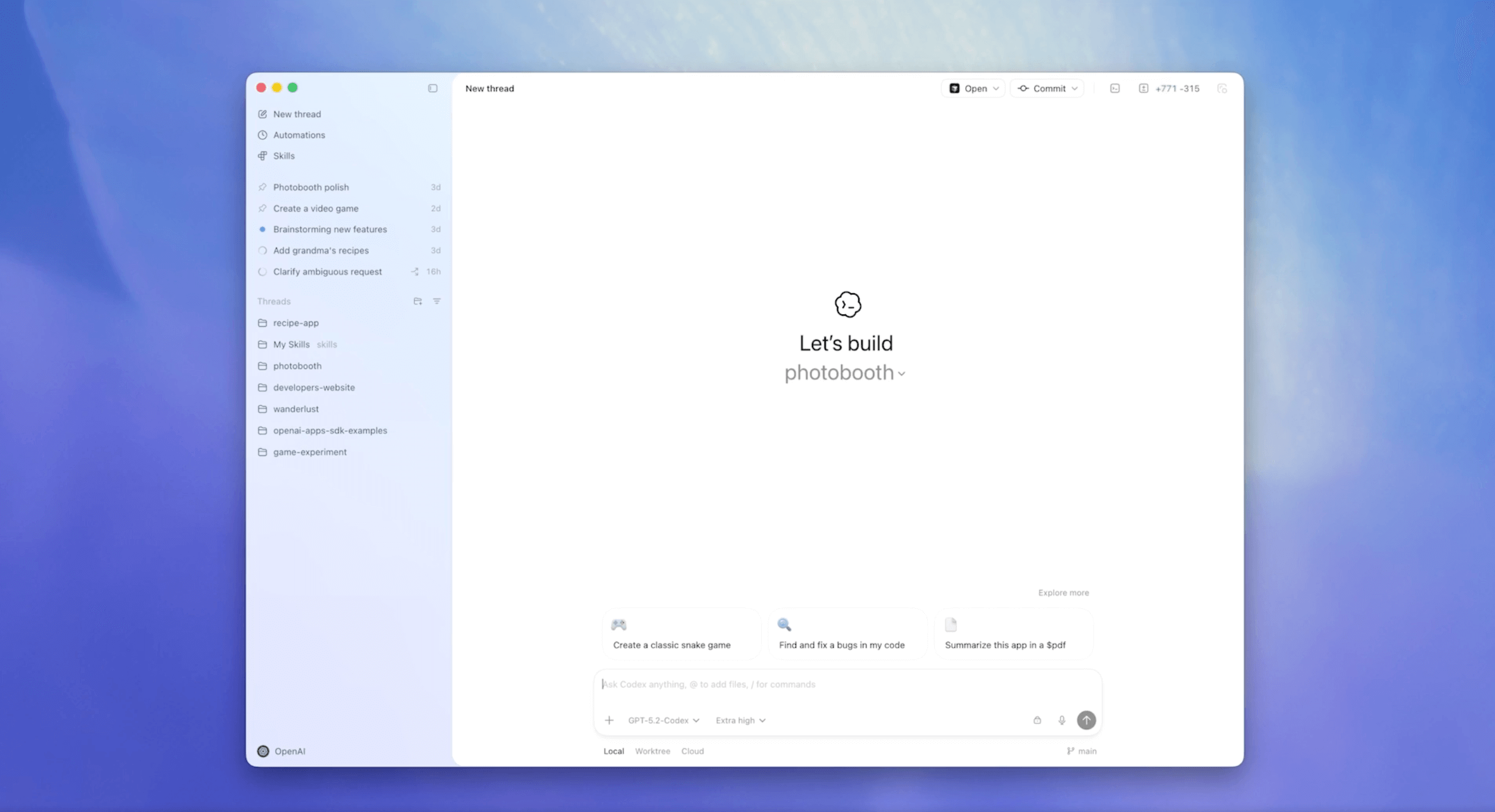
OpenAI launches a macOS Codex app with parallel agents, reusable skills, and automated task handling
|
|
24,842 Likes
|
|
Codex started in April 2025 as a strong single coding agent, but real usage shifted toward long-running, multi-agent work. The app turns that shift into a first-class workflow by giving you one place to direct, review, and control parallel agents.
Instead of one agent per task, you run many agents in parallel, each focused on a specific job. The app groups agents by project and preserves their context, so work continues for hours or days without resets. This matters when agents design, implement, test, and iterate on large systems.
Codex also moves beyond pure code generation. With “skills,” it executes structured workflows that combine scripts, tools, and instructions. OpenAI demonstrates this by generating a full 3D racing game from one prompt using more than 7 million tokens.
Key features
-
Parallel agents with persistent state, organized by project
-
Git worktrees that isolate agent changes from your active branch
-
Inline diff review with optional editor handoff
-
Skills that package reusable workflows beyond code writing
-
Automations that run scheduled tasks and return results for review
How you use it
-
Install the macOS app and sign in with ChatGPT
-
Start agents per task or repository
-
Review changes, merge selectively, or let agents continue independently
|
|
|
|
Presented by Coresignal
|
|
Build Your Platform With the Freshest Jobs Data Available
|
|
Still building your platform on stale job data? Outdated job listings cost you conversions.
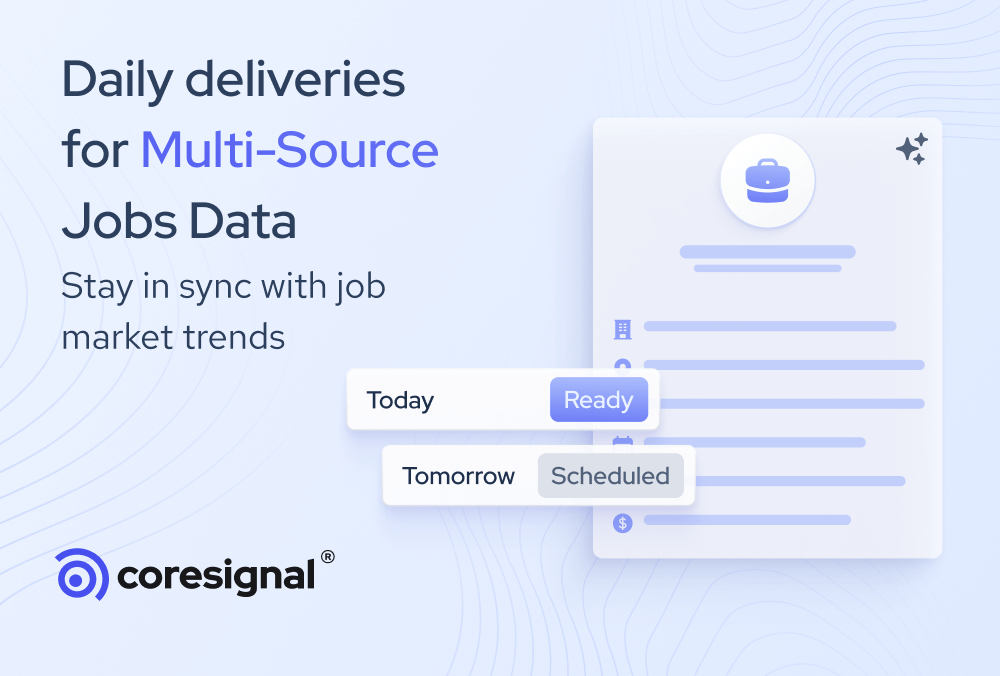
Coresignal’s daily deliveries for the Multi-Source Jobs Dataset ensure listings stay fresh, accurate, and competitive. Daily job listings enhance user experiences, increase conversion rates, and deliver stronger business outcomes.
Accessible via API or as a dataset, daily deliveries remove the lag between market reality and your platform's data.
Multiple sources. Deduplicated records. One dataset. Delivered every day.
|
|
|
|
partner with us
|
|
Top News
|
|
|
|
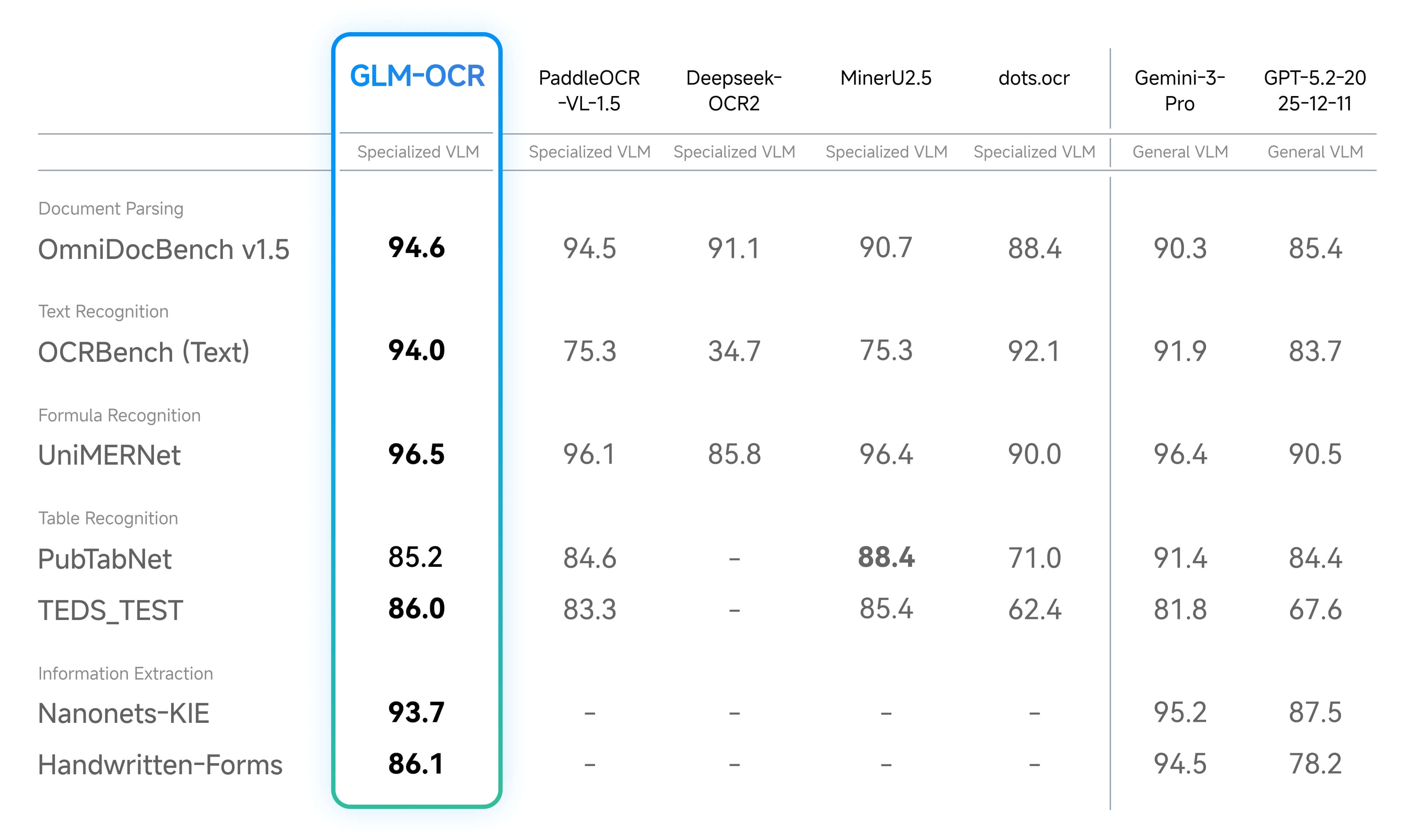
Z.ai ships open-source GLM-OCR, delivering state-of-the-art document understanding with just 0.9B parameters
|
|
2,428 Likes
|
|
Most OCR systems break once documents include tables, formulas, or dense layouts. GLM-OCR targets that gap with a multimodal model built for real documents, not clean text scans. The standout detail is scale: the model uses 0.9B parameters yet ranks #1 on OmniDocBench V1.5.
GLM-OCR treats document understanding as a vision-and-language problem.
A visual encoder reads the page layout, a connector compresses visual signals, and a language decoder outputs structured text. A two-stage pipeline first detects regions like tables and formulas, then recognizes each region in parallel.
Key features
-
CogViT visual encoder trained on large image–text datasets
-
Two-stage pipeline with layout detection and parallel recognition
-
Training uses Multi-Token Prediction loss and full-task reinforcement learning
Performance
-
OmniDocBench V1.5 score: 94.62, ranked #1 overall
-
Throughput: 1.86 PDF pages/sec, 0.67 images/sec
How to use
-
Download weights from Hugging Face
-
Run inference with vLLM, SGLang, or Ollama
-
Call the API or SDK for PDF and image OCR workflows
|
|
|
|
Presented by Speechmatics
|
|
Building with voice? Get $50k from Speechmatics
|

|
Build production-ready voice apps with Speechmatics’ speech-to-text and text-to-speech APIs. Accurate across accents, noise, and 55+ languages with on-prem deployment for strict data governance.
Speechmatics' Startup Program offers $50k in credits, priority support, and direct access to engineers.
|
|
|
|
partner with us
|
|
Top News
|
|
|
|
ElevenLabs releases Eleven v3 to general availability with a 68% error reduction across technical categoriesn
|
|
2,018 Likes
|

|
ElevenLabs ships Eleven v3 to general availability after months in alpha, closing a long-standing gap in text-to-speech accuracy. Text-to-speech systems often fail on numbers and symbols because the same characters mean different things in different contexts.
Eleven v3 targets that problem directly, with a 68% overall error reduction, which stands out as the core technical result.
Earlier versions could misread phone numbers, formulas, or scores by treating digits as large numbers. Eleven v3 instead infers meaning from surrounding text. In simple terms, the model decides whether “102-98” means subtraction, a score, or a ratio based on context.
You can use Eleven v3 anywhere ElevenLabs supports text-to-speech. The release keeps existing APIs and SDKs unchanged, so integration does not require code updates.
Key model changes
-
Improves text normalization for numbers, symbols, and technical notation across languages
-
Uses context-aware decoding instead of fixed rules for ambiguous symbols
Measured results
-
Overall error rate drops from 15.3% to 4.9% across internal benchmarks
-
Chemical formula errors drop from 45.6% to 0.6%
-
Phone number errors drop from 16.9% to 0.6%
-
URL and email errors drop from 45.6% to 3.9%
-
Users prefer GA outputs 72% of the time in blind comparisons
|
|
|
At Alpha Signal, our mission is to build a sharp, engaged community focused on AI, machine learning, and cutting-edge language models, helping over 200,000 developers stay informed and ahead. We’re passionate about curating the best in AI, from top research and trending technical blogs to expert insights and tailored job opportunities. We keep you connected to the breakthroughs and discussions that matter, so you can stay in the loop without endless searching. We also work closely with partners who value the future of AI, including employers and advertisers who want to reach an audience as passionate about AI as we are.
Our partnerships are based on shared values of ethics, responsibility, and a commitment to building a better world through technology.Privacy is a priority at Alpha Signal. Our Privacy Policy clearly explains how we collect, store, and use your personal and non-personal information. By using our website, you accept these terms, which you can review on our website. This policy applies across all Alpha Signal pages, outlining your rights and how to contact us if you want to adjust the use of your information. We’re based in the United States. By using our site, you agree to be governed by U.S. laws.
|
|
|
Looking to promote your company, product, service, or event to 250,000+ AI developers?
|
|
|
|
|
