| Hey, | Welcome to AlphaSignal – the most read newsletter by AI developers.
We bring you the top 1% of news, papers, models, and repos, all summarized to keep you updated on the latest in AI. |
|
|
|
IN TODAY'S SIGNAL
| Read time: 5 min 17 sec | 🎖️ Top News
⚡️ Trending Signals
📌 ElevenLabs
💻 Top of YouTube
🧠 PyTorch Tip |
|
|
|
If you're enjoying AlphaSignal please forward this email to a colleague.
It helps us keep this content free. |
|
|
|
TOP NEWS
| Multimodal Agent | ByteDance unveils UI-TARS-1.5, an open-source agent with 100% scores on 14 interactive web games
| ⇧ 1,438 Likes |
| What's New |
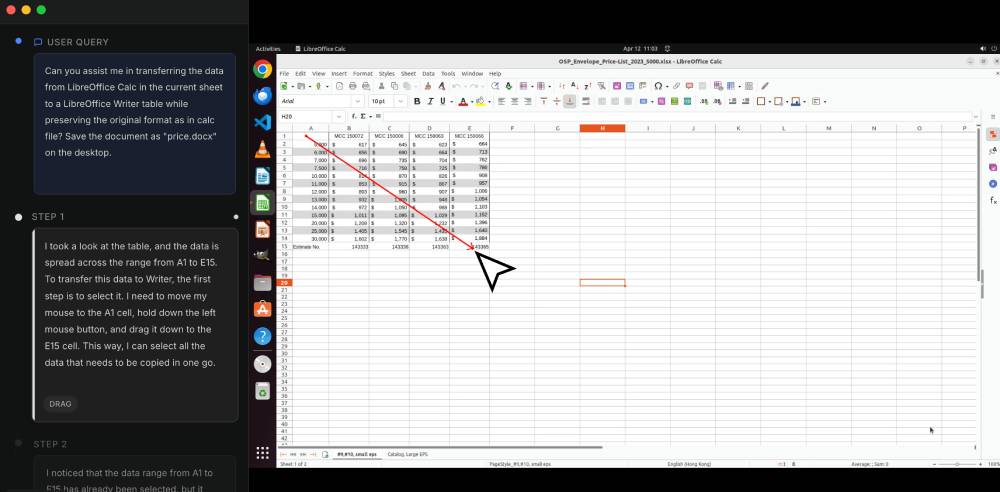
ByteDance has open-sourced UI-TARS-1.5, a multimodal agent built on the Qwen2.5-VL-7B vision-language model. It uses reinforcement learning to reason before acting, improving task execution across environments. The model reaches 100% normalized scores on 14 interactive web games, setting new benchmarks.
GUI-Based Benchmarks The model shows high accuracy in visual grounding and desktop interaction tasks.
Scores 61.6 on ScreenSpotPro, compared to 43.6 (previous SOTA)
Achieves 42.5 on OSWorld, beating CUA (36.4) and Claude 3.7 (28)
Uses GUI grounding to locate screen elements with high precision
Operates in constrained step settings: 100 (OSWorld) and 50 (Windows Arena)
Gameplay Performance Reaches 100 Across All Tasks
UI-TARS-1.5 leads in long-horizon reasoning benchmarks using up to 1,000 interaction steps per game. Achieves 100.00 across all 14 poki.com games, including Infinity-Loop and Maze: Path of Light
Outperforms Claude 3.7 and OpenAI CUA in all measured gameplay categories
Demonstrates strong scaling as interaction rounds increase
Evaluated using normalized scores for cross-game consistency
Web Navigation
UI-TARS-1.5 handles structured browser tasks and information queries effectively. Scores 83.8 on SimpleQA, outperforming GPT-4.5 (60)
Reaches 2.3 on BrowseComp, higher than GPT-4.5 (0.6)
Uses GUI tools to parse and interact with real-time web interfaces
Supports multi-step queries and structured task execution
Performance in Embodied Environments UI-TARS-1.5 surpasses top embodied agents in Minecraft-based tasks using only visual input.
Beats VPT, DreamerV3, and JARVIS-VLA in Mine Blocks and Kill Mobs
Operates with native mouse and keyboard controls in first-person mode
Uses reinforcement-learned "thought-before-action" module to refine strategy
Shows improved task success over longer interaction windows
Architecture and Reasoning Design
UI-TARS-1.5 uses a reasoning-before-action approach based on token-level multimodal supervision.
Training Process and Data
The team trained the model using reinforcement learning and multimodal trajectory supervision. Uses trajectory-weighted reinforcement learning with a self-improving critic
Pretrained on vision-language data and multimodal instruction datasets
Fine-tuned with step-level planning and memory interaction traces
Training includes supervised and self-play data from simulated and real UIs
Availability and Tooling for Local Use
ou can access weights, test apps, and evaluation tools through open-source repositories. Open weights hosted on Hugging Face (7B parameters)
Desktop app includes memory, planner, and UI simulation environment
Tools support custom dataset integration and finetuning
Evaluation code includes tests for desktop, Android, and web agents
Community Feedback
Junjie Fang
"The superiority of UI-TARS-1.5 is consistent across online benchmarks, spanning computer use, browser use, and phone use."
Yiheng Xu
"I recently made a chart for a talk to track the progress of computer use agents. Just updated it with today's UI-TARS-1.5 release. The progress over the past year is mind-blowing. The climb is getting steeper. Can't stop thinking about when we'll hit that human-level singularity (72%)."
Ed
"Omg the part with the worm game. I really want to see if this thing can learn to trade. Imagine a trading bot that can be used live and also on visual information sounds amazing!" | |
| Try now
|
|
|
|
TRENDING SIGNALS
| Content Integration |
|
⇧ 1,249 Likes | |
Text-to-Speech Model |
|
⇧ 16,858 Likes | |
AI Assistant |
|
⇧ 1,027 Likes | |
LLM Safety |
|
From Our Partners | |
Vision Language Model |
|
⇧ 863 Like | | |
|
|
|
|
ElevenLabs’ Scribe Turns Audio into Accurate Text
| Transcribe audio with 98%+ accuracy using Scribe. Get smart diarization, audio-event tagging, and character-level timestamps, all delivered in a clean API.
Drop in, transcribe, integrate — production-ready speech-to-text for developers. |
Start transcribing free today ↗️ |
|
|
|
|
AI Coding Tool
| |
► 107,553 Views |
|
|
Generative AI
| |
► 43,851 Views |
|
|
Physics Based Simulation
| |
► 67,990 Views |
|
|
|
PYTORCH TIP
| Speed Up Dynamic Shape Inference with TorchScript Shape Caching | TorchScript can speed up inference even for models with dynamic input shapes using inline shape specialization. Most skip it due to dynamic batching, but torch.jit.trace now caches multiple shape patterns.
When To Use Anytime you serve a model with varying input shapes but want low-latency inference.
Benefit Preserves dynamic batching while enabling optimized execution via shape cache reuse. |
import torch
from torch import nn

model = nn.Sequential(nn.Linear(128, 64), nn.ReLU()
                                  , nn.Linear(64, 10))
example = torch.randn(1, 128)
traced = torch.jit.trace(model, example)

# Different shape gets cached on first use
output = traced(torch.randn(32, 128))
|
|
|
|
At Alpha Signal, our mission is to build a sharp, engaged community focused on AI, machine learning, and cutting-edge language models, helping over 200,000 developers stay informed and ahead. We’re passionate about curating the best in AI, from top research and trending technical blogs to expert insights and tailored job opportunities. We keep you connected to the breakthroughs and discussions that matter, so you can stay in the loop without endless searching. We also work closely with partners who value the future of AI, including employers and advertisers who want to reach an audience as passionate about AI as we are.
Our partnerships are based on shared values of ethics, responsibility, and a commitment to building a better world through technology.Privacy is a priority at Alpha Signal. Our Privacy Policy clearly explains how we collect, store, and use your personal and non-personal information. By using our website, you accept these terms, which you can review on our website. This policy applies across all Alpha Signal pages, outlining your rights and how to contact us if you want to adjust the use of your information. We’re based in the United States. By using our site, you agree to be governed by U.S. laws. |
|
|
|
Looking to promote your company, product, service, or event to 200,000+ AI developers? Let's work together.
|
| Work with us
|
|
|
|
|