|
Hey,
Your daily briefing is ready. You can finally take a break from the AI firehose.
Our algos spent the night splitting signal from noise and pulled the top news, models, papers, and repos.
Here’s the must-read:
|
|
Together with:
|

|
|

|
Today's Author
Lior Alexander. Founder of AlphaSignal and former ML Engineer.
Previously built ML systems at Iguazio, Guesty, Enphase, Mila.
|
|
Top News
|
|
|
|
Google integrates Gemini into Chrome’s side panel to execute complex, agentic web actions automatically
|
|
4,528 Likes
|
|
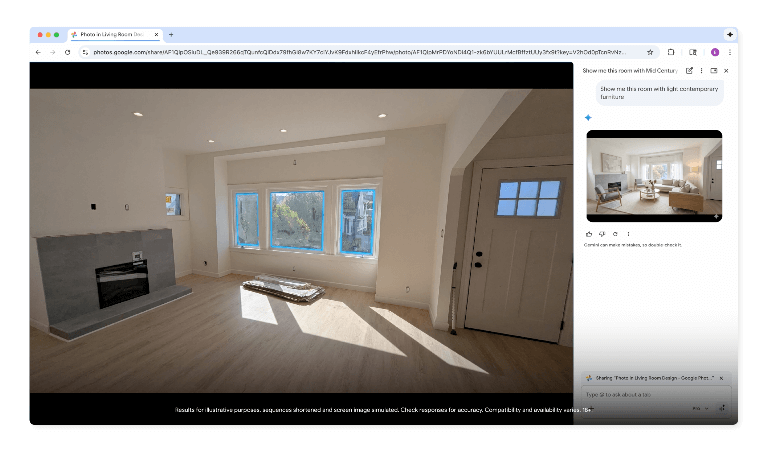
Gemini now lives inside Chrome, powered by Gemini 3, and the headline change is Auto browse: an agent that completes multi-step web tasks for you. This shifts Chrome from assistive to agentic, where the browser itself plans and executes work.
The problem is real tasks span many tabs, forms, and sites. Gemini in Chrome collapses that workflow into one place. You open a side panel, describe the task, and Chrome does the navigation and data entry while you stay in control.
Key features
-
Persistent side panel that reads context across open tabs
-
Auto browse that navigates sites, fills forms, and gathers results
-
In-browser image editing via Nano Banana, no downloads required
-
Connected Apps access to Gmail, Calendar, Maps, Flights, Shopping
Auto browse is available to AI Pro and Ultra subscribers in the U.S. Chrome also supports the Universal Commerce Protocol, which lets agents interact with supported shopping platforms.
|
|
|
|
Presented by Sonar
|
|
Vibe check: Do developers trust AI?
|
|
Based on a survey of over 1,100 developers, the newest State of Code report from Sonar analyzes the impact of generative AI on software engineering workflows and how developers are adapting to address it.
Findings include:
-
96% of developers don’t fully trust that AI-generated code is functionally correct yet only 48% always check it before committing
-
61% agree that AI often produces code that looks correct but isn't reliable
-
24% of a developer's work week is spent on toil work
|
|
|
|
partner with us
|
|
Top News
|
|
|
|
Ai2 introduces Theorizer, providing open-source code for automatic theory synthesis from scientific papers
|
|
1,736 Likes
|
|
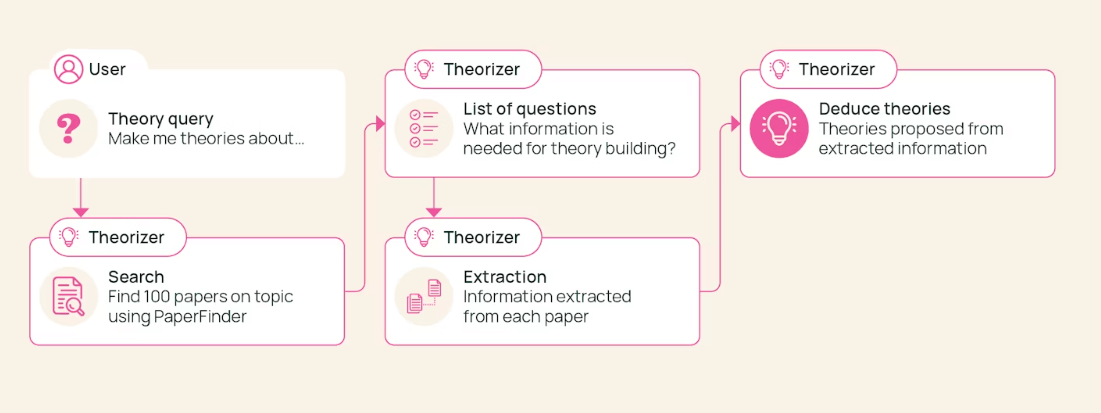
Researchers already automate experiments, but they still read hundreds of papers to extract laws. Theorizer flips that workflow by reading the literature first and writing theories directly. The striking part: it synthesizes explicit scientific laws from up to 100 papers per query.
The system treats a theory as compressed knowledge. A law states a repeatable pattern, scope states where that pattern holds, and evidence cites results from real papers. You can think of it as a map from scattered findings to testable claims.
You use Theorizer by entering a topic query. The system retrieves open-access papers, extracts structured results, and assembles theories with linked evidence.
Key features
-
Reads and processes up to 100 papers per query
-
Outputs ⟨LAW, SCOPE, EVIDENCE⟩ instead of summaries
-
Uses GPT-4.1 for theory synthesis and GPT-5 mini for extraction
-
Runs in 15–30 minutes per query
Results
-
Evaluates 2,983 laws against 4,554 papers
-
Achieves 0.88–0.90 precision in accuracy-focused tests
-
Improves recall from 0.45 to 0.51 with literature grounding
|
|
|
|
Top Repo
|
|
|
|
Google DeepMind shares AlphaGenome research and weights to study disease-linked mutations across 1M base context
|
|
2,292 Likes
|
|
Google DeepMind released AlphaGenome, a unified DNA sequence model for regulatory variant-effect prediction. The release includes a paper, hosted API and research weights and code.
The most notable capability is 1 Mb input length with single–base-pair resolution across multiple genomic modalities.
Earlier models force a trade-off between context and resolution. AlphaGenome breaks that trade-off by reading up to 1 million DNA base pairs and predicting effects at single-base resolution.
That scale explains why the API already handles over 1 million calls per day from 3,000+ users worldwide.
What AlphaGenome does
The model predicts regulatory signals directly from raw DNA sequence at base resolution.
-
Predicts gene expression, transcription initiation, splicing usage, junction strength, and chromatin features.
-
Outputs chromatin accessibility, histone marks, transcription factor binding, and contact maps.
-
Aligns predictions to genomic coordinates for direct variant scoring across modalities.
Availability
-
Model weights available via Kaggle and Hugging Face under non-commercial research terms
-
Research repository includes model code, variant scorers, and dataset loaders
-
Full-length inference recommends NVIDIA H100 GPUs; training targets TPU v3 or higher
|
|
|
At Alpha Signal, our mission is to build a sharp, engaged community focused on AI, machine learning, and cutting-edge language models, helping over 200,000 developers stay informed and ahead. We’re passionate about curating the best in AI, from top research and trending technical blogs to expert insights and tailored job opportunities. We keep you connected to the breakthroughs and discussions that matter, so you can stay in the loop without endless searching. We also work closely with partners who value the future of AI, including employers and advertisers who want to reach an audience as passionate about AI as we are.
Our partnerships are based on shared values of ethics, responsibility, and a commitment to building a better world through technology.Privacy is a priority at Alpha Signal. Our Privacy Policy clearly explains how we collect, store, and use your personal and non-personal information. By using our website, you accept these terms, which you can review on our website. This policy applies across all Alpha Signal pages, outlining your rights and how to contact us if you want to adjust the use of your information. We’re based in the United States. By using our site, you agree to be governed by U.S. laws.
|
|
|
Looking to promote your company, product, service, or event to 250,000+ AI developers?
|
|
|
|
|
