Hey, | Welcome to today's edition of AlphaSignal.
Whether you are a researcher, engineer, developer, or data scientist, our summaries are there to keep you up-to-date with the latest breakthroughs in AI.
Let's get into it!
Lior | . |
|
|
|
IN TODAY'S SIGNAL
| Top Repo
Confidential AI Data Summit
Top Signal
Must Read
Python Tip |
Read Time: 3 min 17 sec |
|
|
|
Enjoying this newsletter?
Please forward it to a friend or colleague. It helps us keep this content free.
|
|
|
|
TOP REPO
| AI Assistants | PhiData: Build AI Assistants with memory, knowledge and tools |
⇧ 8809 Stars |
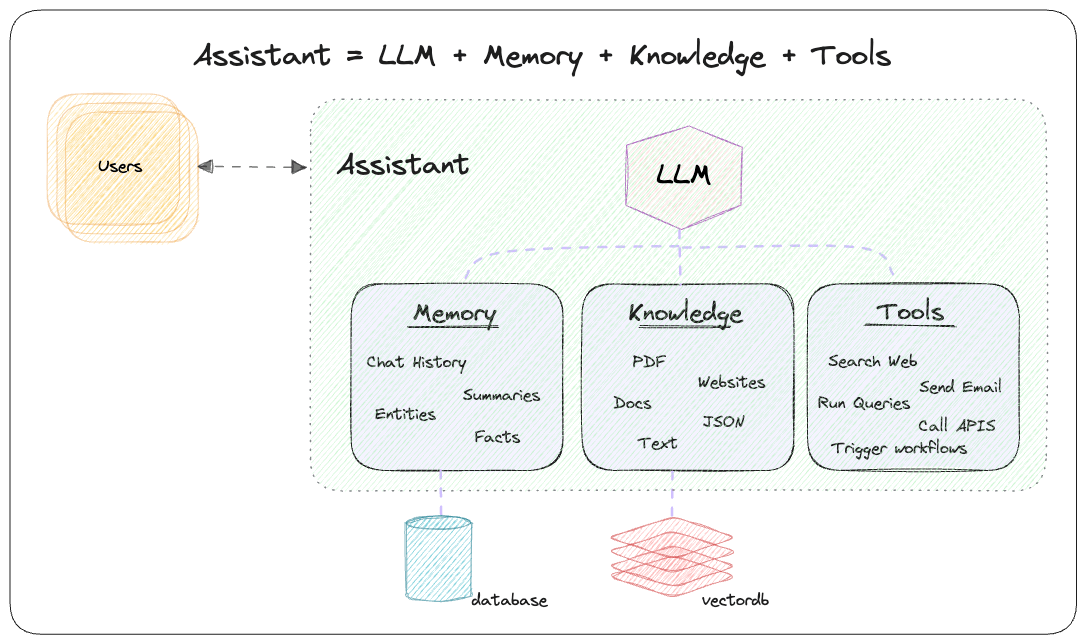 |
What's New | Phidata is a framework for building Autonomous Assistants (aka Agents) that have long-term memory, contextual knowledge and the ability to take actions using function calling.
Why phidata? Problem: LLMs have limited context and cannot take actions. Solution: Add memory, knowledge and tools.
Memory: Stores chat history in a database and enables LLMs to have long-term conversations.
Knowledge: Stores information in a vector database and provides LLMs with business context.
Tools: Enable LLMs to take actions like pulling data from an API, sending emails or querying a database. How it works
Step 1: Create an Assistant
Step 2: Add Tools (functions), Knowledge (vectordb) and Storage (database)
Step 3: Serve using Streamlit, FastApi or Django to build your AI application Installation
!pip install -U phidata | |
|
Try phidata
|
|
|
|

| The Summit for Confidential Data and AI | Generative AI will transform the world, but data privacy solutions must keep pace. Join the Confidential Computing Summit in San Francisco on June 5 & 6.
Learn from leaders like Karthik Narain (Accenture), Mike Russinovich (Microsoft Azure), Dave Reber (Nvidia), and Jason Clinton (Anthropic).
Engage in hands-on workshops to develop practical skills, explore 30+ use cases to understand real-world applications, and network with top professionals to expand your connections.
Stay updated on the latest trends in secure and trustworthy AI to enhance your projects and advance your career.
Alpha Signal readers get $200 off with promo code: AS. |
|
Register now
| partner with us |
|
|
|
TRENDING SIGNALS
| Open Source |
|
⇧ 750 Likes | |
Finance |
|
⇧ 1829 Likes | |
Multilingual |
| ⇧ 428 Likes |
| RAG |
|
⇧ 564 Likes | |
Theory |
|
⇧ 1429 Likes | | |
|
|
| |
|
MUST-READ
|
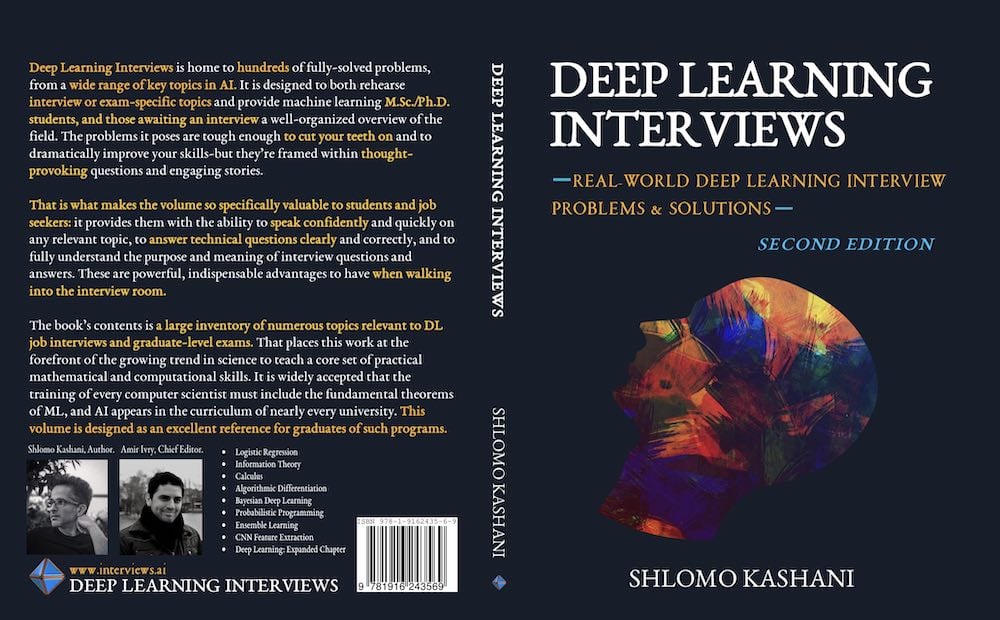 |
Deep Learning Interview: Fully Solved Questions Covering A Wide Range Of Key AI/ML Topics |
The second edition of Deep Learning Interviews is home to hundreds of fully-solved problems. It is designed to both rehearse interview or exam specific topics and provide machine learning MSc / PhD. students, and those awaiting an interview a well-organized overview of the field.
The problems it poses are tough enough to cut your teeth on and to dramatically improve your skills-but they're framed within thought-provoking questions and engaging stories.
That is what makes the volume so specifically valuable to students and job seekers: it provides them with the ability to speak confidently and quickly on any relevant topic, to answer technical questions clearly and correctly, and to fully understand the purpose and meaning of interview questions and answers. |
|
Read more
|
|
|
|
PYTHON TIP
| Data Processing | Efficiently Handle Large Dataframes with Dask |
Use Dask to handle larger-than-memory datasets with familiar Pandas-like syntax. Dask provides parallel computing, out-of-core computation, and scalability beyond what Pandas can offer, making it ideal for very large datasets.
Benefits: - Scalability: Handle datasets larger than your available memory.
- Parallel Computing: Leverage multiple cores for faster computation.
- Familiar Syntax: Use a syntax similar to Pandas, minimizing the learning curve.
Using Dask can significantly optimize your data processing workflows, especially when dealing with very large datasets. |
import dask.dataframe as dd
import pandas as pd
from dask.distributed import Client

# Create a Dask client
client = Client()

# Create a sample DataFrame
data =
df = pd.DataFrame(data)

# Convert the Pandas DataFrame to a Dask DataFrame
ddf = dd.from_pandas(df, npartitions=2)

# Perform operations just like you would with Pandas
result = ddf.groupby('column_name').mean().compute()

# Print the result
print(result)
|
|
|
|
Ghita is an editor at AlphaSignal and AI Engineer at Clear Ventures. Experienced in Computer Vision and Language models, she holds 2 masters in Applied Mathematics.
| | | |
Want to promote your company, product, job, or event to 180,000+ AI researchers and engineers?
|
|
Sponsor
|
|
|
|
|
