| Hey, | Welcome to AlphaSignal, the most read source of news by AI engineers and researchers. Every day, we identity and summarize the top 1% of news, papers, models, and repos, so you’re always up to date. Here’s today’s roundup: |
|
|
|
If you're enjoying AlphaSignal please forward this email to a colleague.
It helps us keep this content free. |
|
|
|
./TOP_NEWS
| | Google adds conversational segmentation to Gemini 2.5, lets you mask objects using natural language prompts
| 2,583 Likes |

| Gemini 2.5 supports natural language-driven segmentation. It identifies regions in an image based on complex queries like “the third book from the left” or “the people not sitting.”
How does it work at a high level? You submit a prompt describing the object or concept you want to segment. Gemini 2.5 returns pixel-level masks. It uses relational reasoning, OCR, multilingual understanding, and abstract concept grounding to isolate the exact regions users refer to directly from a sentence.
Key Features
Supports five types of segmentation queries: relationships, conditionals, abstract concepts, in-image text, and multilingual prompts Understands natural descriptions Supports multi-lingual labels including French, Spanish, and more Enables task specific masks for use cases like creative editing, safety monitoring, and insurance assessment Runs via API with no need for custom training Supports real-time interaction in Google AI Studio or Python Colab
How to use it?
Access the Gemini API via Google AI Studio or Python Colab. Use the gemini-2.5-flash model with thinkingBudget=0. Provide clear natural language prompts. Set the output format to JSON. Start with the Spatial Understanding demo or follow the Gemini developer guide.
Main Limitations Conversational segmentation works best with descriptive prompts and structured queries. While it supports abstract and relational language, results may degrade with ambiguous or extremely long instructions. Only available through Gemini 2.5 API.
Community Feedback "The progress that’s been made & importance of Gemini’s world understanding is so underrated "
- Ben Kaufman
"This evolution in the understanding of Gemini images is very important for the future development of Multimodal AI that understands physical space." - Federico Lix Klett |
|
| Try now
|
|
|
|
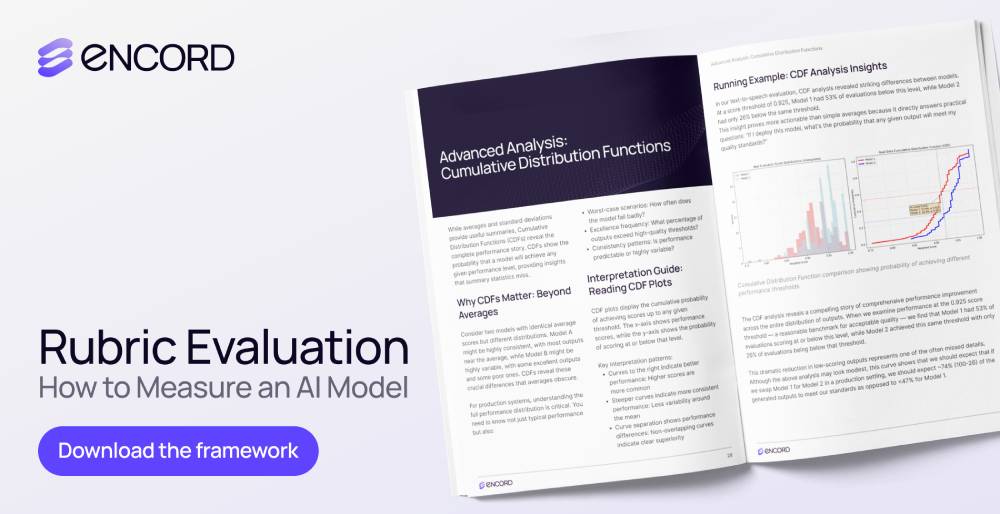
| Expert Opinion: What Framework Does This ML Lead Use for Gen AI Assessment? |
The evaluation of generative AI models has reached an inflection point. As complexity increases, we encounter more grey areas between ‘success’ and ‘failure’.
Traditional evaluation methods are proving inadequate. Single-metric evaluations fail to capture the nuanced requirements of real-world applications.
What’s the best approach then? This is the question we asked Frederik, ML Lead at Encord.
His answer: Rubric Evaluation - new frameworks to measure clarity, accuracy and contextual performance. |
| Download the full framework
| partner with us |
|
|
|
./TOP_LECTURES
| |
| 1,639 Likes |
Learn reinforcement learning fundamentals, design reward functions, train agents, evaluate kernel usefulness, and apply 1.58-bit quantization to LLMs like DeepSeek-R1 while maintaining accuracy. Includes theory, code, and performance tradeoffs. |
|
|
| 1,048 Likes |
This blogpost by NVIDIA discusses how to speed up slow pandas workflows using GPU with cuDF. You’ll see faster stock analysis, text processing, and dashboard filtering, and learn how to handle datasets larger than GPU memory. |
|
|
| 1,149 Likes |
Work with raw audio by loading waveforms, generating spectrograms, and applying transformers for classification, transcription, and synthesis. Use Hugging Face pipelines to run and evaluate audio tasks with minimal setup. |
| |
| |
|
|
./DEEP_DIVE
| |
Andrew Ng on why deciding features now blocks progress |
1,043 Likes | Agentic coding tools accelerate implementation, but shift the bottleneck to product decision-making. Andrew Ng calls this the Product Management Bottleneck. Teams now struggle more with what to build than how to build it.
Fast, high-quality decisions rely on PMs who:
Build strong internal models of user behavior Update those models using conversations, surveys, usage data, and A/B tests Make fast decisions guided by intuition refined by data
He warns that this approach doesn't scale in environments with massive decision volume e.g., ad ranking, where automated systems must optimize through experimentation.
But for early-stage product decisions where each feature is strategic, Ng argues that the speed-quality tradeoff favors mental model-driven decisions informed by diverse data.
Agentic coding doesn’t eliminate the need for product strategy, it amplifies the cost of poor or slow decisions. |
| Read now
|
|
|
|
At Alpha Signal, our mission is to build a sharp, engaged community focused on AI, machine learning, and cutting-edge language models, helping over 200,000 developers stay informed and ahead. We’re passionate about curating the best in AI, from top research and trending technical blogs to expert insights and tailored job opportunities. We keep you connected to the breakthroughs and discussions that matter, so you can stay in the loop without endless searching. We also work closely with partners who value the future of AI, including employers and advertisers who want to reach an audience as passionate about AI as we are.
Our partnerships are based on shared values of ethics, responsibility, and a commitment to building a better world through technology.Privacy is a priority at Alpha Signal. Our Privacy Policy clearly explains how we collect, store, and use your personal and non-personal information. By using our website, you accept these terms, which you can review on our website. This policy applies across all Alpha Signal pages, outlining your rights and how to contact us if you want to adjust the use of your information. We’re based in the United States. By using our site, you agree to be governed by U.S. laws. |
|
|
|
Looking to promote your company, product, service, or event to 200,000+ AI developers? Let's work together.
|
| Work with us
|
|
|
|
|
