AI is quietly crossing a threshold: from answering to acting. GPT-Live talks and listens simultaneously. Tokyo agents sold an ebook on the open internet. And our coding benchmarks just broke under the weight of models improving faster than we can measure them.
The pattern? We built the intelligence. Now we're stress-testing reality.
Buckle up, it gets interesting.
|
|
In Partnership with
|
·
|

|
|
|
|

|
Today's Author
Lior Alexander. Founder of AlphaSignal and former ML Engineer. Previously built ML systems at Iguazio, Guesty, Enphase, Mila.
|
|
Top Repo
|
|
|
|
Anthropic's Claude Managed Agents hits 96% top model performance at 46% of the cost
|
|
27,252 Likes
|
|
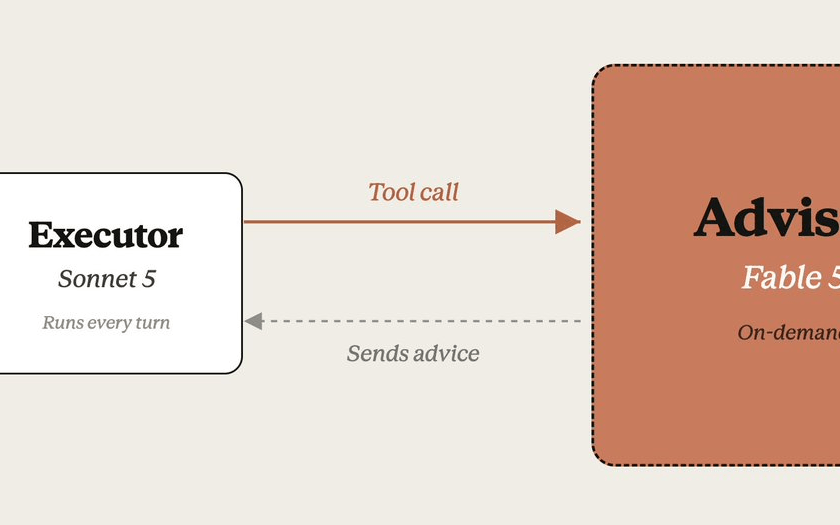
Fable 5 is powerful. It's also expensive. Running every token through it adds up fast. Anthropic just shared two patterns to keep the quality without paying full price on every call. The idea: stop using Fable 5 for everything. Use it only where it actually matters. - Advisor pattern: Sonnet 5 does all the work and calls Fable 5 only at key decision points, roughly once per task. On SWE-bench Pro, this hits 92% of Fable 5's score at 63% of the cost, because most tokens bill at Sonnet's cheaper rate.
- Orchestrator pattern: Fable 5 plans the task and hands off the heavy lifting to Sonnet 5 workers running in parallel. On BrowseComp, this reaches 96% of Fable 5's performance at 46% of the price. One real example: verifying 20 facts cost $1.61 with the split team versus $4.00 solo.
- Caching bonus: Each sub-agent keeps its own cache, so repeated context doesn't get billed twice.
Both patterns run through Claude Managed Agents. The cookbook at github.com/anthropics/claude-cookbooks has working code for both setups.
|
|
|
|
Presented by Tiger Data
|
|
Your AI Workload Outgrew Postgres. Or Did It?
|
|
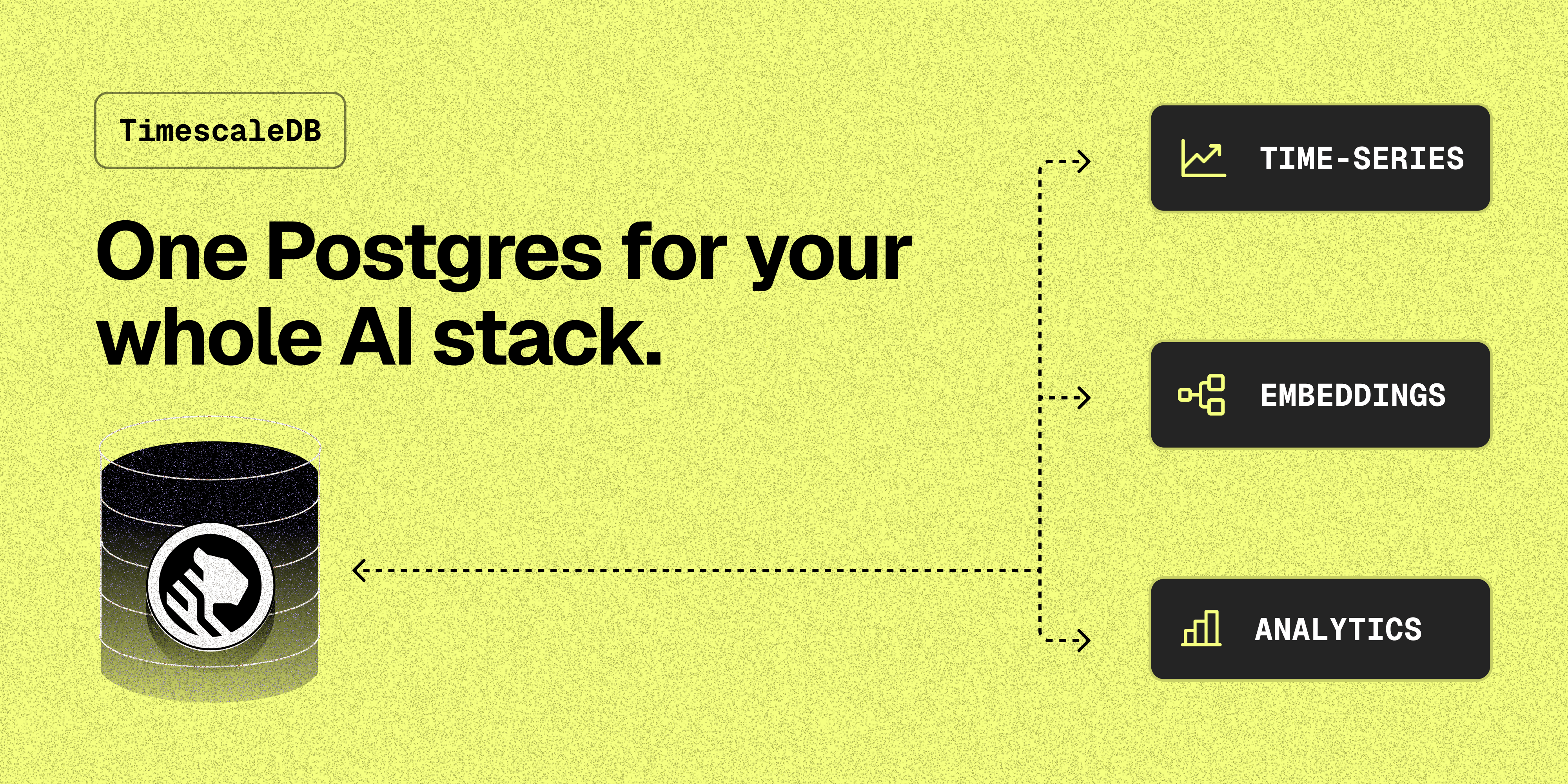
Most teams bolt on a separate database for every job: one for time-series, one for vectors, one for analytics. TimescaleDB handles all three, built on Postgres you already know. - Time-series data at massive scale
- Vector embeddings & similarity search
- Real-time analytics
No new pipelines. No context switching. No drift.
|
|
|
|
Top News
|
|
|
|
OpenAI ships GPT-Live, a full-duplex voice model that talks and listens at once
|
|
24,329 Likes
|

|
Old ChatGPT Voice had a simple but annoying problem. It had to wait until you finished speaking before generating a response, which meant it couldn't do things like real-time translation. Every pause felt like a turn signal. That's now fixed. OpenAI just shipped GPT-Live, and the core change is the architecture. It's built on a full-duplex architecture, meaning it can listen and speak at the same time. Think of it like a phone call instead of a walkie-talkie. Here's what that unlocks: - It can say "mhmm" or "yeah" while you're still talking, or stay quiet when you need a moment to think.
- You can interrupt naturally, and it supports live translation.
- For harder questions needing web search or reasoning, it delegates to a frontier model behind the scenes and brings the result back into the conversation.
Two models are rolling out globally: GPT-Live-1 for paid users and GPT-Live-1 mini for free users, across iOS, Android, and the web. API access is coming soon, and you can sign up to be notified.
|
|
|
|
Presented by Sentry
|
|
Sentry + GitHub: Bugs Diagnosed and Fixed, Live
|
|
What if your bugs were diagnosed and fixed before you even open a PR? Sentry catches it, Seer diagnoses it, Copilot drafts the fix as a pull request. Watch GitHub's Andrea Griffiths and Sentry's Paul Jaffre break a real script live on July 15th, then wire up the same loop in your own repo live.
|
|
|
|
Top News
|
|
|
|
OpenAI finds 30% of SWE-Bench Pro tasks broken, pulls its recommendation
|
|
5,649 Likes
|
|
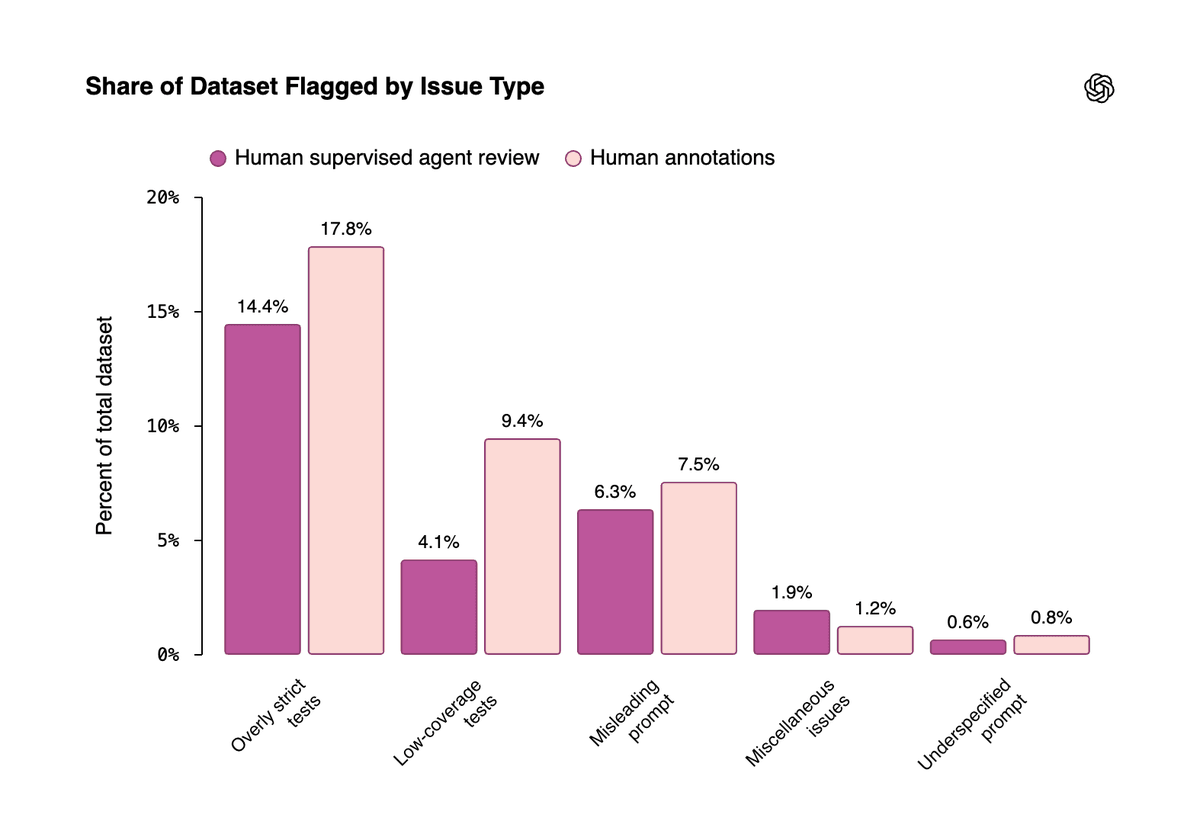
Here is a story about how the ruler we used to measure AI coding progress just snapped in half. OpenAI audited SWE-Bench Pro, the benchmark everyone used to rank AI coding models, and found it is no longer trustworthy. A benchmark is basically a standardized test for AI. The problem? Their analysis flagged 200 tasks (27.4%) as broken, while human reviewers found issues in 249 tasks (34.1%). Correct solutions were failing because of hidden requirements, contradictory instructions, overly strict tests, or incomplete grading criteria. So models were getting penalized for writing good code. The types of broken tasks found: - Hidden requirements not mentioned in the problem description
- Tests that reject valid solutions
- Grading criteria that miss correct answers
- Contradictory instructions
The benchmark hit a saturation point near a 70% noise ceiling, with frontier models jumping from 23.3% to 80.3% in eight months. That speed suggests scores were inflated, not real progress. OpenAI has formally retracted its recommendation. Better benchmarks are coming.
|
|
|
At Alpha Signal, our mission is to build a sharp, engaged community focused on AI, machine learning, and cutting-edge language models, helping over 200,000 developers stay informed and ahead. We're passionate about curating the best in AI, from top research and trending technical blogs to expert insights and tailored job opportunities. We keep you connected to the breakthroughs and discussions that matter, so you can stay in the loop without endless searching. We also work closely with partners who value the future of AI, including employers and advertisers who want to reach an audience as passionate about AI as we are.
Our partnerships are based on shared values of ethics, responsibility, and a commitment to building a better world through technology.Privacy is a priority at Alpha Signal. Our Privacy Policy clearly explains how we collect, store, and use your personal and non-personal information. By using our website, you accept these terms, which you can review on our website. This policy applies across all Alpha Signal pages, outlining your rights and how to contact us if you want to adjust the use of your information. We're based in the United States. By using our site, you agree to be governed by U.S. laws.
|
|
|
Looking to promote your company, product, service, or event to 250,000+ AI developers?
|
|
|
|
|
