| Hey, | Welcome to today's edition of AlphaSignal, a newsletter for developers by developers.
We identify and summarize the top 1% news, papers, models, and repos in the AI industry. |
|
|
|
IN TODAY'S SIGNAL
| Read time: 5 min 25 sec | 🎖️ Top News
📌 WebAI
⚡️ Trending Signals
⚙️ Top Lectures
🧠 Lecture
|
|
|
|
If you're enjoying AlphaSignal please forward this email to a colleague.
It helps us keep this content free. |
|
|
|
TOP NEWS
| LLM | NVIDIA dropped multimodal language model that rivals GPT-4 and Llama-3.1 405B |
⇧ 2,457 Likes |
 |
What's New |
Nvidia has released NVLM 1.0, a family of open-source multimodal large language models. In this family the flagship model is NVLM-D-72B's performance is at par with GPT-4 and Claude 3.5 in across many vision and language tasks specific benchmarks.
Key Highlights
Open-source release of model weights On par with Llama 3.1 405B on Math and Coding. Improved text-only performance after multimodal training Hybrid architecture for diverse input processing Under "Creative Commons Attribution Non Commercial 4.0 International" license. Not allowed for commercial usage. Architecture and Performance
NVLM-D-72B employs a hybrid architecture combining various multimodal processing techniques. This approach enables effective handling of visual and textual inputs, including meme interpretation, image analysis, and step-by-step math problem-solving. The model achieves state-of-the-art results on benchmarks like MMMU (58.7/54.9 val/test), MathVista (65.2), and OCRBench (852). NVLM-D 1.0 72B outperforms Llama 3.2 90B on most benchmarks despite having fewer parameters, showing particularly strong advantages in MathVista, OCRBench, and VQA tasks. Compared to GPT-4V, NVLM-D 1.0 72B demonstrates superior performance across all listed benchmarks, with notable leads in OCRBench, AI2D, and VQA, though it falls short of GPT-4V's MMMU test score. Text-Only Capabilities
A notable feature of NVLM-D-72B is its enhanced text-only performance post-multimodal training. The model increased accuracy by an average of 4.3 points across text benchmarks, outperforming its original language model backbone. On text-only tasks, it scores 81.7 on MMLU, 93.2 on GSM8K, and 73.1 on MATH. Implementation
Nvidia provides code for distributed loading across multiple GPUs, allowing efficient use of hardware resources for large-scale deployments. The model supports multi-GPU inference. | |
|
Read more
|
|
|
|
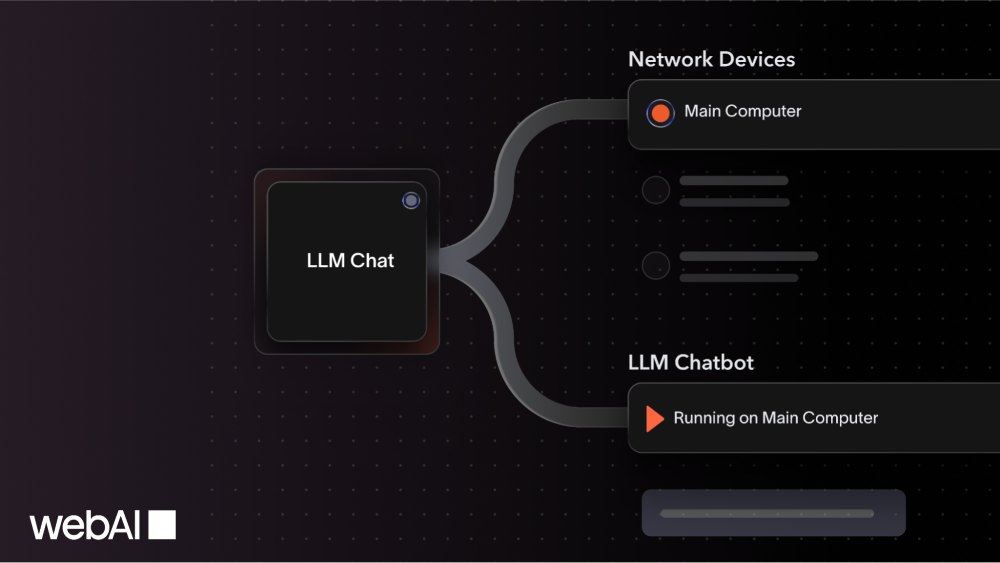
| Unlock the real value of AI with local, ownable, and customizable models that you control |
webAI just released new features that give developers full control over their AI models. Test solutions immediately, utilize local resources, and deploy securely—all while maintaining data privacy.
webAI enables developers to harness AI power on their own terms.
The platform offers
Direct testing and iteration without a dedicated AI team Local compute for fast, secure prototyping at reduced costs Simple deployment to local environments |
|
Learn more
| partner with us |
|
|
|
TRENDING SIGNALS
| Google |
|
⇧ 1,100 Likes | |
Voice AI |
|
⇧ 431 Likes | |
Video Generation |
|
⇧ 1,824 Likes | |
Open Source LLM |
|
⇧ 548 Likes | |
AI File Handling |
|
⇧ 293 Likes | | |
|
|
|
|
|
TOP LECTURES
| Web scraping |
| ⇧ 2,500 Likes |
Crawl4AI is a free, open-source web scraping tool for AI applications. You'll learn to extract LLM-friendly data from multiple URLs simultaneously. It offers JSON, cleaned HTML, and markdown outputs. You'll explore features like media tag extraction, link gathering, metadata collection, custom JavaScript execution, and advanced chunking strategies. Crawl4AI helps you streamline data collection for AI projects. |
| Prompt Engineering |
|
⇧ 1000 Likes |
This example reveals OpenAI's leaked "meta" prompt for optimizing GPT prompts. You'll learn the structure and key components of effective prompts, including task understanding, reasoning order, example usage, and output formatting. You'll gain insights into preserving user content, handling constants, and creating clear, concise instructions for AI models. |
| Retrieval Optimization |
|
⇧ 1,500 Likes |
This course teaches you tokenization internals, embedding processes, and RAG optimization. You'll learn how different tokenizers work, tackle common challenges, and measure search quality. The course covers HNSW algorithm tuning and quantization methods. You'll gain skills to improve vector search relevance, speed, and memory efficiency in RAG systems. |
| |
| |
|
|
TOP LECTURE
| RAG | Andrej Karpathy explains about moving from PyTorch to bare-metal C, stripping down language model training to its core |
⇧ 3,100 Likes |
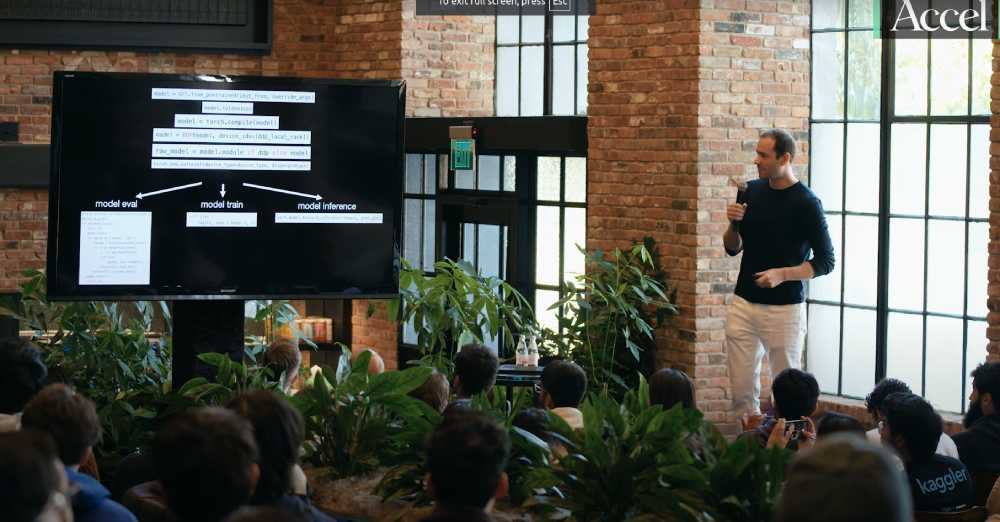 |
Andrej Karpathy recently presented at the GPU MODE workshop, unveiling llm.c - a single C file implementation of large language models. This project strips away PyTorch dependencies, reimplementing core components like arrays, autograd, and distributed training from scratch. llm.c aims for portability, determinism, and efficiency, compiling instantly and running on diverse hardware.
In this talk, you'll learn about Porting PyTorch layers to C Implementing forward and backward passes Memory pre-allocation techniques CUDA and GPU optimizations Mixed precision training Multi-GPU and multi-node setups Performance comparisons with PyTorch Open-source development insights The project achieved 29% less memory usage and 19% faster training than PyTorch nightly for GPT-2 (1.6B) on an 8XH100 node. |
|
Watch video
|
|
|
|
Looking to promote your company, product, service, or event to 200,000+ AI developers? Let's work together.
|
|
Advertise
|
|
|
|
|
