|
Hey,
Your daily briefing is ready. You can finally take a break from the AI firehose.
Our algos spent the night splitting signal from noise and pulled the top news, models, papers, and repos.
Here’s the must-read:
|
|
Together with:
|

|
|

|
Today's Author
Lior Alexander. Founder of AlphaSignal and former ML Engineer.
Previously built ML systems at Iguazio, Guesty, Enphase, Mila.
|
|
Top News
|
|
|
|
Anthropic launches Glasswing, using Claude Mythos Preview to detect vulnerabilities across critical infrastructure
|
|
73,692 Likes
|
|
Anthropic introduces Project Glasswing, a coordinated effort to secure critical software using a new frontier model. Claude Mythos Preview shows a step-change in vulnerability discovery, outperforming most human experts.
The initiative focuses on defensive deployment before such capabilities spread widely.
What it does
It applies AI to automate vulnerability discovery and security testing at scale.
- Scans large codebases to detect zero-day vulnerabilities (unknown security bugs)
- Simulates exploit paths by chaining multiple weaknesses across system components
- Works autonomously, reducing reliance on manual security audits and expert review
Evaluation and benchmarks
The model shows higher performance across coding and cybersecurity evaluations.
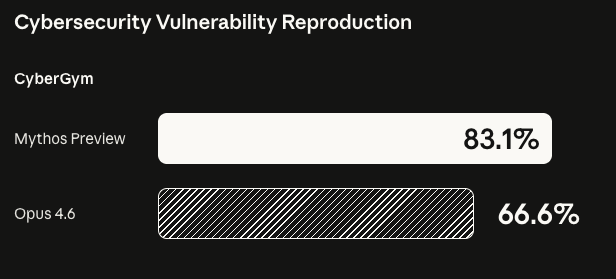
- Scores 83.1% on CyberGym vulnerability reproduction benchmark
- Achieves 93.9% on SWE-bench Verified for software engineering tasks
- Reaches 82.0% on Terminal-Bench 2.0 for agentic command-line workflows
- Records 79.6% on OSWorld-Verified for real-world computer use scenarios
Controlled deployment
Access is limited due to the model’s dual-use cybersecurity capabilities.
- Restricted to approved partners for defensive security use cases
- Deployment includes safeguards to block high-risk outputs
- Future rollout depends on additional safety systems under development
|
|
|
|
Presented by Lambda
|
|
How to push Model FLOPS Utilization past 60%
|
|
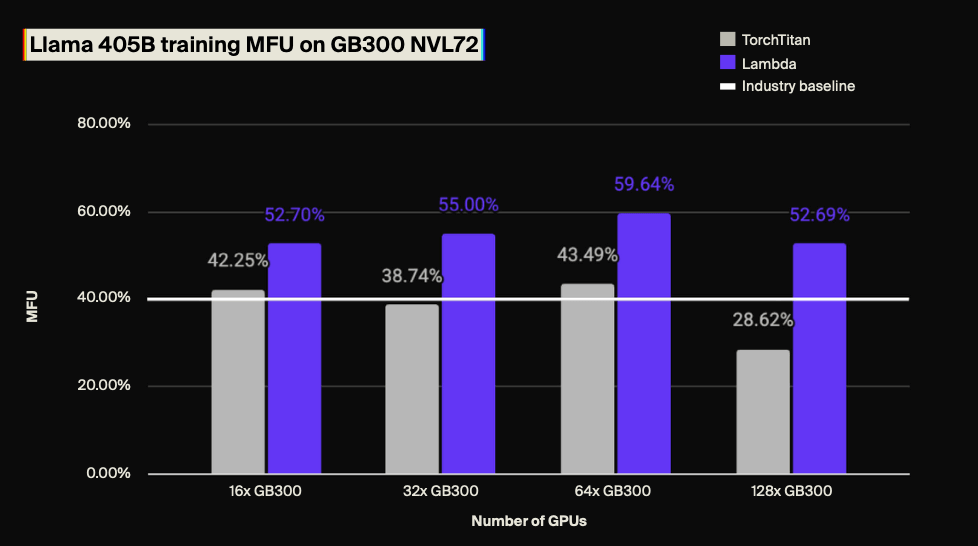
Most large-scale training runs operate at 35–45% Model FLOPS Utilization (MFU). You're paying for twice the compute you're using.
Lambda's engineers benchmarked Llama 3.1 models from 8B to 405B on NVIDIA Blackwell GPUs and traced efficiency loss to its root causes:
-
Memory overhead
-
Parallelism strategy
-
Serialized communication
The result: a reproducible framework that pushed MFU past 60% (25%+ improvement vs. industry benchmark) with no changes to model architecture.
|
|
|
|
partner with us
|
|
Top News
|
|
|
|
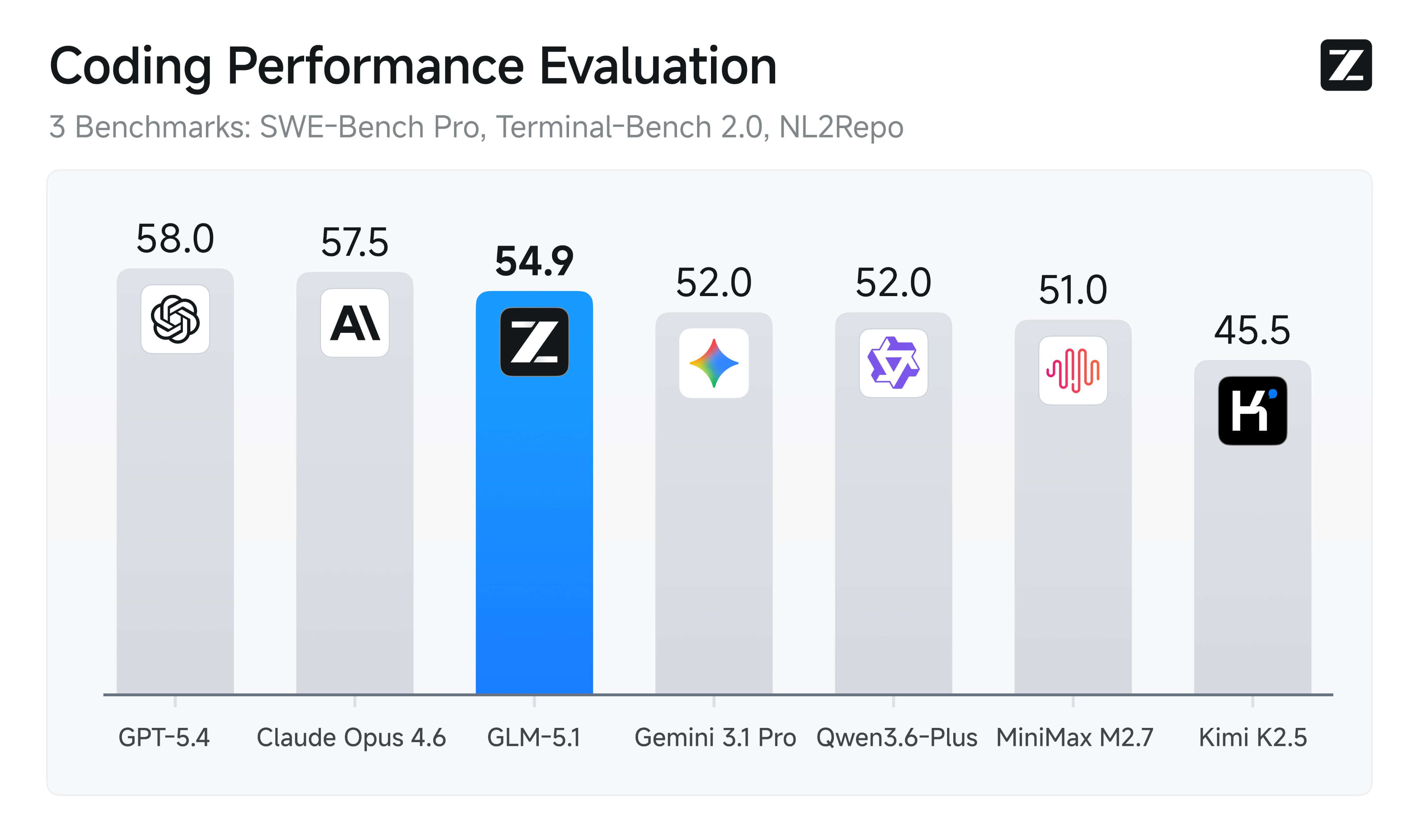
Z.ai announces open-source GLM-5.1 coding model topping SWE-Bench Pro and beating GPT-5.4 and Opus 4.6
|
|
12,536 Stars
|
|
Z.ai releases GLM-5.1, an open-source model for agent-based software tasks. It focuses on long-horizon work, which means it keeps improving results across many steps instead of finishing after one response.
The most notable result: it continues optimization over hundreds of iterations and thousands of tool calls.
What it does
It runs coding agents that execute, test, and refine code over time.
- Breaks tasks into steps, runs code, checks outputs, and revises strategy
- Handles complex workflows like debugging, repo generation, and system builds
- Uses tools such as file editing, compilers, and test runners in loops
Key results
It reports strong performance across benchmarks and long tasks.
- Scores 58.4 on SWE-Bench Pro, ranking first among open models
- Reaches 21.5k QPS after 600+ iterations in database optimization
- Achieves 3.6× GPU speedup on KernelBench Level 3 workloads
How to use it
You run it inside an agent framework with tool access.
- Set model name to GLM-5.1 in agents like Claude Code or OpenClaw
- Use a loop: run code, evaluate results, update, and repeat
- Deploy locally with vLLM or SGLang, or use via API
|
|
|
|
Presented by BenchBot
|
|
Your Chatbot Is Live. But Is It Actually Working?
|
|
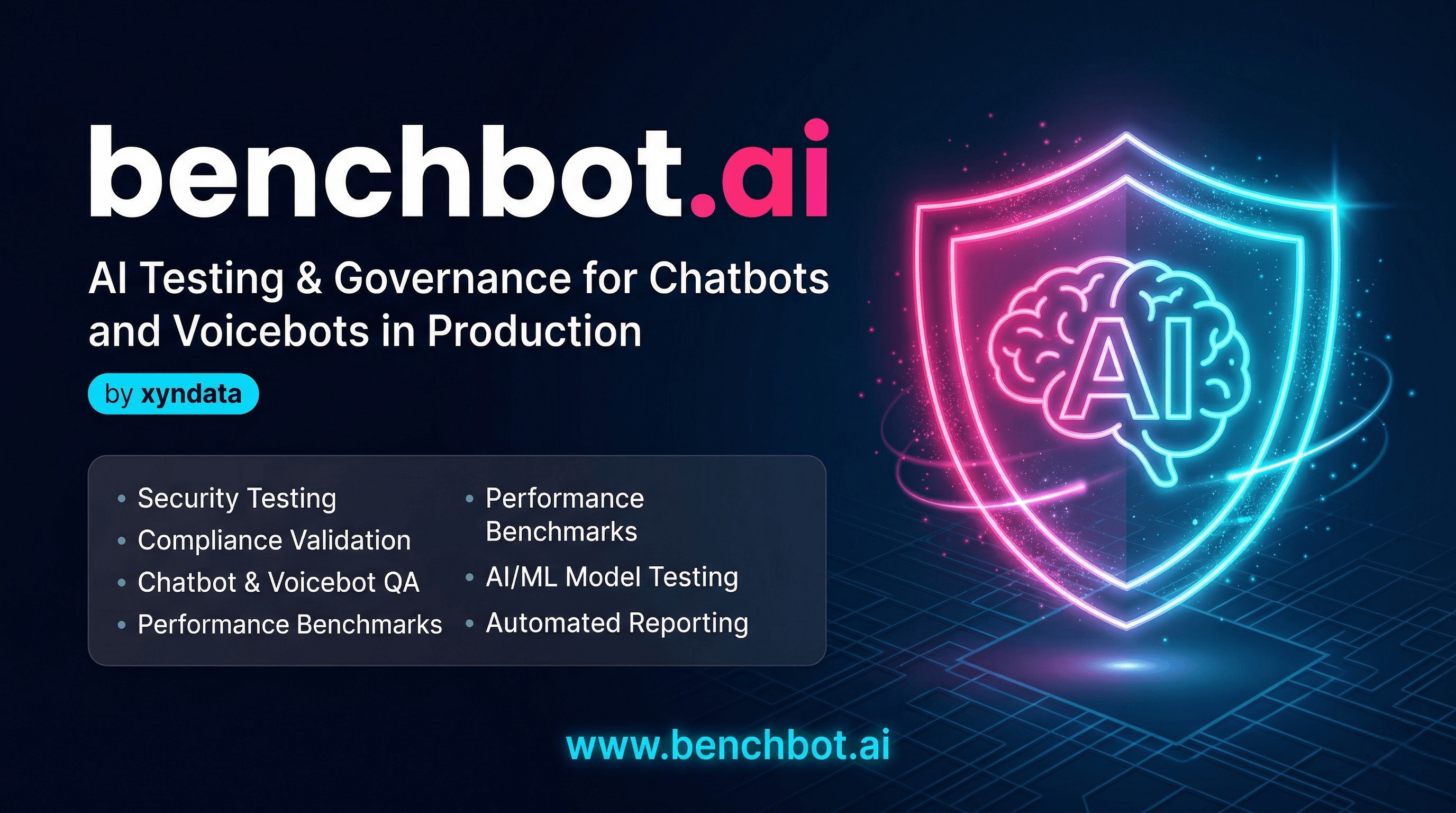
benchbot.ai helps companies test, benchmark, and monitor their chatbots before and after deployment.
Catch broken flows, regressions, and bad responses automatically - across any platform or model.
Confidence for every release.
|
|
|
|
partner with us
|
|
Top News
|
|
|
|
Amazon introduces S3 Files, enabling file system access directly on S3 without duplicating or moving data
|
|
3,528 Stars
|
|
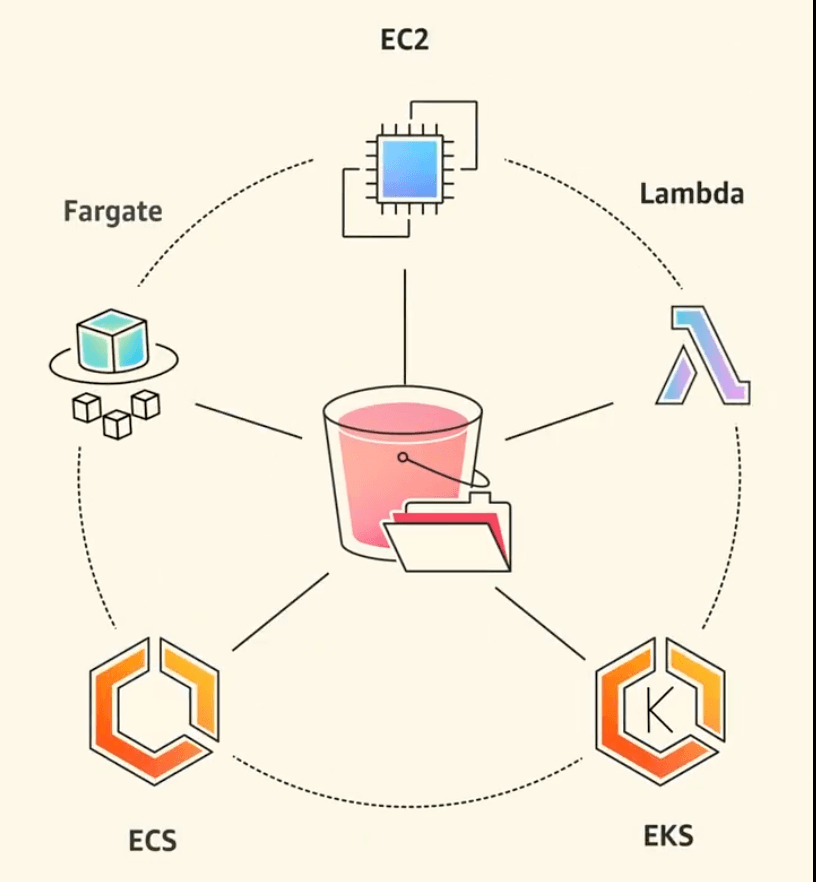
Amazon Web Services introduces S3 Files to close a long-standing gap between object storage and file systems. S3 stores data as objects, while many tools expect files with folders and paths, forcing teams to duplicate or sync data across systems.
S3 Files removes that step by letting you access S3 like a regular file system, so existing applications run directly on stored data.
What problem it solves
Teams store data lakes in S3 but tools require file-based access.
- Removes need to copy data between object storage and file systems
- Eliminates pipelines that keep two storage systems in sync
- Allows file-based tools to operate directly on S3 data
How it works
S3 Files creates a file system view over objects.
- Uses Amazon Elastic File System to map file operations to S3 requests
- Keeps data in S3 while presenting folders, files, and paths
- Caches frequently accessed data to reduce access latency
How to use it
You mount and access it like a file system.
- Connect from EC2, containers, or serverless environments
- Use standard file operations instead of S3 APIs when needed
- Access the same data through both file system and S3 APIs
|
|
|
At Alpha Signal, our mission is to build a sharp, engaged community focused on AI, machine learning, and cutting-edge language models, helping over 200,000 developers stay informed and ahead. We’re passionate about curating the best in AI, from top research and trending technical blogs to expert insights and tailored job opportunities. We keep you connected to the breakthroughs and discussions that matter, so you can stay in the loop without endless searching. We also work closely with partners who value the future of AI, including employers and advertisers who want to reach an audience as passionate about AI as we are.
Our partnerships are based on shared values of ethics, responsibility, and a commitment to building a better world through technology.Privacy is a priority at Alpha Signal. Our Privacy Policy clearly explains how we collect, store, and use your personal and non-personal information. By using our website, you accept these terms, which you can review on our website. This policy applies across all Alpha Signal pages, outlining your rights and how to contact us if you want to adjust the use of your information. We’re based in the United States. By using our site, you agree to be governed by U.S. laws.
|
|
|
Looking to promote your company, product, service, or event to 250,000+ AI developers?
|
|
|
|
|
