| Hey, | Welcome to AlphaSignal – the most read newsletter by AI developers.
We bring you the top 1% of news, papers, models, and repos, all summarized to keep you updated on the latest in AI. |
|
|
|
IN TODAY'S SIGNAL
| Read time: 5 min 45 sec | 🎖️ Top News
📌 CoreWeave
⚡️ Trending Signals
💻 Top Tutorials
🧠 Deep Dive |
|
|
|
If you're enjoying AlphaSignal please forward this email to a colleague.
It helps us keep this content free. |
|
|
|
TOP NEWS
| Agents | Google releases open-source Agent Development Kit to to build and deploy Gemini agents with tool use
| ⇧ 6,028 Likes |
| What's New |
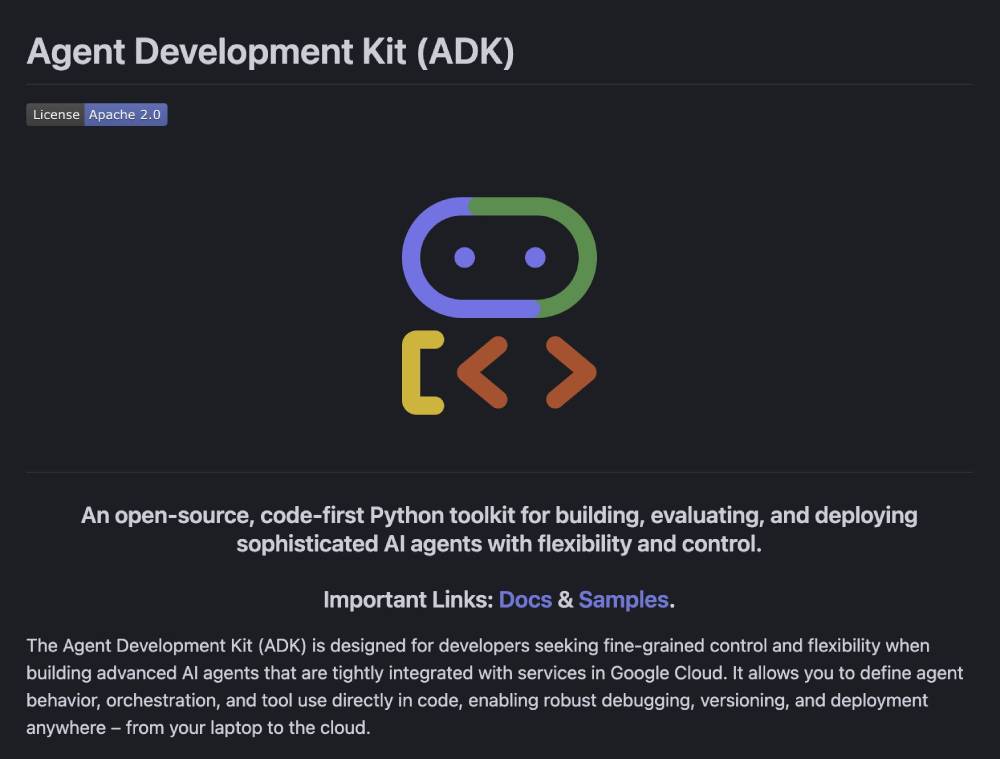
Google has released ADK, a production-grade Python framework for building agentic systems with full support for Gemini and third-party models. You can now build, test, and deploy tool-using agents that run on Google infrastructure. The framework supports recursive tool use, workflows, and containerized deployment out of the box.
Multi-Model Compatibility
ADK works with Gemini and external models through LiteLLM. Supports Gemini 1.5 and third-party models like Claude, LLaMA, Mistral, and Jurassic-2
Lets you bring your own model via a custom connector
Uses Vertex AI Agent Builder for integration with Google’s model serving stack
Offers fallback and routing across models using prompt-based logic
Tooling and Extensibility
You can define and manage tools with Python. Built-in tools include google_search and code_exec
Supports OpenAPI specs, Python functions, or custom wrappers
Agents can call tools and also invoke other agents as tools
Tool behavior is introspectable and testable with structured input/output
Workflow Orchestration ADK includes a workflow engine that structures agent behavior.
Supports sequential, parallel, and conditional execution
Built with native support for loops and retries
Orchestration uses JSON/YAML and can invoke agents recursively
Offers detailed step-level logs for observability and debugging
Deployment and Runtime ADK runs anywhere, with support for container runtimes and Vertex AI Agent Engine.
Deploy as containerized HTTP APIs with minimal setup
Deploy agents with Vertex AI for enterprise runtime integration
Supports web-based interaction with optional UI and CLI
Access APIs managed via Apigee for tool integration
Connect to over 100 enterprise systems like BigQuery, AlloyDB, NetApp
Includes memory management for long-running agents
Use Gemini 2.5 Pro Experimental models directly via native model support
Availability
The public repo us available under Apache 2.0.
Community Feedback
Natalie VRBeliever "Workflow orchestration AND built-in evaluation? ADK checks all the boxes for slick AI agent development. Love the multi-agent focus!"
Shawn Chauhan
"This is a game changer for anyone looking to work with multi-agent systems—love the low-code approach!"
Verysell AI
"Google’s Agent Development Kit (ADK) is setting the stage for powerful, flexible, and scalable AI agents! The ability to integrate multiple agents in modular architectures, combined with a rich tool ecosystem and robust developer experience, opens up a lot of possibilities for creating dynamic, production-ready AI systems." | |
| Try now
|
|
|
|
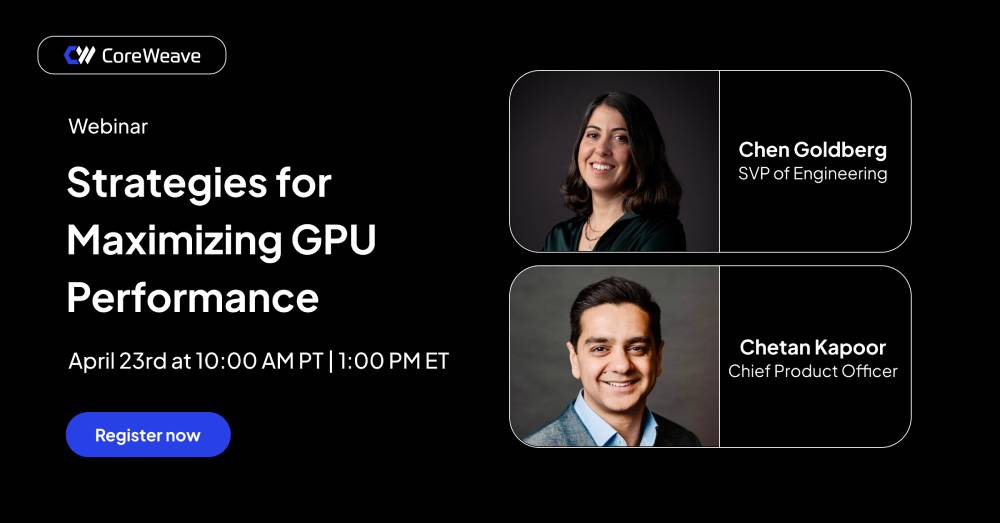
| Unlock Faster Training with Smarter GPU Optimization |
AI labs and enterprises need to optimize GPU clusters for faster time to market. CoreWeave, the AI Hyperscaler, is hosting a webinar to share how they achieve superior speed, efficiency, and reliability in their GPU infrastructure.
Learn advanced optimization techniques for: - Faster model loading
- Efficient checkpointing
- Scalable fleet management
See how CoreWeave quickly identifies and remediates job failures, driving industry-leading effective training times for large-scale GPU clusters.
Reduce downtime and improve training efficiency.
|
| Register now
| partner with us → |
|
|
|
TRENDING SIGNALS
| Coding Assistance |
|
⇧ 795 Likes | |
Reasoning Model |
|
⇧ 846 Likes | |
Generative AI |
|
⇧ 1,348 Likes | |
AI Trends |
|
⇧ 1,578 Likes | |
AI Funding |
|
⇧ 1,485 Like | | |
|
|
|
|
TOP TUTORIALS
| RAG |
| ⇧ 1,238 Likes |
Learn how to build efficient RAG systems using indexing, vector search, hybrid methods, and multimodal retrieval. This 6-part course includes hands-on demos, GitHub samples, and optimization strategies for real-world performance. Understand tradeoffs, tune retrieval for accuracy, and apply techniques that cut latency and improve relevance in generative applications.
|
| MCP |
| ⇧ 581 Likes |
Define a custom MCP server using Claude Code by combining tools, memory, context rules, and prompts. This tutorial shows how to configure behavior using tool_choice, input_schema, and step logic. Build agentic workflows that maintain state, call external APIs, and follow strict control flows in a YAML file.
|
| LLMs |
| ⇧ 1,193 Stars |
Learn how to fine-tune a decoder-only LLM to follow free-form instructions like answering questions or rewriting text. Reuse the pretraining loss and loop only the data format changes. The tutorial shows prompt/response formatting, dynamic padding, loss masking, and clean end-of-text handling using a lightweight dataset for fast, practical experimentation.
|
| |
| |
|
|
DEEP DIVE
| LLM |
Pre-Training GPT-4.5
|
⇧ 6,538 Likes |

| This podcast dives into the challenges faced during the development of OpenAI's GPT-4.5 model. Sam Altman, Amin Tootoonchian, Alex Paino, and Daniel Selsam explores the technical aspects of scaling models, handling compute bottlenecks, and managing large-scale distributed systems.
You'll gain insights into how scaling from 10,000 to 100,000 GPUs impacted error rates and performance. You'll also learn about the novel Torch sum bug, data efficiency strategies, and the importance of ML-systems co-design.
Key topics covered:
Challenges in scaling GPT-4.5 training
Strategies for large GPU cluster management
Handling early run failures and bug fixes
Pre-training as data compression
Key metrics tracking and performance monitoring
Future directions in model scaling and hardware advancements |
| Watch now
|
|
|
|
At Alpha Signal, our mission is to build a sharp, engaged community focused on AI, machine learning, and cutting-edge language models, helping over 200,000 developers stay informed and ahead. We’re passionate about curating the best in AI, from top research and trending technical blogs to expert insights and tailored job opportunities. We keep you connected to the breakthroughs and discussions that matter, so you can stay in the loop without endless searching. We also work closely with partners who value the future of AI, including employers and advertisers who want to reach an audience as passionate about AI as we are.
Our partnerships are based on shared values of ethics, responsibility, and a commitment to building a better world through technology.Privacy is a priority at Alpha Signal. Our Privacy Policy clearly explains how we collect, store, and use your personal and non-personal information. By using our website, you accept these terms, which you can review on our website. This policy applies across all Alpha Signal pages, outlining your rights and how to contact us if you want to adjust the use of your information. We’re based in the United States. By using our site, you agree to be governed by U.S. laws. |
|
|
|
Looking to promote your company, product, service, or event to 200,000+ AI developers? Let's work together.
|
| Work with us
|
|
|
|
|
