| Hey | Welcome to AlphaSignal, the most read source of news by AI engineers and researchers.
Every day, we identify and summarize the top 1% of news, papers, models, and repos, so you’re always up to date.
Here’s today’s roundup: |
|
|
|
Top News
| | Google releases VaultGemma, an open-weight model designed to protect sensitive training data securely
| 2,638 Likes |
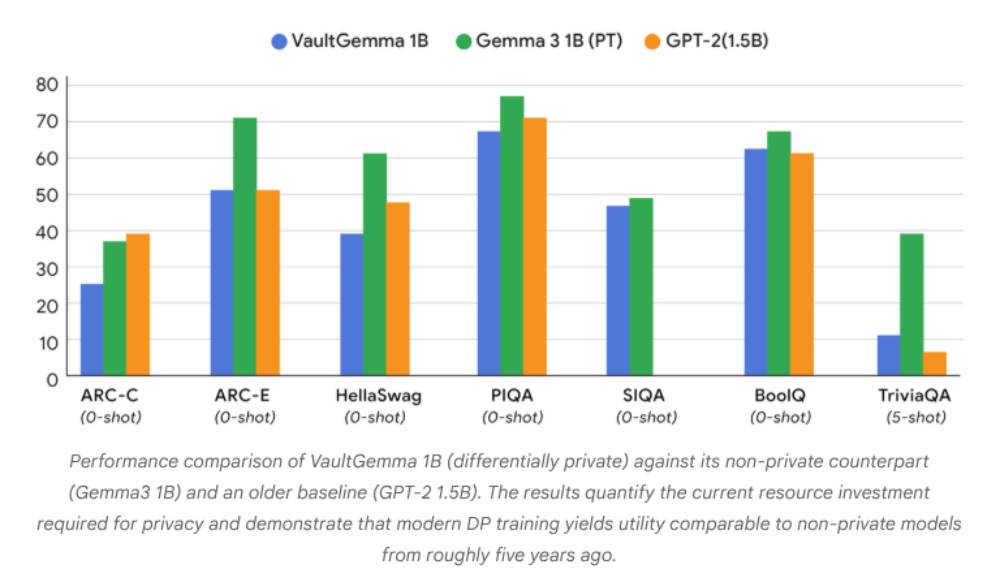
| Google Research, in collaboration with DeepMind, introduced VaultGemma, the largest and most capable language model trained from scratch with differential privacy (DP). It is based on the Gemma family architecture.
What Differential Privacy Means Differential privacy is a mathematical framework that adds noise during training so that individual training examples cannot be extracted from the model. It ensures that model outputs reveal patterns about the dataset as a whole, while protecting sensitive details about any single data point.
Key Features
Differential privacy built-in: Protects individual training data while still learning useful patterns. Formal guarantees: Provides mathematically defined privacy limits that prevent data leakage. New scaling laws: Defines how to balance model size, data, compute, and privacy noise. This model shows how to make LLMs both capable and privacy-preserving, proving that strong privacy does not have to come at the cost of performance. Trained on the same 13 trillion-token dataset as Gemma 2.
How It Works
Adds carefully calibrated noise to training data so no single record can be traced. Uses differential privacy during training to guarantee that outputs do not reveal sensitive data. Trains at scale with new methods that balance accuracy and privacy noise. Evaluates models with formal privacy metrics instead of just accuracy benchmarks. Performance
Achieves similar downstream task performance to GPT-2–era models (e.g., HellaSwag, BoolQ, PIQA). Exhibits no detectable memorization in tests that try to recover training data via long-prefix prompts. Demonstrates that differential privacy is now practical for training usable LLMs at scale even if there is still a gap with modern non-private models.
Access and Availability VaultGemma models are released as open-weight checkpoints. Available on Hugging Face and Kaggle for research and experimentation. Includes tools and documentation to help reproduce training and evaluation. Note
Alongside the model, the team released a new research study titled “Scaling Laws for Differentially Private Language Models,” offering a roadmap to balance compute, privacy, and utility. | |
| Try now
|
|
|
|
| Take Control of User Access with WorkOS | As your app grows, managing “who can do what” becomes complex. Hard-coded roles and scattered permissions slow you down and fail to meet enterprise demands for fine-grained access.
WorkOS RBAC is the fastest way to implement structured, scalable permissions. Define roles, group permissions, and update access for entire user groups in a single step.
With developer-friendly APIs, a powerful dashboard, and native integrations for SSO and Directory Sync, WorkOS gives you enterprise-grade access control out of the box. |
| INTEGRATE RBAC WITH WorkOS
| partner with us |
|
|
|
Signals
| |
|
2,154 Likes | |
|
2,648 Likes | |
|
837 Likes | |
|
1,148 Likes | |
|
| 803 Likes |
| |
| |
|
|
Fuel AI Hiring With micro1: $35M Raised, 500k Interviews
| micro1 closed a $35M Series A at a $500M valuation. Zara, the recruiter agent, has powered 500,000 interviews.
Microsoft and Fortune 10 companies use the platform. |
See how Micro1 powers AI labs ↗️ |
|
|
|
Tutorials
| |
|
2,593 Likes |
This video shows how MCP lets LLM agents call external tools. It covers writing a simple MCP server, authenticating with Linear via OAuth, and using Gemini CLI to retrieve issues, assign tasks, mark progress, and even create generative video with Veo 3. |
|
|
2,047 Likes | This guide explains how Claude Code hooks let you register shell commands at lifecycle events. You can automate formatting, logging, permission blocking, and notifications for deterministic control over Claude Code behavior. |
|
|
| 3,957 Likes |
This video explains fine-tuning LLMs for domain-specific tasks. It covers when to fine-tune, preparing clean data, running training with LoRA on Colab GPUs, testing inference, and loading the fine-tuned model into Ollama for local applications. |
| |
| |
|
|
AI Coding Tip
| |
Edit GitHub Repos in Your Browser with github.dev |
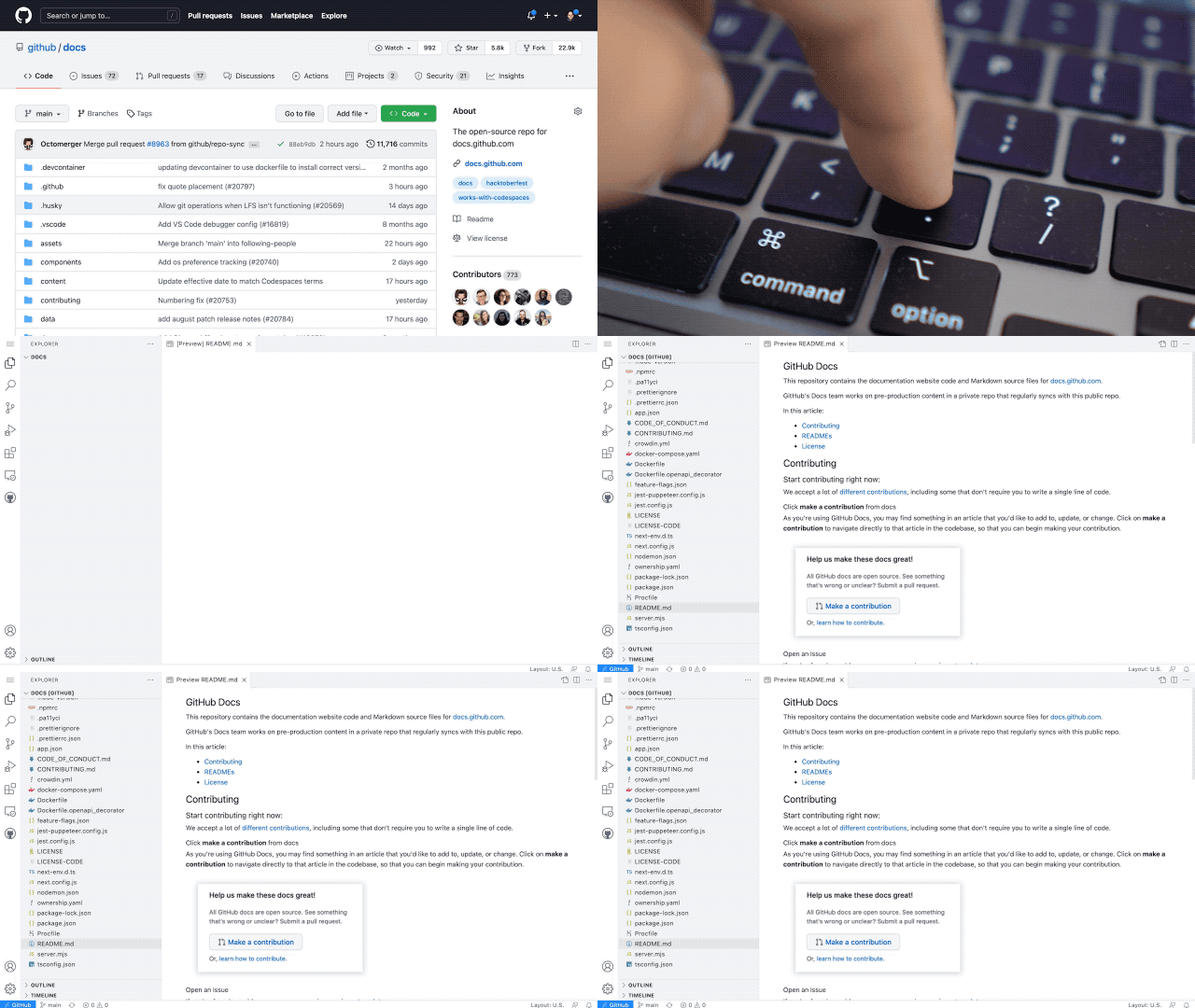
| The github.dev web-based editor runs entirely in your browser. It gives you a lightweight VS Code experience for navigating files, browsing source code, and making commits without local setup.
How to use it: Why use it?
It’s a fast way to edit multiple files, explore repos, or make quick changes with full VS Code features. |
| Know more
|
|
|
|
At Alpha Signal, our mission is to build a sharp, engaged community focused on AI, machine learning, and cutting-edge language models, helping over 200,000 developers stay informed and ahead. We’re passionate about curating the best in AI, from top research and trending technical blogs to expert insights and tailored job opportunities. We keep you connected to the breakthroughs and discussions that matter, so you can stay in the loop without endless searching. We also work closely with partners who value the future of AI, including employers and advertisers who want to reach an audience as passionate about AI as we are.
Our partnerships are based on shared values of ethics, responsibility, and a commitment to building a better world through technology.Privacy is a priority at Alpha Signal. Our Privacy Policy clearly explains how we collect, store, and use your personal and non-personal information. By using our website, you accept these terms, which you can review on our website. This policy applies across all Alpha Signal pages, outlining your rights and how to contact us if you want to adjust the use of your information. We’re based in the United States. By using our site, you agree to be governed by U.S. laws. |
|
|
|
Looking to promote your company, product, service, or event to 250,000+ AI developers?
|
| Work with us
|
|
|
|
|
