| Hey | Welcome to AlphaSignal, the most read source of news by AI engineers and researchers.
Every day, we identify and summarize the top 1% of news, papers, models, and repos, so you’re always up to date.
Here’s today’s roundup: |
|
|
|
Top News
| | OpenAI launches GPT-5.1, a reasoning upgrade that adjusts thought depth per task complexity
| 22,954 Likes |
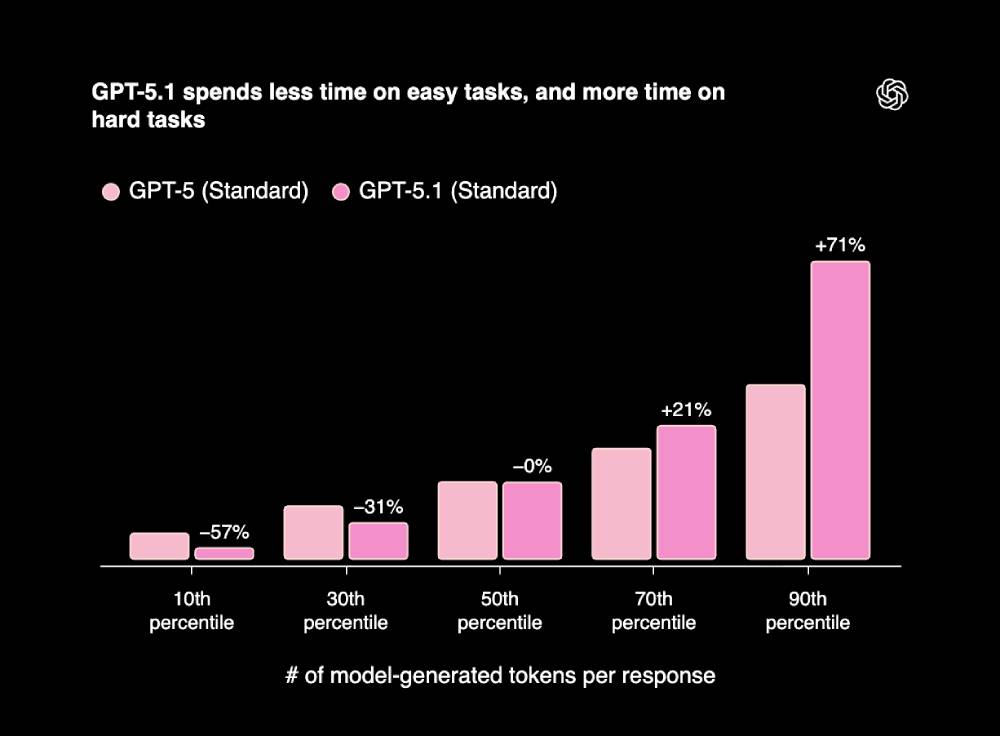
| OpenAI just released GPT-5.1, an upgrade to the GPT-5 series that quietly redefines how its models think and talk. Instead of one-size-fits-all responses, GPT-5.1 adapts, spending less time on easy tasks and more time on hard ones.
The most exciting change is adaptive reasoning, a system that lets the model decide how much to think before it answers.
The problem: static reasoning
Earlier models treated every question the same. A basic “write a haiku” request consumed as much compute as solving a physics problem.
GPT-5.1 fixes that imbalance by dynamically adjusting its reasoning depth. In short, it saves tokens when it can and thinks longer when it must.
The insight: one model, two brains
GPT-5.1 comes in two variants tuned for different work:
GPT-5.1 Instant: faster, friendlier, and optimized for everyday conversation. GPT-5.1 Thinking: slower on purpose when facing complex reasoning or coding tasks.
That split lets you pick between speed and depth or let the system decide automatically through GPT-5.1 Auto, which routes tasks to the right model behind the scenes.
The breakthrough: adaptive performance
OpenAI measured reasoning time in tokens per response: Up to 57% fewer tokens for simple prompts. Up to 71% more tokens for complex reasoning tasks. Roughly 2× faster on lightweight questions. Scored higher on AIME 2025 and Codeforces coding tests than GPT-5. How to use it
You can access both variants directly in ChatGPT or via the API this week: The impact: control and clarity
GPT-5.1 also introduces tone presets, Professional, Candid, Quirky, and Efficient, so responses match your style. Adjustments apply instantly across active chats, giving you a consistent interaction tone without changing the model itself.
GPT-5.1 isn’t a bigger model, it’s a smarter, more adaptive one. It knows when to think deeply and when to keep it brief, giving developers a faster, more predictable tool for coding, research, and everyday reasoning. | |
| Try now
|
|
|
|
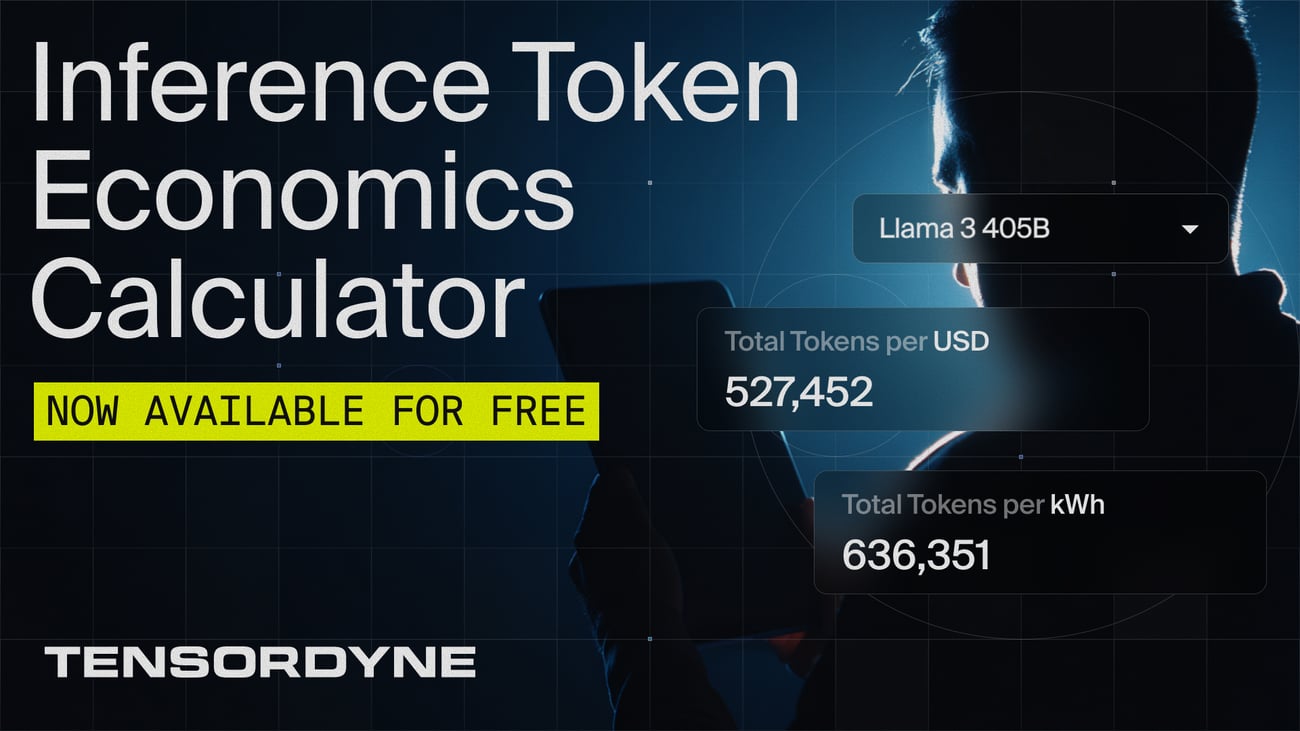
| Compare AI Inference Systems Performance With the Token Economics Calculator | Tensordyne develops AI inference chips and systems powered by logarithmic math.
The company developed the Token Economics Calculator, a tool that compares AI inference system performance across key metrics with consistent and normalized scenarios.
What you’ll get: Scenario-normalized benchmarks for consistent evaluation Capacity modeling for target users and KV-cache Cost and power metrics: tokens per dollar and tokens per kWh Architecture trade-offs across SRAM-only and HBM systems Data comes from publicly available sources and is user modifiable. |
| Open calculator
| partner with us |
|
|
|
Signals
| |
|
1,937 Likes | |
|
1,783 Likes | |
|
1,384 Likes | |
|
717 Likes | |
|
|
3,582 Likes | | |
|
|
|
|
Trending Reads
| |
|
1,721 Likes | The post shows how Skills turn generic AI designs into consistent, on-brand layouts. You can can store reusable visual guidelines and let Claude reference them without repeating long instructions in every prompt. |
|
|
1,203 Likes | The article explains each step: tool list exposure, model decision simulation, tool invocation prediction, result checking. You understand how GitHub measures correctness of tool calls, parameter use, and overall agent-workflow quality.
| |
|
|
1,328 Likes | Wikipedia argues that in the AI era, human-curated knowledge remains essential. It fuels reliable AI systems, ensures transparency, and preserves debate-driven accuracy that machines alone cannot replicate.
| | |
|
|
|
|
Top Lecture
| |
Andrew Ng and the Jupyter co-founder show how to code with Jupyter Notebook |
1,629 Likes |
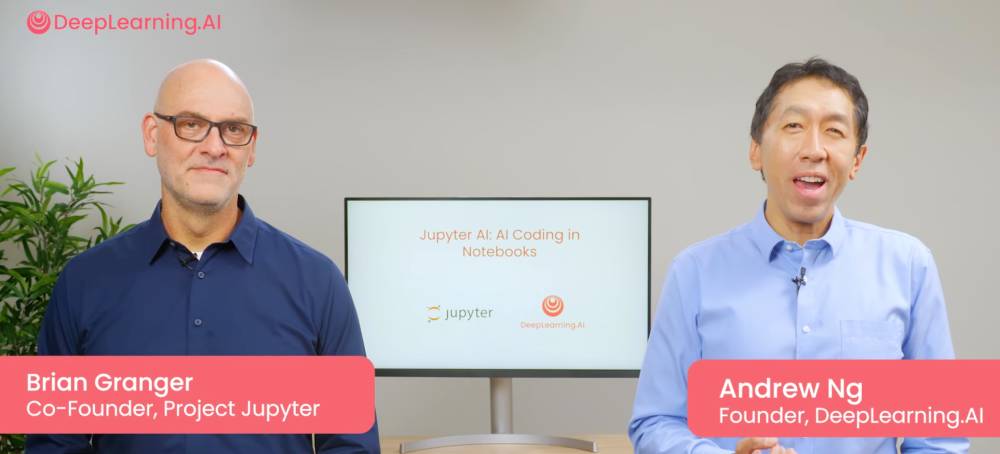
| The Jupyter AI: AI Coding in Notebooks lecture shows you how to use Jupyter AI as a coding partner inside your notebook.
It explains the shift from manual coding to AI-assisted workflows and shows how Jupyter AI solves common notebook issues like context loss, debugging friction, and multi-step analysis.
You see how to guide the model with precise inputs, supply external documentation, and build full workflows without leaving the notebook environment.
You will learn how to:
Generate, refactor, and explain code in Jupyter. Debug by dragging cells into the chat. Build a book research assistant with the Open Library API. Create a stock-analysis workflow with API calls and charts. Use API docs as context for accurate code. Set up and reuse Jupyter AI context locally. |
| Watch now
|
|
|
|
At Alpha Signal, our mission is to build a sharp, engaged community focused on AI, machine learning, and cutting-edge language models, helping over 200,000 developers stay informed and ahead. We’re passionate about curating the best in AI, from top research and trending technical blogs to expert insights and tailored job opportunities. We keep you connected to the breakthroughs and discussions that matter, so you can stay in the loop without endless searching. We also work closely with partners who value the future of AI, including employers and advertisers who want to reach an audience as passionate about AI as we are.
Our partnerships are based on shared values of ethics, responsibility, and a commitment to building a better world through technology.Privacy is a priority at Alpha Signal. Our Privacy Policy clearly explains how we collect, store, and use your personal and non-personal information. By using our website, you accept these terms, which you can review on our website. This policy applies across all Alpha Signal pages, outlining your rights and how to contact us if you want to adjust the use of your information. We’re based in the United States. By using our site, you agree to be governed by U.S. laws. |
|
|
|
Looking to promote your company, product, service, or event to 250,000+ AI developers?
|
| Work with us
|
|
|
|
|
