|
Hey,
Your daily briefing is ready. You can finally take a break from the AI firehose.
Our algos spent the night splitting signal from noise and pulled the top news, models, papers, and repos.
Here’s the must-read:
|
|
Together with TinyFish
|

|
|

|
Today's Author
Lior Alexander. Founder of AlphaSignal and former ML Engineer.
Previously built ML systems at Iguazio, Guesty, Enphase, Mila.
|
|
Top News
|
|
|
|
Alibaba releases Qwen3.5 open weights, 397B parameters with up to 19× faster decoding than Qwen3-Max
|
|
2,247 Likes
|

|
Alibaba releases Qwen3.5-397B-A17B as the first open-weight model in the Qwen3.5 series. It supports text, image, and video inputs in a single native multimodal system.
The standout detail: a 397B-parameter sparse MoE model with 17B active parameters per token and up to 19× higher decoding throughput at 256k context than Qwen3-Max.
The model combines linear attention (Gated DeltaNet) with standard attention layers to control memory growth at long context lengths. It scales reinforcement learning across diverse agent-style environments, including multi-turn and tool-based tasks.
Key features and results:
-
Apache 2.0 open-weight release.
-
8.6× throughput at 32k; 19.0× at 256k context.
-
IFBench 76.5; AIME26 91.3; SWE-bench Verified 76.4.
-
201 languages and dialects; 250k-token vocabulary.
-
Native early fusion for joint text–vision processing.
You can deploy the weights with distributed multi-GPU inference. You can access Qwen3.5-Plus via Alibaba Cloud Model Studio with a 1M context window and enable tool use through API flags.
|
|
|
|
Presented by TinyFish
|
|
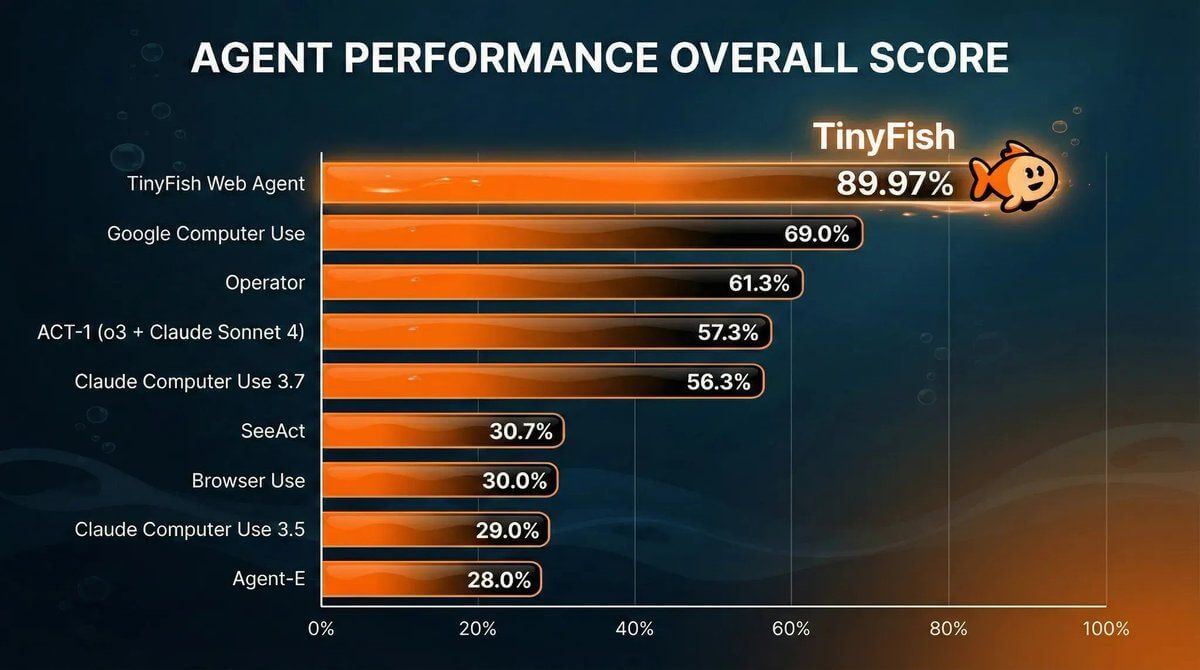
90% on the Hardest Benchmark. Every Step is Public.
|
|
TinyFish Web Agent scored 90% on Online-Mind2Web, the most rigorous benchmark for evaluating web agents.
And this is the highest level of transparency. Every single run, all 300 tasks of the benchmark, is published in this public spreadsheet that you can run and check yourself.
But the score is just the beginning.
Developers are already building with the API: no-code QA testing, multi-source research agents, and code reference finders that visit multiple websites in parallel and get your work done.
One endpoint. Send a URL and a goal, get structured JSON back.
Check-out and star the open-source cookbook for ready-to-fork examples.
First 1,000 steps free.
|
|
|
|
partner with us
|
|
Top News
|
|
|
|
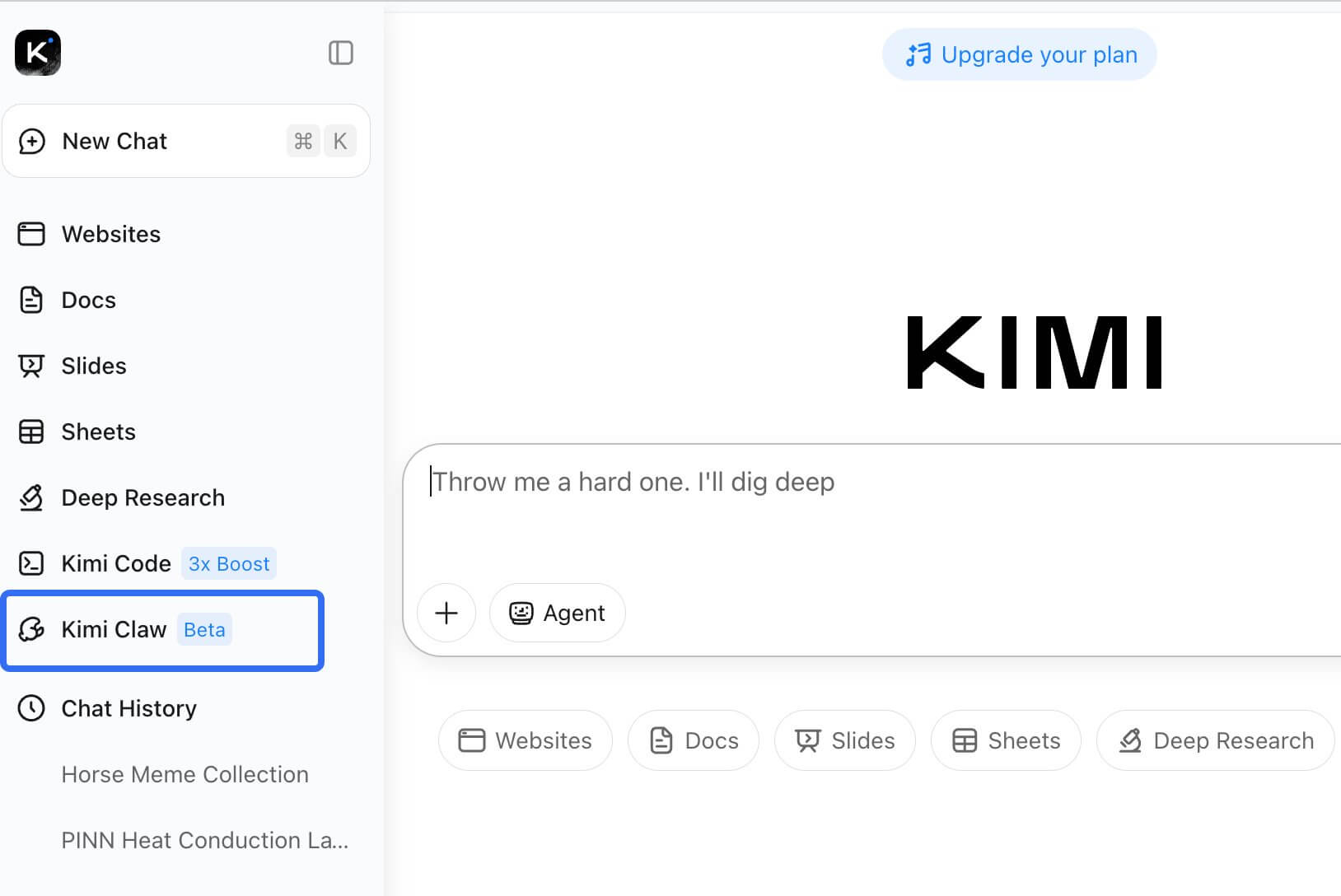
Moonshot AI launches Kimi Claw, a persistent OpenClaw assistant running natively inside your browser
|
|
9,582 Likes
|
|
Most AI assistants answer a question and disappear. Kimi Claw stays.
It runs OpenClaw directly inside your browser at kimi.com, online 24/7, with long-term memory and cloud storage. Instead of acting like a chatbot, it acts like a configurable assistant you control.
OpenClaw is an AI system with persistent memory and personality. Kimi deploys it to the cloud in one click or lets you link your existing instance. No server setup. No manual API wiring.
What you get:
-
5,000+ ClawHub Skills: Install reusable task modules for analysis, research, workflows.
-
40GB Cloud Storage: Store files and working artifacts.
-
Live Web Search: Pull real-time data such as market information.
-
Telegram Integration: Bridge your assistant into chats and groups.
-
Scheduled Tasks: Run recurring jobs with defined format and constraints.
How to use it:
-
Deploy or link OpenClaw.
-
Define persona, output format, and rules.
-
Install Skills for structured tasks.
-
Schedule tasks using: At [time], do [task], output [format], follow [constraints].
|
|
|
|
Top Paper
|
|
|
|
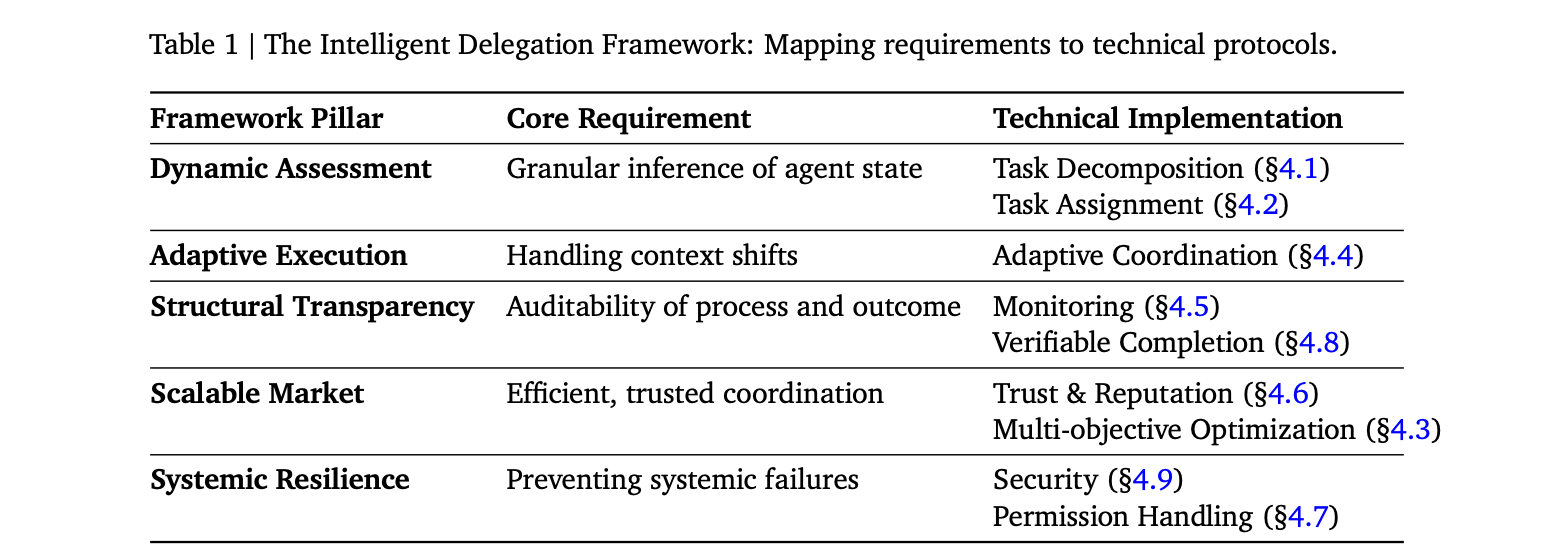
Google DeepMind presents a formal framework for structured AI task delegation across multi-agent networks
|
|
1,283 Likes
|
|
Multi-agent systems now write code, call tools, and coordinate workflows. Most of them split tasks with prompts and heuristics, then hope sub-agents behave as expected.
Google DeepMind introduces Intelligent AI Delegation to formalize how agents assign work, transfer authority, and track responsibility across networks.
The paper treats delegation as a sequence of explicit decisions. Instead of “Agent B, do this,” the framework defines who holds decision power, who owns outcomes, and what boundaries apply.
It also defines trust calibration, which means the delegator updates confidence based on observed performance.
Key elements:
-
Explicit task allocation rules instead of ad-hoc planner prompts
-
Authority scope definitions using constrained permissions
-
Responsibility and accountability attribution per sub-task
-
Revocation and reassignment mechanisms after failures
-
Evaluation metrics beyond raw task completion rates
|
|
|
At Alpha Signal, our mission is to build a sharp, engaged community focused on AI, machine learning, and cutting-edge language models, helping over 200,000 developers stay informed and ahead. We’re passionate about curating the best in AI, from top research and trending technical blogs to expert insights and tailored job opportunities. We keep you connected to the breakthroughs and discussions that matter, so you can stay in the loop without endless searching. We also work closely with partners who value the future of AI, including employers and advertisers who want to reach an audience as passionate about AI as we are.
Our partnerships are based on shared values of ethics, responsibility, and a commitment to building a better world through technology.Privacy is a priority at Alpha Signal. Our Privacy Policy clearly explains how we collect, store, and use your personal and non-personal information. By using our website, you accept these terms, which you can review on our website. This policy applies across all Alpha Signal pages, outlining your rights and how to contact us if you want to adjust the use of your information. We’re based in the United States. By using our site, you agree to be governed by U.S. laws.
|
|
|
Looking to promote your company, product, service, or event to 250,000+ AI developers?
|
|
|
|
|
