| Hey | Welcome to AlphaSignal, the most read source of news by AI engineers and researchers.
Every day, we identify and summarize the top 1% of news, papers, models, and repos, so you’re always up to date.
Here’s today’s roundup: |
|
|
|
Top News
| | Former OpenAI CTO’s lab releases research making LLMs fully repeatable
|
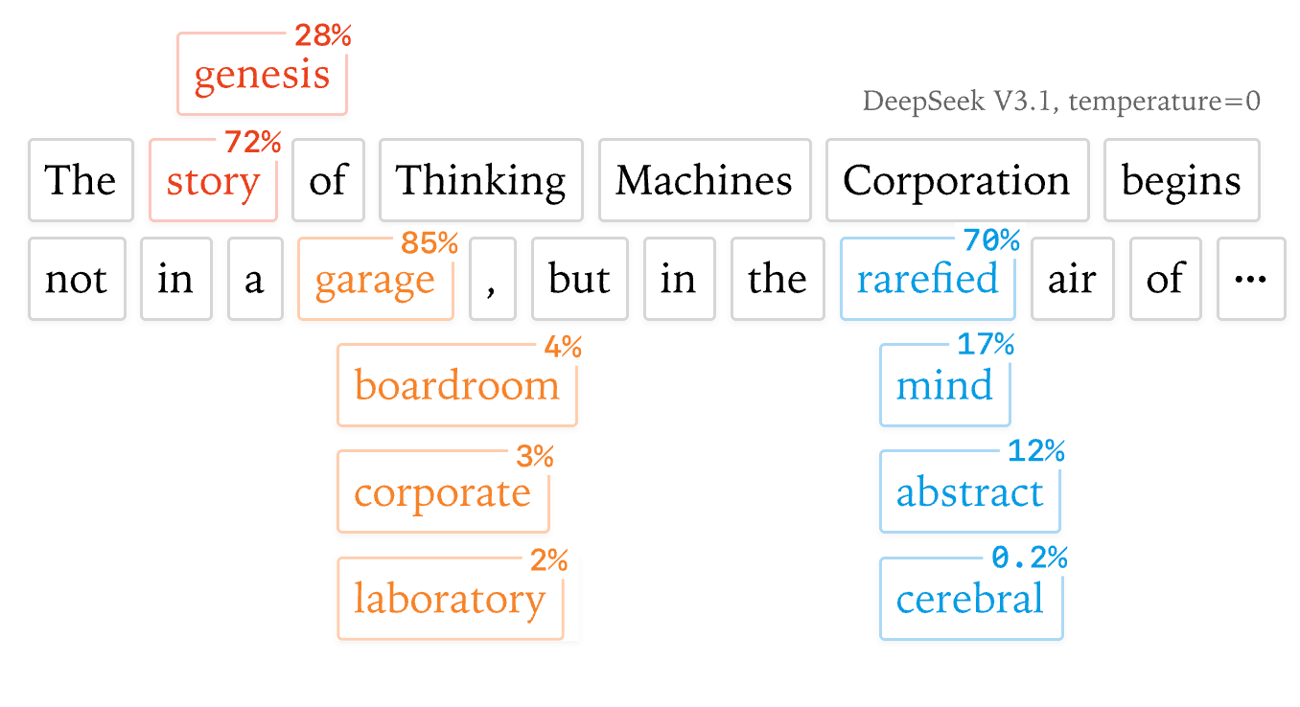 |
Thinking Machines Lab, founded by former OpenAI CTO Mira Murati, released research that solves one of the biggest headaches in AI: models giving different answers even when you set temperature to 0.
Normally, you expect the same answer every time, but that’s not what happens. In one test, 1,000 completions of “Tell me about Richard Feynman” produced 80 different outputs.
With the new method, every one of the 1,000 completions was identical. The research paper is titled “Defeating Nondeterminism in LLM Inference.”
Why outputs change today
LLMs return different answers because of how computations run inside the model. When batch sizes change on a server, the math order also changes. Key steps like normalization, multiplication, and attention behave differently. That’s why results vary even if you ask the same thing. How the fix works
The team rewrote those key steps so the math always runs the same way.
Normalization now always reduces numbers in the same order. Matrix multiplication avoids shortcuts that change results. Attention uses fixed rules so sequences process consistently. Performance trade-off
Making models repeatable slows them down.
Standard inference produced 1,000 sequences in 26 seconds. Deterministic inference needed 42 seconds, about a 62% slowdown. Speed is still good enough for research and controlled testing. How you can try it
The release is open source and ready to use.
Works with PyTorch through simple overrides. Runs inside vLLM without heavy modifications. Repository: thinking-machines-lab/batch-invariant-ops. Why it matters for training
Stable outputs fix a major problem in reinforcement learning.
With nondeterministic models, training drifts and rewards collapse. With deterministic inference, training and sampling stay aligned. RL experiments showed zero divergence between training and inference. | |
| Read the paper
|
|
|
|
| 200+ AI Side Hustles to Start Right Now | From prompt engineering to AI apps, there are countless ways to profit from AI now. Our guide reveals 200+ actionable AI business models, from no-code solutions to advanced applications.
Learn how people are earning $500-$10,000 monthly with tools that didn't exist last year.
Sign up for The Hustle to get the guide and daily insights. |
| Get the guide
| partner with us |
|
|
|
Signals
| |
|
11,485 Likes | |
|
1,592 Likes | |
|
2,617 Likes | |
|
1,461 Likes | |
|
|
7,249 Likes | | |
|
|
|
|
Papers
| |
|
3,515 Likes | The Nature cover article details R1’s $294K training cost and pure RL approach, which replaces human traces. The model invents novel reasoning strategies, scaling beyond human-capped supervised training methods. |
|
|
1,069 Likes | Google introduces SLED, a decoding method that uses logits from all transformer layers. It improves factual accuracy across models without retraining, reducing hallucinations and enhancing reliability in generation tasks. |
|
|
| 538 Likes |
This paper finds in-context learning generalizes poorly across tasks and models. Accuracy varies widely depending on exemplar quality, task type, and robustness to shifts, challenging the “few-shot learning” narrative. |
| |
| |
|
|
Top Read
| |
Why “agents” now mean tools in a loop with a goal |
1,521 Likes |
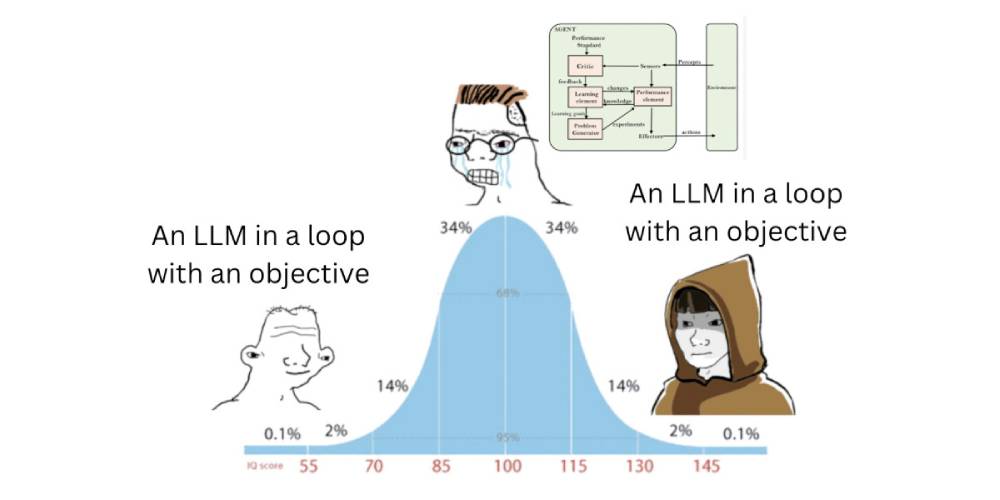
| Simon Willison, after years of skepticism, accepts a simple, widely-shared definition of “agent”: An LLM agent runs tools in a loop to achieve a goal.
Why this matters
If you’re working with agents, you need shared language. For the first time, “agent” has a concrete definition that cuts through the buzzword noise and makes technical discussions more productive.
Highlights
Earlier, “agent” was a buzzword with 200+ conflicting definitions.
The new consensus: tools + loop + goal, with a stop condition.
Memory isn’t required; conversation history provides short-term state.
Business uses of “agents as staff replacements” remain unrealistic. AI lacks accountability.
OpenAI’s mixed definitions still add confusion, but the looped-tools framing is winning out. |
| Read now
|
|
|
|
At Alpha Signal, our mission is to build a sharp, engaged community focused on AI, machine learning, and cutting-edge language models, helping over 200,000 developers stay informed and ahead. We’re passionate about curating the best in AI, from top research and trending technical blogs to expert insights and tailored job opportunities. We keep you connected to the breakthroughs and discussions that matter, so you can stay in the loop without endless searching. We also work closely with partners who value the future of AI, including employers and advertisers who want to reach an audience as passionate about AI as we are.
Our partnerships are based on shared values of ethics, responsibility, and a commitment to building a better world through technology.Privacy is a priority at Alpha Signal. Our Privacy Policy clearly explains how we collect, store, and use your personal and non-personal information. By using our website, you accept these terms, which you can review on our website. This policy applies across all Alpha Signal pages, outlining your rights and how to contact us if you want to adjust the use of your information. We’re based in the United States. By using our site, you agree to be governed by U.S. laws. |
|
|
|
Looking to promote your company, product, service, or event to 250,000+ AI developers?
|
| Work with us
|
|
|
|
|
