| Hey, | Welcome to today's edition of AlphaSignal, a newsletter for developers by developers.
We identify and summarize the top 1% news, papers, models, and repos in the AI industry. |
|
|
|
IN TODAY'S SIGNAL
| Read time: 5 min 42 sec | 🎖️ Top News
📌 Encord
⚡️ Trending Signals
📌 Baseten
⚙️ Top Tutorials
🧠 How-To
|
|
|
|
If you're enjoying AlphaSignal please forward this email to a colleague.
It helps us keep this content free. |
|
|
|
TOP NEWS
| OpenAI | OpenAI Introduces Swarm, a Framework for Building Multi-Agent Systems |
⇧ 7,990 Likes |
 |
What's New | Swarm is an experimental library for building multi-agent systems.
Key highlights
Uses Chat Completions API, not Assistants API Stateless between calls for transparency and control Supports direct Python function calling within agents Enables dynamic agent switching through handoffs Includes streaming support for real-time interaction The library automatically converts Python functions into JSON schemas for the Chat Completions API. Developers can define custom functions for Agents to call, with options to return values, update context, or initiate handoffs to other Agents.
Architecture Swarm introduces two primary abstractions: Agents and handoffs. Each Agent encapsulates specific instructions, available functions (tools), and handoff logic. The framework manages a loop of agent interactions, function calls, and potential handoffs through its core function, client.run().
Swarm's Operational Framework: Agent Definition: Create Agents with specific instructions, roles, and functions. Each function is automatically converted to a JSON structure for API compatibility. Handoff Mechanism: Implement logic for agent transitions. Functions can return a new Agent object to transfer control based on conversation flow or predefined criteria. Context Management: Utilize Context Variables to initialize and update shared information throughout the conversation, maintaining state across agent interactions. Execution Loop: The client.run() function manages the multi-agent conversation. It takes an initial agent, user messages, and context as input, and returns a response with updated messages, context variables, and the last active agent. This structure allows for flexible, dynamic multi-agent interactions while maintaining a stateless architecture between calls.
Its flexible design allows integration with any OpenAI-compatible client, potentially supporting custom language models or alternative hosting solutions. | |
|
Read more
|
|
|
|
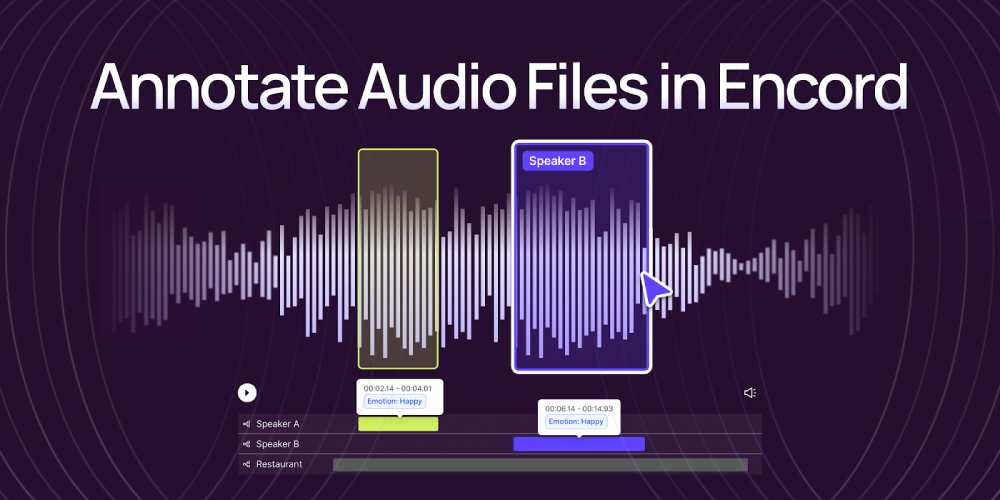
| Encord launches Audio Annotation capabilities | Encord just released Audio Annotation for their AI data management platform.
Developers can now handle audio data alongside other asset types, supporting speaker recognition, sentiment analysis, and sound event detection.
The update enables filtering by audio metrics and integrates state-of-the-art models like OpenAI's Whisper and Google's Gemini Pro 1.5 for automated transcription.
This new capability streamlines audio-related tasks within Encord's workflow builder.
|
|
Get started
| partner with us |
|
|
|
TRENDING SIGNALS
| LLM |
|
⇧ 331 Likes | |
RAG |
|
⇧ 515 Likes | |
LLM |
|
⇧ 2,800 Likes | |
Voice Cloning |
|
⇧ 3,700 Likes | |
Google |
|
⇧ 1,710 Likes | | |
|
|
|
|
| JSON mode doesn’t work. Build with real structured output!
|
Discover efficient structured output implementation using Outlines for schema enforcement at the model server level. Baseten's engineers just released a method to generate structured output from open-source and fine-tuned LLMs. It offers high TPS, zero retries, and perfect schema adherence.
Alpha Signal readers get $100 in credits. | Join the event |
|
|
|
TOP TUTORIALS
| Machine Learning |
| ⇧ 1,100 Likes |
Learn to train and evaluate multiple machine learning models efficiently with Lazy Predict. This Python library streamlines model selection for classification and regression tasks. You'll discover how to fit numerous algorithms simultaneously using minimal code. Lazy Predict generates performance metrics for each model, helping you identify top performers quickly. Save time in your machine learning workflow by automating the initial model comparison process. |
| RAG |
|
⇧ 431 Likes |
This tutorial shows you how to build a multi-document agentic RAG system using LanceDB and LlamaIndex. You'll create specialized vector stores for different automotive data types. You'll implement custom tools for retrieving and processing information. The tutorial covers setting up an agent that can reason across multiple data sources. You'll learn to handle complex queries by breaking them into subtasks. The walkthrough demonstrates how to integrate LLMs, vector databases, and agent-based reasoning for enhanced information retrieval and task completion. |
| LLM |
|
⇧ 812 Likes |
Learn practical techniques to load large models with limited GPU or CPU memory. This tutorial focuses on PyTorch models, especially LLMs. You'll discover methods to efficiently load pretrained or finetuned models saved using torch.save(). The notebook covers memory-tracking utilities and demonstrates various approaches to reduce memory usage. Gain skills to handle bigger models on resource-constrained systems. |
| |
| |
|
|
| HOW TO |
Prompt engineering |
Mastering Anthropic prompt prefilling for enhanced RAG performance |
⇧ 1,100 Likes |
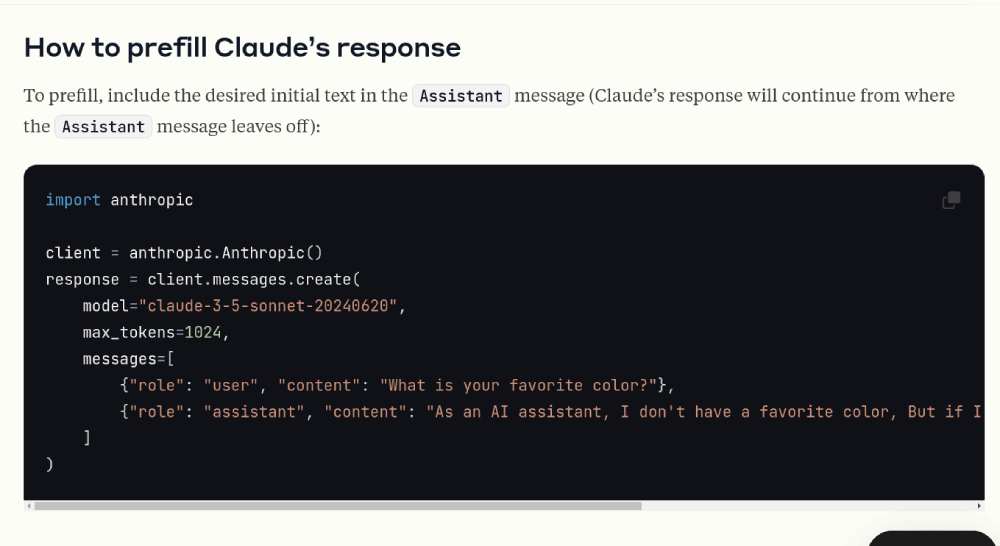 |
Prompt prefilling is an Anthropic API feature that lets you shape Claude's responses. You add an 'assistant' turn at the end of your messages array, pre-writing part of Claude's reply.
This technique helps you direct Claude's output, skip unnecessary text, enforce specific formats, and maintain character in role-play.
In this tutorial, you'll learn:
How to implement prompt prefilling in API calls Techniques for controlling output formatting Methods to skip preambles for concise responses Strategies for maintaining character consistency Best practices for structured data extraction
Step-by-step guide for high-accuracy RAG on PDFs/text files: Install LlamaParse and necessary libraries Load your PDF or text file into LlamaParse Configure parsing settings for scientific literature Extract structured data from the document Create embeddings for the extracted information Store embeddings in a vector database Implement a retrieval mechanism using cosine similarity Generate prompts combining user queries and retrieved context Use prompt prefilling to guide Claude's responses Fine-tune the retrieval process for improved accuracy |
|
Read more
|
|
|
|
Looking to promote your company, product, service, or event to 200,000+ AI developers? Let's work together.
|
|
Advertise
|
|
|
|
|
