|
Hey,
Your daily briefing is ready. You can finally take a break from the AI firehose.
Our algos spent the night splitting signal from noise and pulled the top news, models, papers, and repos.
Here’s the must-read:
|

|
Today's Author
Lior Alexander. Founder of AlphaSignal and former ML Engineer.
Previously built ML systems at Iguazio, Guesty, Enphase, Mila.
|
|
Top News
|
|
|
|
Google introduces open-source smaller translation models beating larger Gemma 3
|
|
7,252 Likes
|
|
High-quality models usually require large parameter counts and expensive hardware. That tradeoff limits where translation systems run and who can experiment with them. Google introduces TranslateGemma to change that balance.
The key insight is model distillation. Instead of shipping only large translation systems, the team compresses translation behavior from Gemini models into smaller Gemma 3 checkpoints.
The result is a set of open models that preserve accuracy while cutting parameters.
What TranslateGemma is
-
Open neural machine translation models built on Gemma 3
-
Three sizes: 4B, 12B, 27B parameters
-
Native support for 55 languages
Key results
-
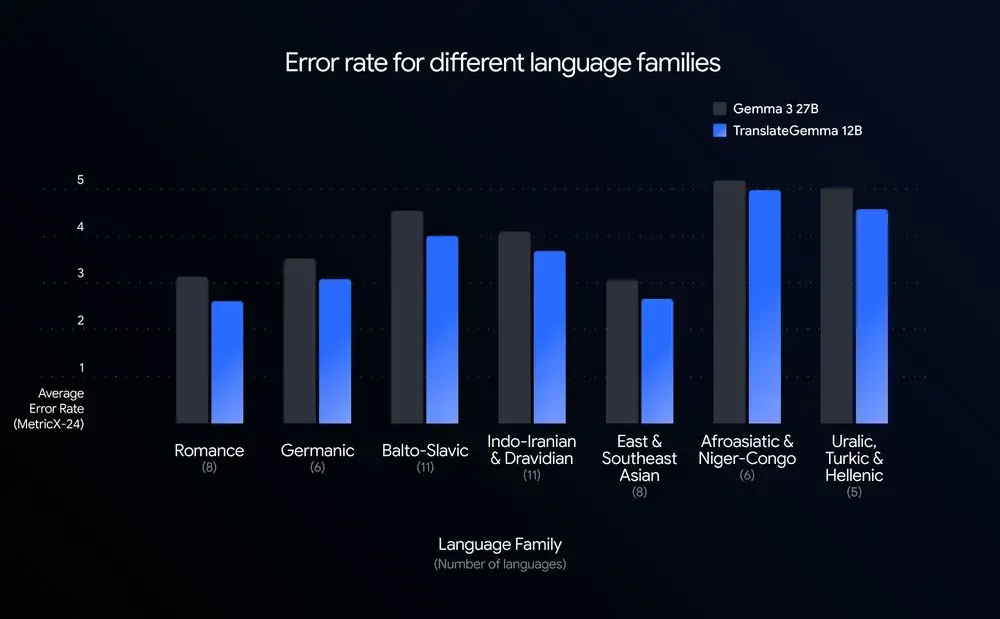
12B beats the Gemma 3 27B baseline on WMT24++ using MetricX
-
4B matches the Gemma 3 12B baseline at mobile-scale size
-
Lower error rates across high- and low-resource languages
How it works
How you use it
-
Run 4B on edge devices, 12B on laptops, 27B on one H100 or TPU
-
Download from Hugging Face or Kaggle, or deploy via Vertex AI
|
|
|
|
Top News
|
|
|
|
OpenAI introduces Open Responses to close the gap between agent behavior and legacy APIs
|
|
3,826 Likes
|
|
Open Responses enters at a moment when agent workloads outgrow chat-style APIs.
Developers now build systems that plan, call tools, loop over tasks, and stream intermediate state, yet most interfaces still assume turn-based text exchange. The gap between how agents work and how APIs expose inference keeps growing.
The core idea behind Open Responses is inference already uses the same building blocks across providers, so standardize them openly. The project takes the OpenAI Responses API and turns it into a shared, open specification that any provider or router can implement.
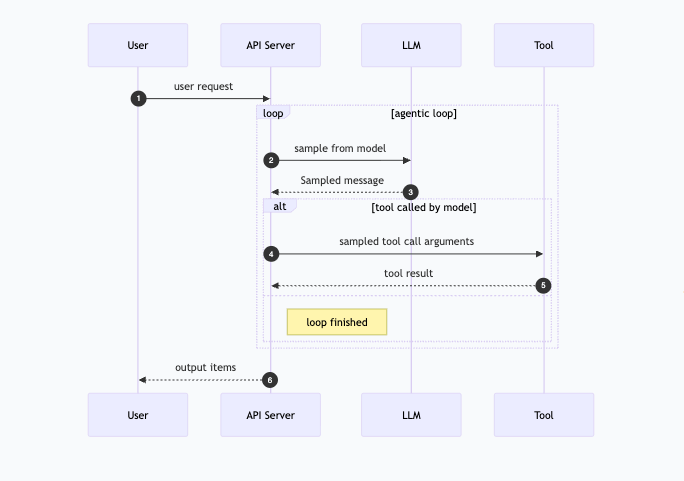
Instead of tokens, the API streams events. Instead of opaque text, it returns items that represent reasoning, tool calls, and results.
Key features
-
Unified schema for text, images, and structured JSON outputs
-
Event-based streaming for text, reasoning, tool calls, and tool results
-
Explicit agent loops with automatic tool execution and iteration control
-
Clear split between external tools you host and internal provider tools
How you use it
-
Send one request to /responses
-
Enable streaming to observe reasoning and tool execution
-
Control loops with max_tool_calls and tool_choice
|
|
|
|
Top News
|
|
|
|
Black Forest Labs ships open FLUX.2 klein, combining real-time image generation and editing in one model
|
|
2,257 Likes
|
|
Image models often trade quality for speed or demand large GPUs that slow experimentation. That gap blocks interactive workflows such as live editing, rapid concept iteration, and agent-driven visual tasks.
The insight behind FLUX.2 [klein] is simple: unify generation and editing in one compact model and cut inference steps without dropping quality.
FLUX.2 [klein] reaches end-to-end inference under 0.5 seconds and runs on consumer GPUs with ~13GB VRAM. A single architecture now handles text-to-image, image editing, and multi-reference composition, which removes model switching and pipeline glue.
Key features and results
-
Unified model for text-to-image, image-to-image, and multi-reference composition
-
9B distilled model uses four inference steps with an 8B Qwen3 text embedder
-
4B model runs locally on RTX 3090 / 4070 class hardware
-
Quantized FP8 and NVFP4 builds cut VRAM up to 55% and raise throughput
-
Elo benchmarks show higher quality at lower latency versus comparable fast models
How to use
|
|
|
At Alpha Signal, our mission is to build a sharp, engaged community focused on AI, machine learning, and cutting-edge language models, helping over 200,000 developers stay informed and ahead. We’re passionate about curating the best in AI, from top research and trending technical blogs to expert insights and tailored job opportunities. We keep you connected to the breakthroughs and discussions that matter, so you can stay in the loop without endless searching. We also work closely with partners who value the future of AI, including employers and advertisers who want to reach an audience as passionate about AI as we are.
Our partnerships are based on shared values of ethics, responsibility, and a commitment to building a better world through technology.Privacy is a priority at Alpha Signal. Our Privacy Policy clearly explains how we collect, store, and use your personal and non-personal information. By using our website, you accept these terms, which you can review on our website. This policy applies across all Alpha Signal pages, outlining your rights and how to contact us if you want to adjust the use of your information. We’re based in the United States. By using our site, you agree to be governed by U.S. laws.
|
|
|
Looking to promote your company, product, service, or event to 250,000+ AI developers?
|
|
|
|
|
