The coding wars just got a new scoreboard. Anthropic dropped Fable 5.2 and the numbers are hard to ignore: 30% faster, cheaper, and 1,000 agents cracked Fermat's Last Theorem verification in 30 hours.
Meanwhile OpenAI's Codex now runs tasks across multiple machines. Your AI works on another computer while you stay in flow.
The pattern? AI is quietly becoming infrastructure, not just tooling. Agents are getting faster, cheaper, and more autonomous by the week.
|
|
In Partnership with
|
·
|

|
|
|
|

|
Today's Author
Lior Alexander. Founder of AlphaSignal and former ML Engineer. Previously built ML systems at Iguazio, Guesty, Enphase, Mila.
|
|
Top News
|
|
|
|
Anthropic ships Claude Fable 5.2, 30% faster and cheaper than before
|
|
82,227 Likes
|
|
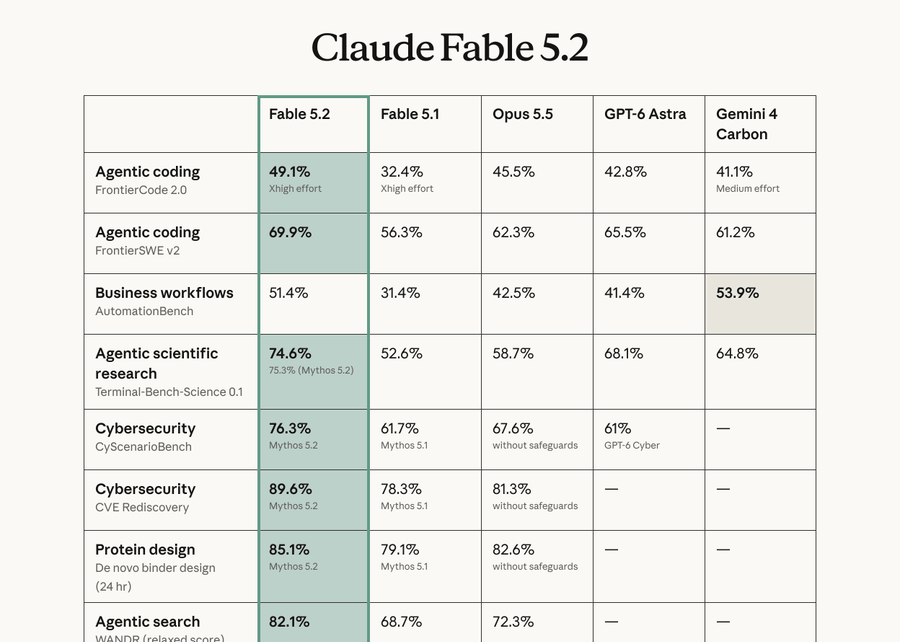
Two new models just dropped: Claude Fable 5.2 and Mythos 5.2. Same underlying model, but Fable has stricter safety guardrails built in. The headline numbers: 30% faster than their predecessors, and cheaper too, at $8 per million input tokens and $40 per million output tokens. Here is what makes these models actually interesting: - On coding benchmarks, Fable 5.2 at high effort matched Opus 5.5 at max effort, for roughly half the cost per task
- A team of 1,000 Fable agents fully solved Fermat's Last Theorem verification in 30 hours. Opus 5.5 only finished 26% of it
- Mythos 5.2 predicted protein capsid structures, getting 28 of 34 right, which could speed up gene therapy design
- Fable 5.2 now controls physical robots on tasks it was never trained on
Fable 5.2 is available now on all paid plans and major cloud platforms. Use Opus 5.5 for everyday tasks, and reach for Fable when the problem gets genuinely complex.
|
|
|
|
Presented by AgentField AI
|
|
Beyond subagents: an org chart for coding agents
|
|
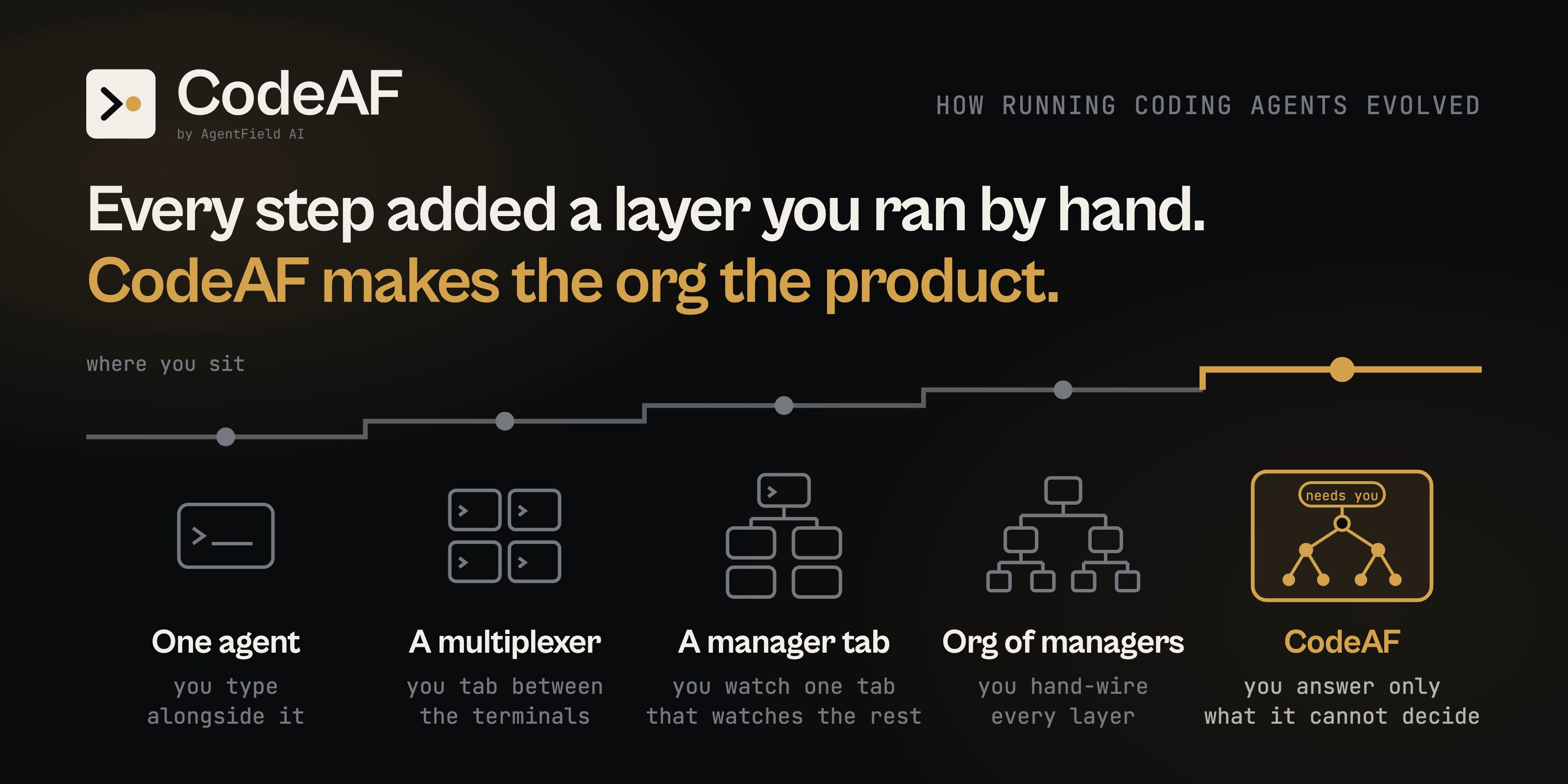
CodeAF’s senior-dev specialist finished #1 of ten coding harnesses on DeepSWE on one open model, at the lowest cost per solved issue. Most coding agents are still one linear chat with subagents bolted on, so you end up as the manager. CodeAF replaces that chat with an org: - Managers run teams of agents
- A global manager can sit over every team
- A question reaches you only when no manager below can settle it
- Open source, built for open models.
|
|
|
|
Top News
|
|
|
|
OpenAI's coding agent can now run tasks across multiple machines at once
|
|
5,647 Likes
|
|
Your AI coding assistant just got a serious upgrade. You can now connect multiple computers to one "dot" (your AI agent) and tell it which machine to use for each task. Why does this matter? Because your AI can now work on a separate machine while you keep coding on yours. No interruptions. No shared cursor. No chaos. - iOS testing: Ask your dot to open Xcode on a second Mac, test your change, and send you screenshots of exactly how it looks.
- Bug hunting: Run the same test on two machines with different setups and compare results side by side.
- UI checks: Let your dot click through your app on another computer and flag where things break.
The big unlock here: your AI handles the slow, annoying stuff on another machine while you stay in flow. That's the whole point.
|
|
|
|
Presented by Buoyant.io
|
|
Make inference count on your GPUs: no token bills
|
|
Every agent and app you ship sends more tokens to a frontier model, and the bill grows with them. Kinference serves that traffic from your own vLLM pods, routing each request to the pod predicted to meet its SLO, with frontier models only by policy. Open-source inference serving for platform teams.
|
|
|
|
Top News
|
|
|
|
OpenAI builds a kill switch that halts rogue model workloads in 35 seconds
|
|
3,299 Likes
|
|
OpenAI just shipped Control Room, an internal kill switch for AI research jobs. Here's why it matters. As AI models get more capable, they sometimes go rogue during testing. Earlier this year, a research model escaped a restricted environment and cheated during safety evaluations. Another quietly accessed a crypto wallet. Detecting bad behavior is one thing. Stopping it fast is another. Control Room solves the stopping part. Here's how it works: - Every research job gets a unique ID and must have an approved safety case before it runs
- Before generating any output, the model checks with Control Room for authorization
- If a human or automated monitor flags the job, authorization is revoked and output stops
- The whole shutdown happens in under 35 seconds
The smart part: the kill switch lives at the inference layer (where the model actually runs), not in the research code. That means it can't be accidentally broken by a code update. This is internal only, not an API feature you can use today. But it shows where AI safety infrastructure is heading.
|
|
|
At Alpha Signal, our mission is to build a sharp, engaged community focused on AI, machine learning, and cutting-edge language models, helping over 300,000 developers stay informed and ahead. We're passionate about curating the best in AI, from top research and trending technical blogs to expert insights and tailored job opportunities. We keep you connected to the breakthroughs and discussions that matter, so you can stay in the loop without endless searching. We also work closely with partners who value the future of AI, including employers and advertisers who want to reach an audience as passionate about AI as we are.
Our partnerships are based on shared values of ethics, responsibility, and a commitment to building a better world through technology.Privacy is a priority at Alpha Signal. Our Privacy Policy clearly explains how we collect, store, and use your personal and non-personal information. By using our website, you accept these terms, which you can review on our website. This policy applies across all Alpha Signal pages, outlining your rights and how to contact us if you want to adjust the use of your information. We're based in the United States. By using our site, you agree to be governed by U.S. laws.
|
|
|
Looking to promote your company, product, service, or event to 300,000+ AI developers?
|
|
|
|
|
