
Black Forest Labs' FLUX.1 Fill Beats Ideogram at Open-Source Inpainting
Black Forest Labs open-sourced a 12B parameter inpainting model that rivals proprietary editing tools, with weights available on Hugging Face.
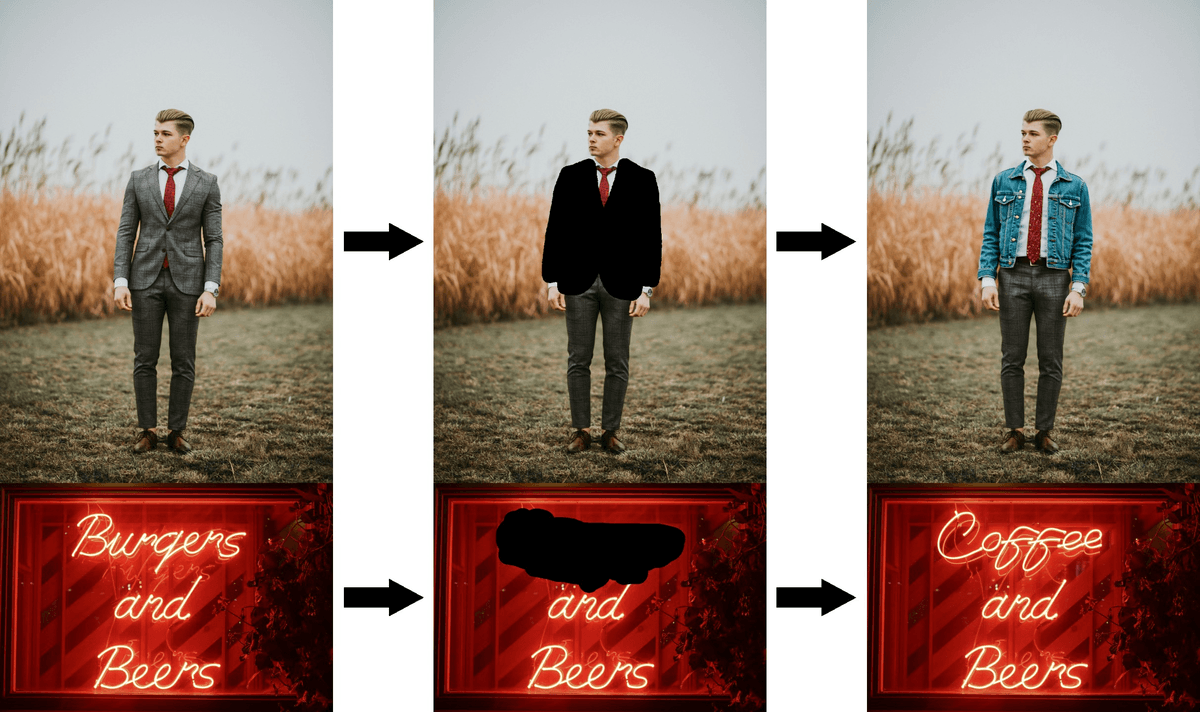
Takeaways
- Black Forest Labs released FLUX.1 Fill [dev], a 12B parameter open-weights inpainting and outpainting model.
- Benchmark ELO scores place it second only to the closed [pro] version, ahead of Ideogram V2.
- Uses guidance distillation for efficient inference, with a reference
FluxFillPipelinein Diffusers. - Handles inpainting and outpainting from a single checkpoint using an image, binary mask, and text prompt.
- Known issues include subtle color drift outside the mask and seam lines on complex textures.
- Released under a non-commercial license; commercial access via BFL API and partners.
Black Forest Labs has released FLUX.1 Fill [dev], an open-weights inpainting and outpainting model that lets you paint over a region of an image, describe what should go there, and get an edit that blends into the rest of the picture. It ships as part of the FLUX.1 Tools suite and is downloadable now on Hugging Face under a non-commercial license, with a paid [pro] version served through the BFL API.
What Fill actually is
Under the hood, FLUX.1 Fill [dev] is a 12 billion parameter rectified flow transformer that fills areas in existing images based on a text description. You feed it a source image, a binary mask marking the region to edit, and a prompt describing what should appear there. The same checkpoint handles inpainting (changing a region inside the frame) and outpainting (extending the canvas beyond the original borders).
The [dev] variant is a distilled sibling of the closed [pro] version. Guided distillation training keeps quality high while cutting compute, so the open checkpoint runs with fewer sampling steps than a naive classifier-free-guidance setup would need.