
Mistral AI's Small 3.1 Beats GPT-4o Mini With Vision and 128k Context
Mistral's 24B open weight model adds vision, 128k context and multilingual reasoning while running on a single RTX 4090 under Apache 2.0.
Takeaways
- Mistral Small 3.1 24B adds vision and 128k context to its 24B open weight model under Apache 2.0.
- Beats GPT-4o Mini and Claude 3.5 Haiku on GPQA, HumanEval, DocVQA, and multilingual averages.
- Runs at 150 tokens per second and fits on a single RTX 4090 or 32GB MacBook once quantized.
- Native function calling, JSON output, and Tekken tokenizer with 131k vocabulary across 24 languages.
- Recommended runtime is vLLM 0.8.1 with the mistral tool call parser.
- Weak spots include pure MATH accuracy at 69.3 percent and low SimpleQA factual recall.
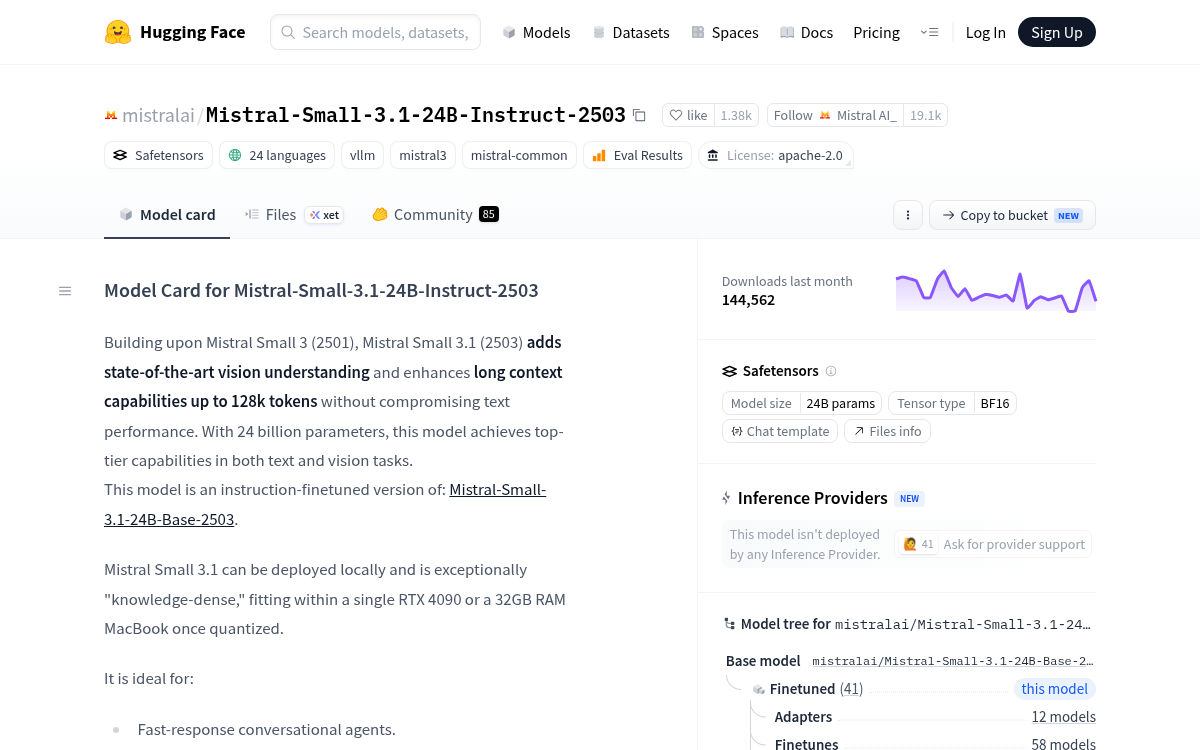
Mistral AI has dropped a new checkpoint into its open weight lineup, and it may be the most capable small model the company has shipped. Mistral Small 3.1 24B Instruct builds on Mistral Small 3 (2501), adding vision understanding and stretching the context window to 128k tokens without regressing on text quality. It ships under Apache 2.0, runs locally on a single high end GPU, and targets the segment currently held by GPT-4o Mini and Claude 3.5 Haiku.
Why does the release matter? It is one of the first fully open weight models that combines multimodal input, a long context window, and multilingual coverage at a size a single developer can actually run at home. According to the release notes, Small 3.1 surpasses the performance of leading small proprietary models across all these dimensions while keeping latency and cost low.
What ships in the checkpoint
The instruct model is a fine tune of the also open Mistral Small 3.1 24B Base. The headline capabilities:
- Vision plus text. The model accepts images alongside text and answers questions grounded in the visual content.
- 128k context window with a Tekken tokenizer that has a 131k vocabulary size.
- 24 supported languages spanning European, East Asian, and Middle Eastern families, including Arabic, Bengali, Chinese, Farsi, Hindi, Japanese, and Korean.
- Native function calling and JSON output, with a dedicated tool call parser in vLLM.