
ETH Zurich Study Proves CS Knowledge Still Beats Raw Brainpower in Vibe Coding
An ETH Zurich study of 100 students finds that CS knowledge and writing ability both predict vibe-coding success, while heavy LLM use correlates negatively.
Takeaways
- ETH Zurich study of 100 students finds CS achievement (r=.39) and writing skills (r=.29) predict vibe coding success.
- CS knowledge stays predictive even after controlling for general cognitive ability, ruling out a pure IQ explanation.
- Frequent LLM users performed worse at both essay writing and vibe coding tasks, though causality is undetermined.
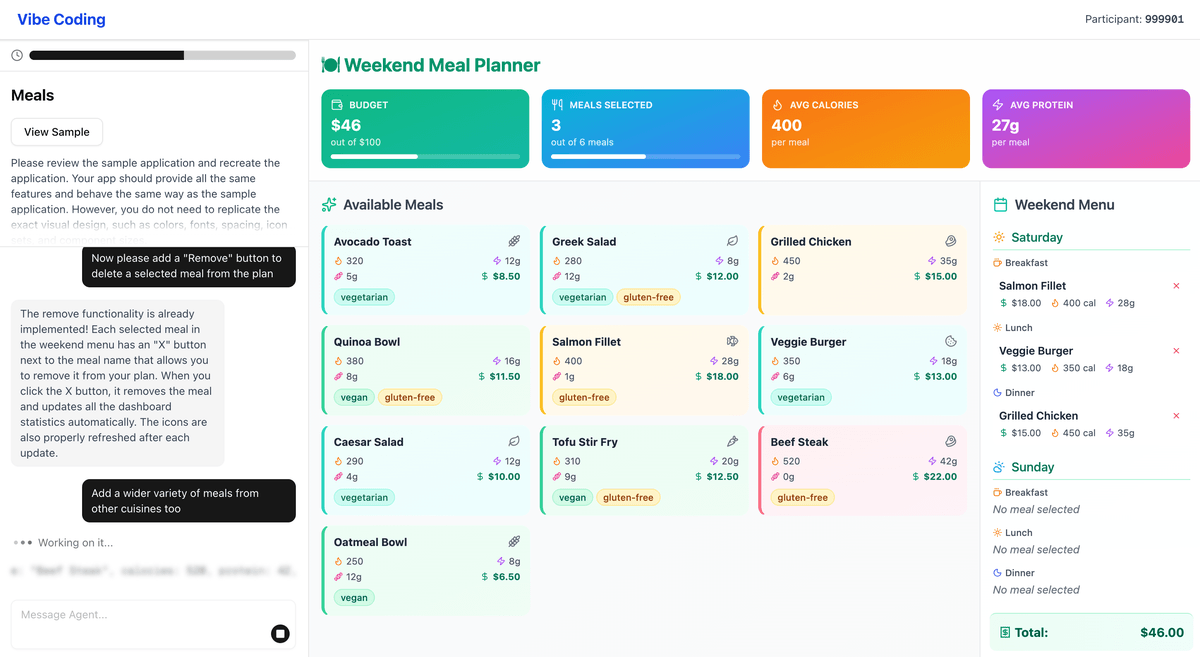
- Participants used a purpose-built vibe-coding environment to build a meal planner, extend a course organizer, and clone an abstract app.
- Tasks were curated by eight-expert consensus; assessments included SCS1 for CS knowledge and ICAR16 for cognitive ability.
- Accepted at CHI 2026; suggests CS fundamentals remain essential even when nobody writes code.
Vibe coding, the practice of building software by describing what you want in plain English and letting an LLM write the code, has become a fixture in tools like Claude Code, Cursor, and Lovable. It has also raised an awkward question that nobody had rigorously answered: if you no longer need to know Python or Java, what do you actually need to know? A new study out of ETH Zurich, accepted at CHI 2026, tries to pin that down with numbers.
The paper by Sverrir Thorgeirsson, Theo B. Weidmann, and Zhendong Su reports a preregistered cross-sectional study finding that both CS achievement (r = .39) and writing skills (r = .29) significantly predict vibe coding performance, and that CS knowledge remains a significant predictor after controlling for domain-general cognitive ability. The marketing story that AI erases the need for programming fundamentals does not hold up under measurement.
Why measuring this is harder than it looks
Non-experts can now describe how an app should work in natural language, and an AI interprets these prompts and generates the code in the background. Adoption, however, is running well ahead of any evidence about who can actually do it well. Prior research on programming aptitude focused on syntax, debugging, and mental models of execution, all of which are less visible when the human never touches the source. The authors had to build a controlled way to observe the workflow itself.