
Harbin Institute's CPGRec+ Uses LLMs to Surface Niche Steam Games You'll Actually Love
A new graph-based recommender for Steam blends LLM reasoning with signed edge weights to fix the accuracy-vs-diversity trade-off in game suggestions.
Takeaways
- CPGRec+ extends the CPGRec game recommender to better balance accuracy and diversity.
- New PER module uses signed edge weights to distinguish player interest from disinterest and reduce over-smoothing.
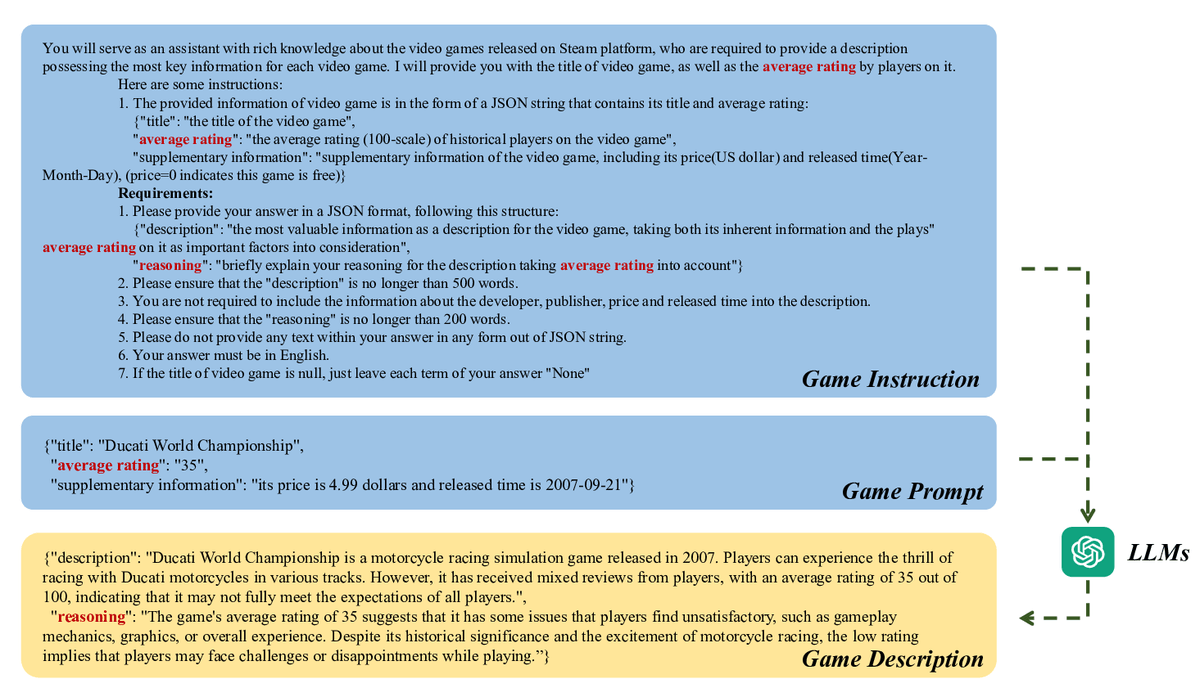
- New PRG module uses LLMs to generate contextual game and player descriptions from global vs. personal interests.
- Box-Cox transformation maps skewed dwelling time and rating distributions to normal for principled analysis.
- Beats LightGCN, SURGE, SCGRec, MVGNN, BIGCF, DGCN, DGRec and CPGRec on two Steam datasets.
- Code and data released at github.com/HsipingLi/CPGRec-Plus.
Recommending video games is trickier than recommending movies or songs. Playtime spans dozens of hours, tastes are hyper-personal, and the Steam catalog is dominated by a handful of blockbusters while thousands of niche titles languish in the long tail. A team from Harbin Institute of Technology just published CPGRec+, an upgrade to their earlier CPGRec framework that tries to make graph neural network recommenders both more accurate and more diverse, with a little help from large language models.
The accuracy versus diversity headache
Most Graph Neural Network recommenders chase accuracy and quietly sacrifice diversity. In practice that means a Steam user who plays a lot of Counter-Strike keeps getting shown more shooters, while indie strategy titles they might love never surface. Accuracy-focused methods like BPR loss refine models using negative examples, while diversity-oriented methods lean on loss rescaling or likelihood adjustments. Both camps tend to optimize for their own objective and struggle to hold the two in balance.

The authors' previous system, CPGRec, attacked this by explicitly encoding game categories and popularity into the recommendation graph. It treated every player-game edge as equally informative, though, ignoring that some interactions reveal far more about personal taste than others. That uniform weighting also worsens over-smoothing, the well-known failure mode where, after several graph convolution layers, node embeddings collapse toward a single average vector and lose their individuality.