
Stanford Study Shows ChatGPT Erases Native Hawaiian History in Classrooms
A new CHI 2026 paper proposes community-oriented AI auditing tools co-designed with Hawaiian public school educators, rethinking who audits and how.
Takeaways
- CHI 2026 paper from Stanford, Cornell Tech, Georgia Tech and Ulu Lāhui Foundation on community-centered AI auditing.
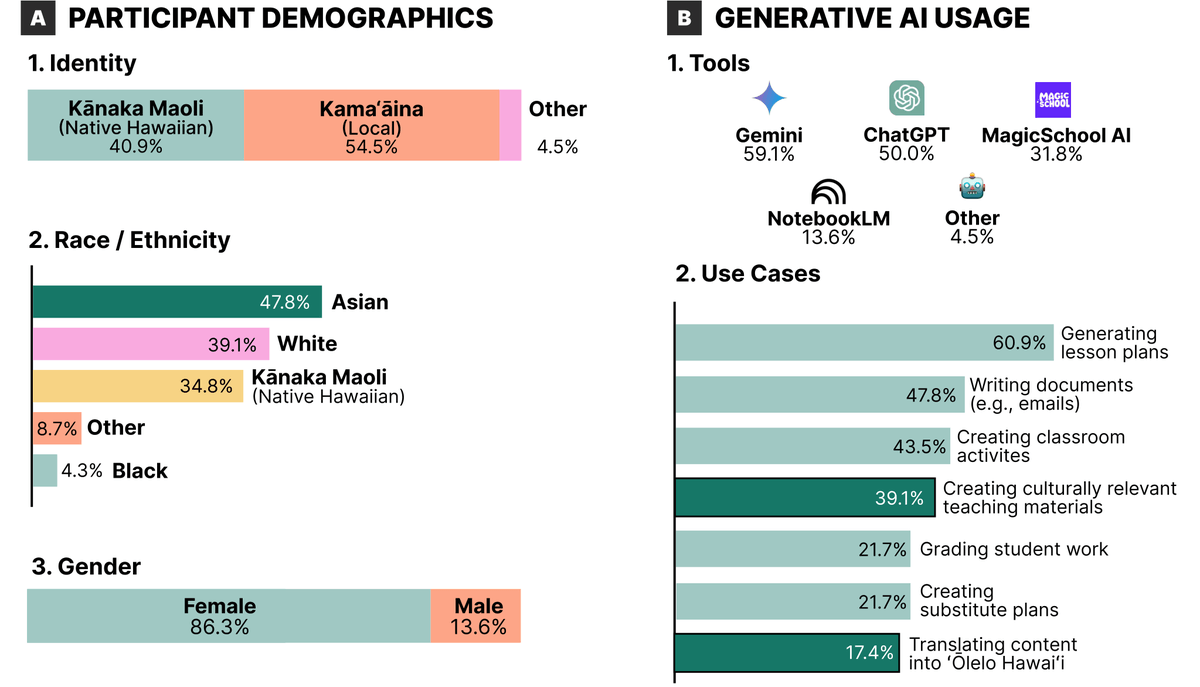
- Four co-design workshops with 22 O‘ahu public school educators drove the tool designs and recommendations.
- Teachers identified five failure modes: hallucination, surface depiction, Western bias, flattened diversity, historicization.
- Proposed features: source genealogy tracing, perspective visualization, and community-reviewed flagging of problematic outputs.
- Exemplar design is a locally hosted browser extension preserving Indigenous data sovereignty over reports.
- Paper delivers design framework and wireframes, not code, models, or benchmarks.
A new peer-reviewed paper accepted to CHI 2026, Whose Knowledge Counts?, argues that generic auditing tools built for global platforms miss the harms that matter most to Indigenous and low-resource communities. The authors, from Stanford, Cornell Tech, Georgia Tech, and the Honolulu-based Ulu Lāhui Foundation, ran four co-design workshops with 22 public school teachers on O‘ahu and turned the results into a design framework that treats auditing as a community process rather than an individual task.
Hawai‘i as a stress test for classroom AI
Public schools in Hawai‘i operate under a statewide mandate to integrate Hawaiian language and culture into education, and teachers are simultaneously being pushed to adopt generative AI. Across the four workshops, educators surfaced concerns about cultural misrepresentation and sketched tools grounded in specific Hawaiian values and practices, including tracing the genealogy of knowledge in source materials.
The authors ground the problem with a running example: asking ChatGPT about Captain Cook returns a sanitized narrative that omits well-documented harms to Native Hawaiians, including the attempted kidnapping of a ruling chief and the introduction of diseases that killed thousands. That skew is no hypothetical for teachers who must cover this history under state standards.
How the co-design study worked
The methodology sits squarely in the HCI tradition rather than benchmark-driven ML. The team ran four one-hour sessions at two O‘ahu elementary schools, one of which offers a Kaiapuni (Hawaiian language immersion) program. Each workshop followed the same arc: