
University of Tokyo Fixes Speech AI's Biggest Flaw Without Retraining Any Model
Researchers from the University of Tokyo show that swapping hard token assignment for soft distributions only at inference time recovers lost speech information without retraining
Takeaways
- Core idea: Replace hard k-means token assignment with a soft softmax distribution at inference only, no retraining required.
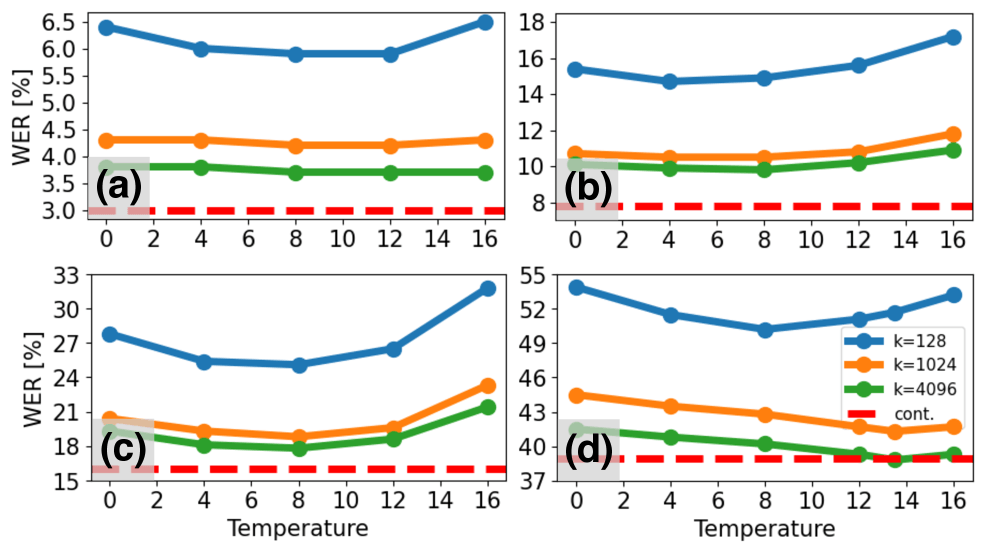
- Best result: On non-native (L2-Arctic) ASR, soft tokens beat even continuous SSL features -- the gold standard for discrete token systems.
- Out-of-domain gains: Improvements are largest when domain gap is widest (noisy, accented, lecture speech), making it ideal for real-world deployment.
- No training cost: Unlike HuBERT-Soft, the method needs no fine-tuning of the SSL model and preserves the data compression benefits of discrete tokens.
- Phoneme alignment: Soft representations cluster more cleanly by phoneme category than hard tokens, explaining the accuracy gains.
- No code released: Implementation requires adding a softmax temperature pass over k-means centroids to an existing HuBERT pipeline; paper available at arxiv.org/abs/2606.06806.
There is a persistent tension at the heart of discrete speech processing: the same quantization step that makes tokens cheap to store and fast to train on also throws away information. A new paper from researchers at the University of Tokyo and AIST proposes a surprisingly clean fix -- swap hard token assignment for soft distributions, but only at inference time. The result is better ASR and speech synthesis across the board, with especially dramatic gains on out-of-domain and non-native speech.
The quantization tax
Discrete speech tokens are symbolic representations extracted from continuous audio using SSL models and vector quantization. The pipeline works like this: a model like HuBERT processes raw audio into continuous, high-dimensional embeddings, and then a k-means algorithm snaps each frame to its nearest cluster centroid. These tokens serve as efficient, interpretable, and robust intermediates for a variety of speech processing tasks, including recognition, synthesis, enhancement, and separation.