
University of Toronto Skips AI Training to Generate Images in One Second
A new arXiv paper replaces hours of single-image diffusion training with a closed-form math formula, matching trained models on quality while generating megapixel images in one second.
Takeaways
- Researchers published a paper showing single-image diffusion generation requires zero neural network training by using a closed-form patch denoiser.
- The optimal denoiser is a softmax-weighted average of all image patches — mathematically identical to attention — enabling FlashAttention acceleration.
- Three stacked speedups (fused attention, VAE latent space, approximate nearest neighbors) achieve megapixel generation in 1 second and gigapixel in minutes.
- The method matches or beats trained single-image diffusion models (SinDDM, SinFusion) on quality metrics while achieving the highest output diversity of all compared methods.
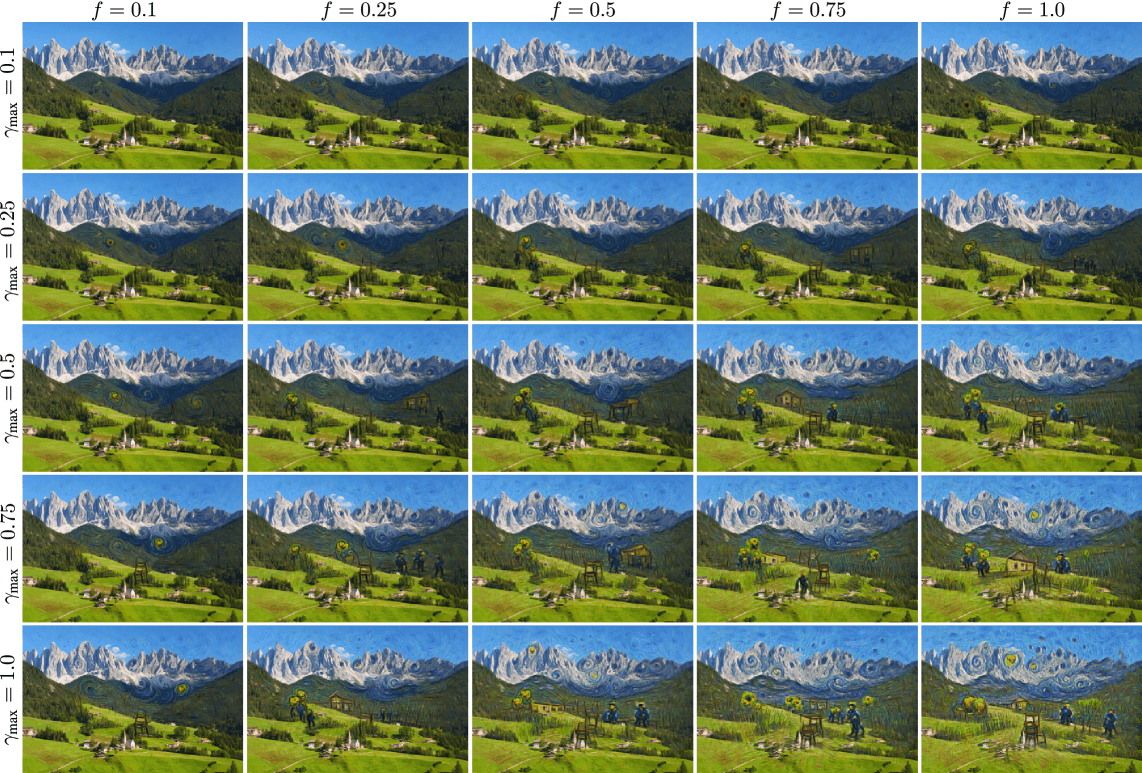
- Applications include unconditional generation, text-guided stylization via CLIP, image retargeting, symmetrization, tileable texture generation, and structural analogies.
- PyTorch code is available on the project page; the paper is a CVPR 2026 Highlight.
Training a generative model on a single image has always felt like overkill. You still need hours of GPU time, a neural network, and an optimization loop , all to learn the statistics of one photo. A new paper from Haojun Qiu, Kiriakos N. Kutulakos, and David B. Lindell at the University of Toronto argues there is a better way: skip the training entirely and solve the denoiser in closed form.
The training tax on single-image generation
Single-image generative modeling is a niche but genuinely useful problem. The goal is to produce new images that share the same internal visual statistics as a reference , the same textures, repeating patterns, and structural rhythms , without copying it outright. The canonical use cases include unconditional generation of "more images like this one," image retargeting (changing aspect ratio while preserving content), and style transfer that stays faithful to a specific source.
The dominant approach, exemplified by models like SinDDM and SinFusion, is to train a small diffusion model directly on the single image. Recent approaches address this problem by training a diffusion model on a single image, but even in this setting, training is computationally expensive and requires hours of optimization. SinDDM, for instance, requires roughly 8–10 hours on a TITAN RTX. That is a steep price for a model trained on one image.
The key insight: patches are a finite dataset
The paper's central observation is deceptively simple. A single image, when you extract all overlapping local patches at multiple scales, gives you a finite dataset of small, low-dimensional vectors. And when your dataset is finite and low-dimensional, you do not need a neural network to learn the denoiser , you can compute the optimal one analytically.
As this dataset is finite and the dimensionality of its patches is small, the score function for a noisy patch can be computed tractably using an optimal, closed-form denoiser, eliminating the need for neural network training. The resulting formula is a softmax-weighted average of all clean patches in the dataset, where the weights measure how similar each clean patch is to the current noisy one. Mathematically, this is identical to scaled dot-product attention , which means the whole thing can be accelerated with FlashAttention kernels.