
AI4Finance's FinRL-Meta Lets Developers Skip a Quarter of Trading Bot Plumbing
AI4Finance's benchmark library gives trading agents hundreds of gym-style market environments, unified data pipelines, and reproducible baselines under one MIT-licensed roof.
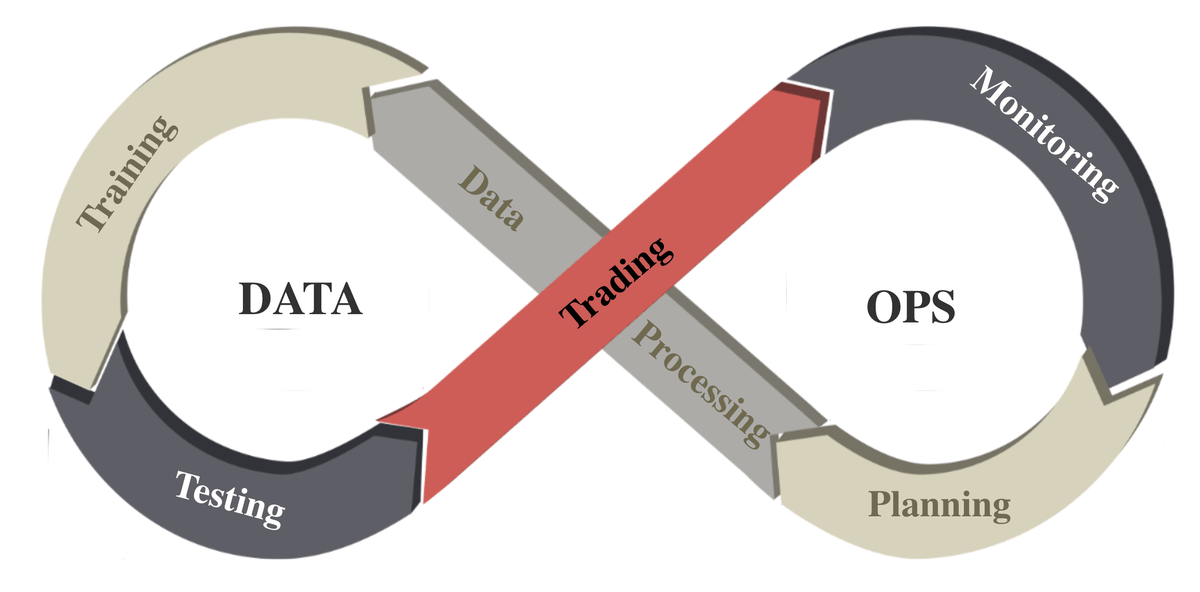
Takeaways
- FinRL-Meta provides hundreds of gym-style market environments for training deep RL trading agents.
- Three-layer architecture separates data, environment, and agent, letting ElegantRL, Stable-Baselines3, and RLlib plug in interchangeably.
- DataOps pipeline unifies twelve data providers across US stocks, Chinese A-shares, ETFs, forex, and crypto.
- Strict training-testing-trading split addresses information leakage and the sim-to-real gap in backtests.
- Reproduces published baselines including high-frequency trading, crypto trading, and portfolio allocation for fair comparison.
- MIT licensed, backed by a NeurIPS 2022 Datasets and Benchmarks paper.
Training a reinforcement learning agent to trade sounds glamorous until you actually try it. You spend weeks wiring up data feeds, scrubbing survivorship bias out of historical prices, hand-rolling gym environments, and then discovering your backtest quietly overfit to a two-year bull run. FinRL-Meta, the benchmark and environment layer of the FinRL ecosystem maintained by the AI4Finance Foundation, tries to remove that entire pre-flight checklist.
The library sits at 1.9k stars under a permissive MIT license, and its pitch is direct. Following a DataOps paradigm, it provides hundreds of market environments through an automatic data curation pipeline that turns real-world market data into gym-style environments. Different DRL algorithms can then be compared on identical data, identical splits, and identical assumptions.
Three landmines, defused at the infrastructure layer
The NeurIPS 2022 paper behind the project frames the problem crisply. Establishing high-quality market environments and benchmarks for financial reinforcement learning is hard because of three factors: the low signal-to-noise ratio of financial data, survivorship bias in historical data, and backtesting overfitting. Every quant researcher steps on these, and FinRL-Meta defuses them at the infrastructure level rather than leaving each team to reinvent fixes.