
AMD Silo AI and Autoware Turn AutoDrive Into an Open Neural Driving Stack
Autoware Foundation and AMD Silo AI are teaming up to train and deploy the open-source AutoDrive end-to-end model on Instinct GPUs.
Takeaways
- Autoware Foundation and AMD Silo AI partner to accelerate open-source end-to-end AI for autonomous driving.
- Focus is Autoware's AutoDrive model targeting production Level 2+ autonomy on AMD Instinct GPUs.
- Uses ROCm software and Radeon Pro GPUs to shorten training cycles and optimize real-time inference.
- End-to-end AI models are being folded into the Open AD Kit, the first SOAFEE SDV blueprint.
- Joint work includes open-source releases inside the existing Autoware repositories.
- Autoware already spans 500+ companies, 30+ vehicle types, and 20+ countries in production deployments.
The Autoware Foundation, the group behind the ROS 2 based open-source autonomy stack used by hundreds of companies, is opening a new chapter for its software. It has announced a collaboration with AMD Silo AI to accelerate training and deployment of an end-to-end AI driving model on AMD Instinct and Radeon Pro GPUs, moving Autoware from a classical modular stack toward a learned, neural-network-driven pipeline.
The partnership targets Autoware's AutoDrive model, an end-to-end network aimed at production-grade Level 2+ autonomy for automotive OEMs. The initial focus will be on optimizing Autoware's AutoDrive end-to-end model for production-grade Level 2+ autonomy targeting automotive OEMs on AMD Instinct GPUs, ensuring seamless performance across diverse model architectures and deployment settings, from training to real-time inference.
Why an end-to-end model changes the game
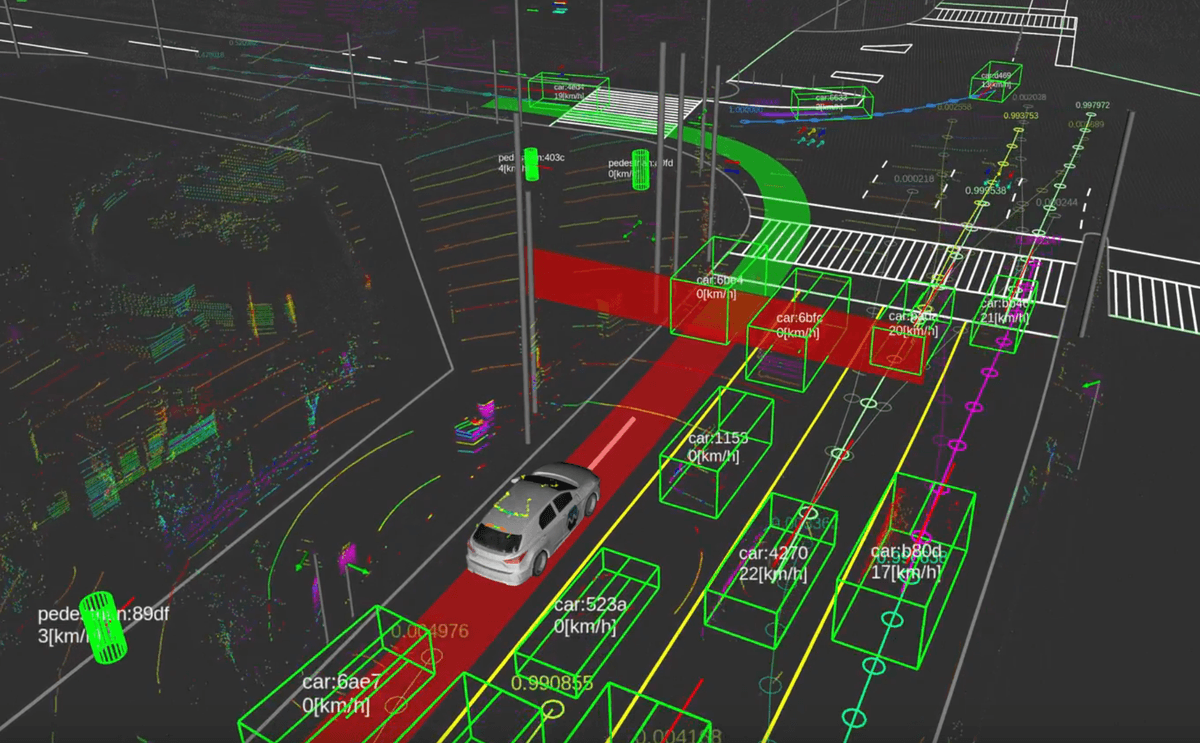
Traditional autonomy stacks, including most of Autoware today, are split into hand-engineered modules: perception, prediction, planning, and control, each with its own algorithms and tuning knobs. An end-to-end model collapses much of that pipeline into a single neural network that maps sensor inputs directly to driving decisions, letting the system learn behaviors that are hard to specify by hand and reducing the integration seams where errors compound.