
ComfyUI-Easy-Install Kills the CUDA Setup Nightmare With One Click
A one-click portable ComfyUI installer that handles Nunchaku, SageAttention, FlashAttention and CUDA/PyTorch version swaps without touching a terminal.
Takeaways
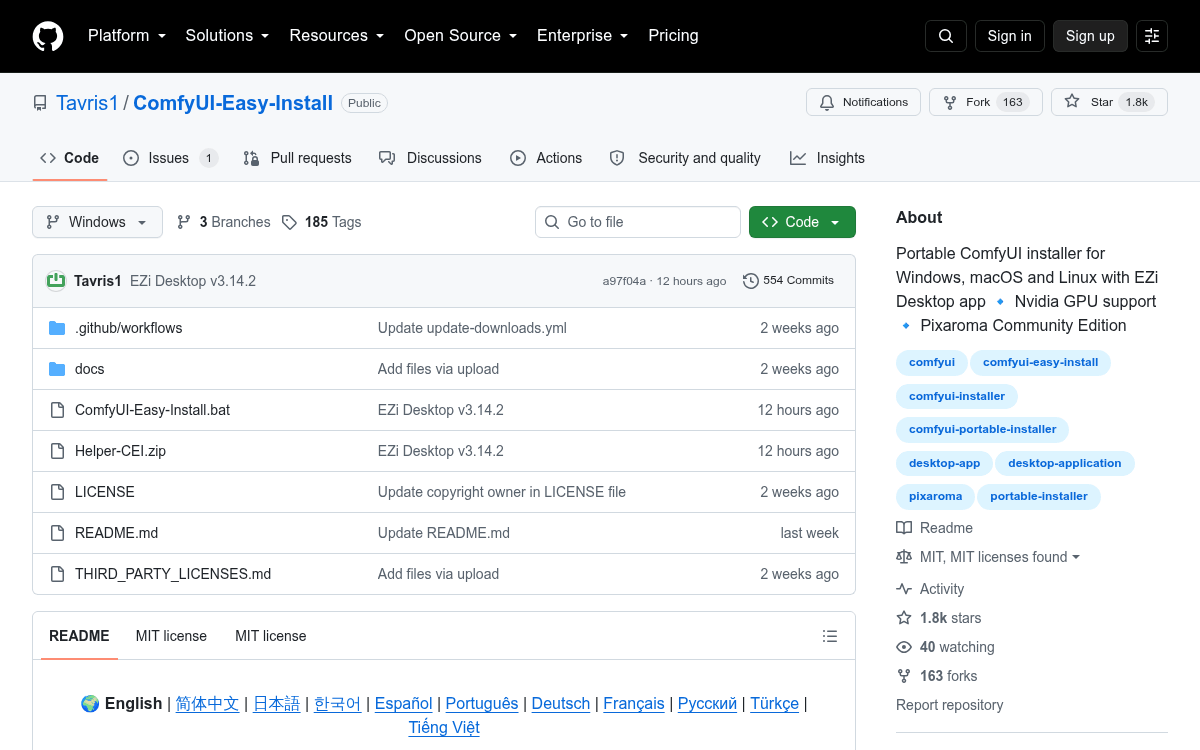
- Portable one-click ComfyUI installer for Windows with Nvidia GPU support, MIT licensed and free.
- Auto-installs Nunchaku, SageAttention v2/v3, FlashAttention, InsightFace and Trellis 2.0 without compilation.
- EZi Desktop app manages PyTorch/CUDA version switching, VRAM toggles, and GGUF model conversion.
- Bundles embedded Python 3.12.10, latest ComfyUI, and Pixaroma community custom nodes.
- Model linker points to existing checkpoint folders via extra_model_paths.yaml, avoiding re-downloads.
- macOS/Linux branch exists but Windows is the primary target; 1.4k stars, 163 releases.
Anyone who has installed ComfyUI knows the drill: clone the repo, pin a Python version, wrestle with a CUDA toolkit, then pray that Nunchaku, SageAttention or FlashAttention will compile without dragging you into Visual Studio build errors. ComfyUI-Easy-Install is a portable installer that skips that entire ceremony, and it has quietly picked up 1.4k stars while doing so.
The project ships as a single ZIP and a batch file. It runs through its own EZi Desktop app or any web browser with a one-click setup, and needs no Python, no Git, and no manual dependencies. It is MIT licensed, free, and targets Windows with Nvidia GPUs, with a separate branch for macOS and Linux.

Killing the compile-error gauntlet
The biggest pain point in the ComfyUI ecosystem is the accelerator libraries built around it, not the app itself. With the bundled app, complex packages like Nunchaku, SageAttention (v2/v3), FlashAttention, InsightFace, and Trellis 2.0 install in one click, without compilation errors. These libraries normally demand matching CUDA versions, MSVC toolchains, and specific PyTorch builds, which is where most first-time installs die.