
GuideLLM Hits 1,000 Stars Stress-Testing LLM Deployments Beyond Generic Load Tools
GuideLLM crossed 1,000 stars as the vLLM project's benchmarking tool for measuring real-world LLM inference latency, throughput, and SLO compliance.
Takeaways
- GuideLLM crossed 1,000 GitHub stars as the vLLM project's SLO-aware benchmarking tool
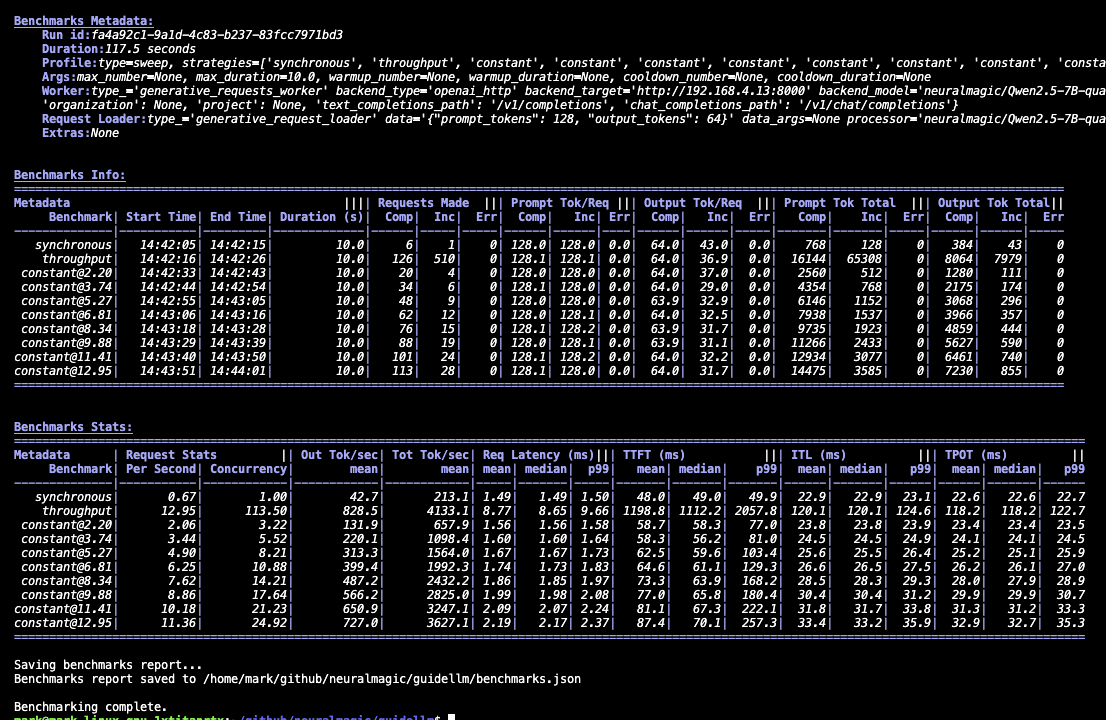
- Measures TTFT, inter-token latency, and throughput distributions instead of just endpoint metrics
- Six load profiles including sweep mode that auto-discovers maximum sustainable request rate
- Multimodal support across text, image, audio, and video with HuggingFace dataset integration
- Outputs benchmarks in JSON, CSV, and HTML formats suitable for CI regression tracking
- Recent additions include Mooncake trace replay, multi-turn conversations, and tool calling benchmarks
The vLLM ecosystem just picked up a milestone worth noting. GuideLLM, the benchmarking and evaluation platform built for stress-testing LLM deployments, crossed 1,000 GitHub stars. It targets a gap that has quietly frustrated anyone running inference in production, since most load testing tools measure endpoints rather than the token-level dynamics that actually determine whether a model meets its service-level objectives.
What GuideLLM Actually Measures
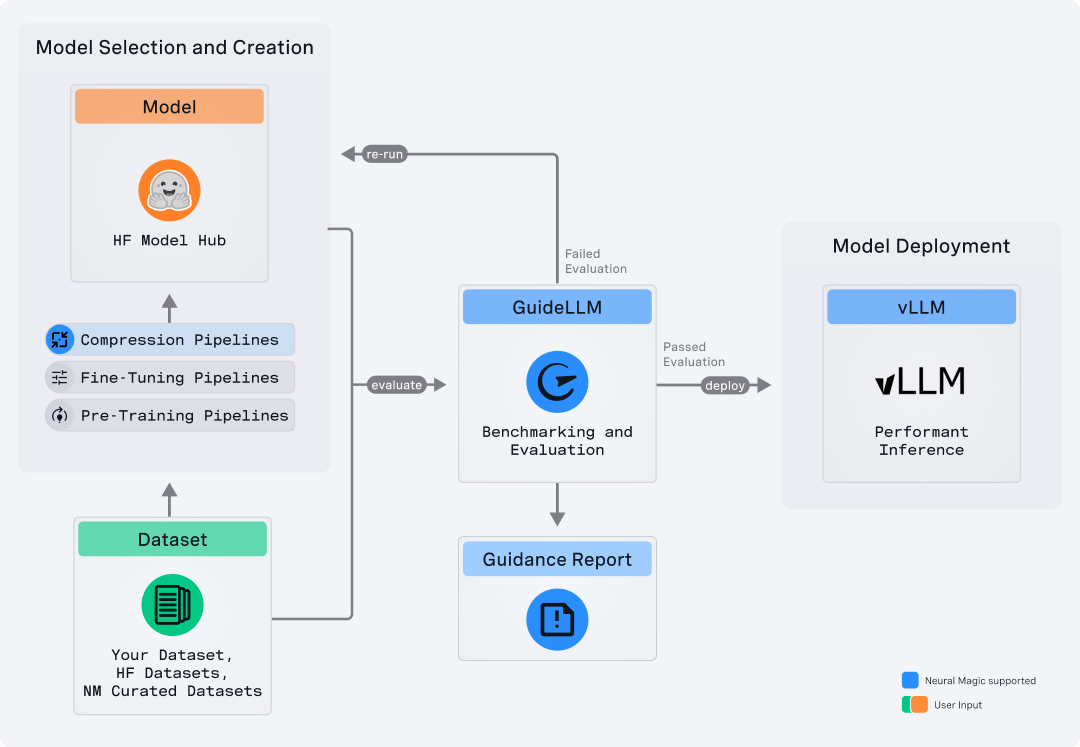
GuideLLM simulates end-to-end interactions with OpenAI-compatible and vLLM-native servers, generates workload patterns that reflect production usage, and produces detailed reports covering system behavior, resource needs, and operational limits. Where a generic load tester gives you request rates and error counts, GuideLLM captures the metrics that matter for generative workloads.
Specifically, it tracks:
- TTFT (time to first token) full distributions, not just averages
- ITL (inter-token latency), which governs perceived streaming smoothness
- End-to-end request latency and output token distributions
- Throughput under various concurrency and rate regimes
It supports high-rate load generation and accurate scheduling well beyond what simple scripts can manage, uses standard Python interfaces and HuggingFace datasets instead of custom formats, and focuses exclusively on LLM-specific workloads.