
Meta's AI4AnimationPy Cuts Motion Capture Processing from Hours to Minutes
Meta open-sources AI4AnimationPy, a pure-Python framework that trains, runs, and visualizes neural character animation without a game engine
Takeaways
- Meta open-sources AI4AnimationPy: a pure-Python framework for AI-driven character animation using PyTorch and NumPy, no game engine required. GitHub
- Kills the Unity bottleneck: training data generation that took 4+ hours in the old Unity-based pipeline now takes under 5 minutes.
- Full stack in one environment: motion capture import, neural network training, inference, and real-time rendering all share the same Python backend.
- Backprop through inference: because everything runs in native PyTorch, you can differentiate through the animation controller itself, previously impossible.
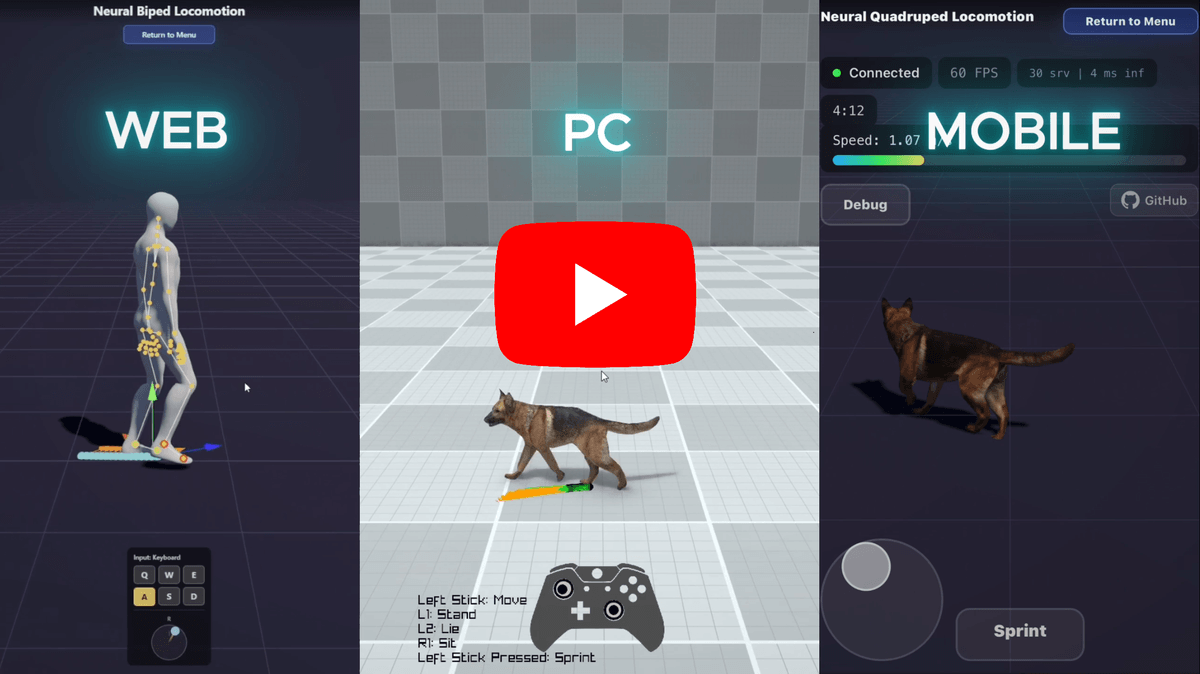
- Ships with demos and pre-trained models: biped locomotion, quadruped gait control, IK, and motion editing; web demos available on Hugging Face.
- CC BY-NC 4.0 license: free for research, not for commercial use; requires Python 3.12+.
For years, doing serious research on AI-driven character animation meant living in two worlds at once: train your model in Python, then export it to Unity just to see it move. Meta's AI4AnimationPy collapses that split into a single Python environment, and the result is a framework that can go from raw motion capture data to a running interactive demo without ever touching a game engine.
The Unity problem it finally solves
The original AI4Animation project aimed to be a comprehensive framework for data-driven character animation, developed in Unity3D and PyTorch. That pairing worked well enough for demos, but it created a painful research workflow. The training pipeline was heavily dependent on Unity, and communication with PyTorch had to go through ONNX or data streaming, creating a disconnect in the overall workflow.
Traditional animation is one of the most expensive bottlenecks in game development and film, and systems like this point toward a future where you describe how you want something to move and a network handles the rest. The numbers make the friction concrete: research on AI-driven character animation has required juggling multiple disconnected tools, with model research happening in Python while visualization requires specialized software, and bridging the two involves custom communication pipelines that slow iteration and make it difficult to validate results on-the-fly.
What actually changed
AI4AnimationPy provides motion capture processing, training and inference, animation engineering, and optional real-time rendering, all in Python via NumPy and PyTorch. It replaces the Unity dependency by unifying data processing, feature extraction, neural network training and inference, and visualization into a single Python framework. The headline benchmark: processing 20 hours of motion capture data that previously took over 4 hours in Unity now takes under 5 minutes.