
OpenAI Ships a Voice AI That Moves Kanban Cards During Live Standups
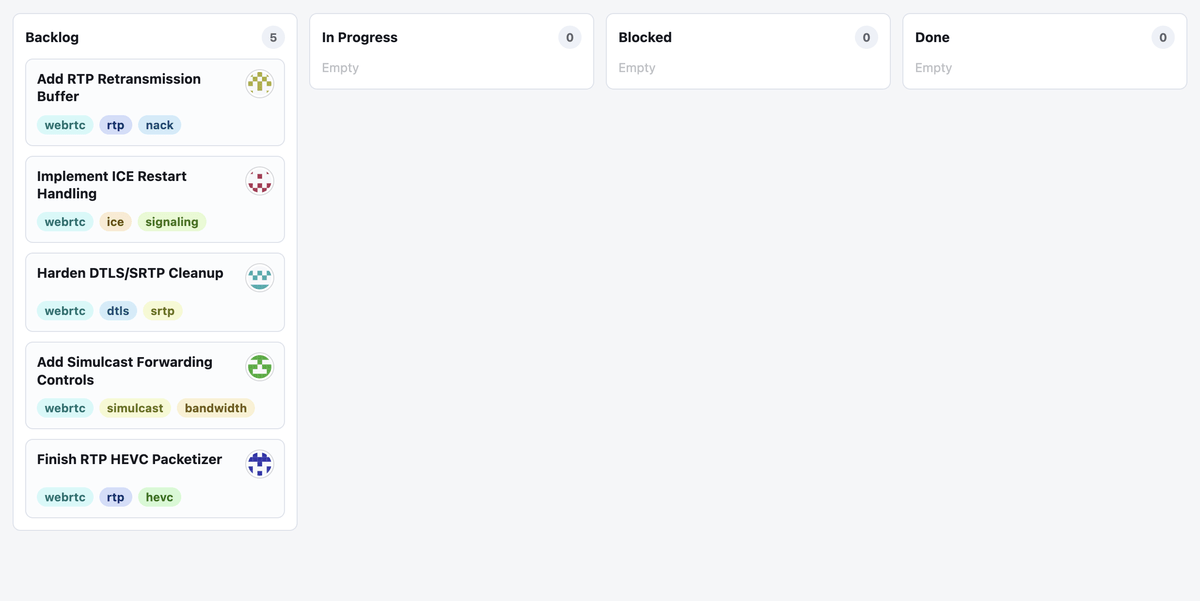
OpenAI shipped an open-source Go demo that turns standup chatter into live Kanban actions using the Realtime API and gpt-realtime-2.
Takeaways
- OpenAI released openai-realtime-meeting-assistant, a Go demo turning voice standups into live Kanban updates.
- Server mixes WebRTC audio, sends it to a Realtime peer, and triggers board changes via function calling.
- Default model is gpt-realtime-2, with parallel tool calls and preambles that keep agents talking during actions.
- Assistant creates, moves, tags, edits, and deletes tickets while ignoring filler phrases.
- Requires Go 1.24+, Opus via pkg-config, and an OPENAI_API_KEY exported to the shell.
- MIT licensed, no built-in auth, runs on localhost:3000 with WebRTC multi-participant rooms.
OpenAI released a reference implementation that shows what happens when you point a speech-to-speech model at a shared work surface. The openai-realtime-meeting-assistant repo is a Go application where multiple people join a WebRTC room, talk about their tickets like they would in a normal standup, and watch cards move themselves across a Kanban board in real time.
The mechanics are clean. The server mixes participant audio, sends it to an OpenAI Realtime peer, and uses function calling to trigger board updates. Rather than transcribing speech, running an LLM, and then acting, the whole loop stays inside a single realtime session. When someone says the DTLS work is blocked, the model emits a function call and the change is broadcast to every browser in the room.
A disciplined board operator, not a chatty co-host
The instructions in kanban.go shape the model into a voice-operated Kanban board operator. It can create tickets from explicit requests or concrete standup updates, move existing tickets between Backlog, In Progress, Blocked, and Done, add tags without replacing existing tags, update titles or notes when follow-up context arrives, delete tickets by request, and ignore filler, handoffs, or wrap-up phrases when no board operation is needed.