
Seeed Studio's reBot-DevArm Opens Every Screw and CAD File for Under $1,500
Seeed Studio's reBot Arm B601 ships full hardware blueprints, a screw-level BOM, and a complete AI software stack for under $1,200 — making research-grade embodied AI accessible to anyone with a workbench.
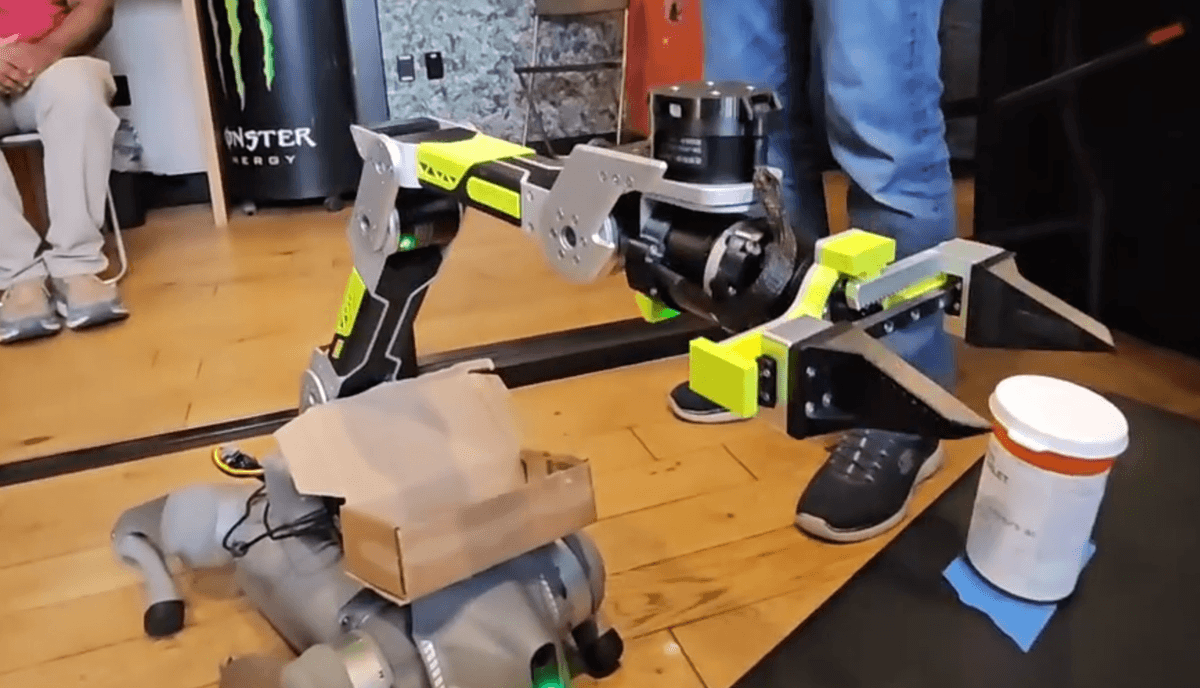
Takeaways
- What it is: Seeed Studio's reBot Arm B601 is a fully open-source 6+1 DoF robotic arm with hardware blueprints, full BOM, and a complete AI software stack.
- Pricing: DIY build targets under $1,000; full kit from Seeed is $1,197 unassembled or $1,499 pre-assembled.
- Two motor variants: B601-DM (Damiao motors, fully launched) and B601-RS (Robostride motors, software stack still rolling out).
- AI-ready software stack: Supports ROS1/2, LeRobot (Hugging Face), NVIDIA Isaac Sim, Pinocchio kinematics, and a Python SDK — all open source.
- Key specs: 767 mm reach, 1.5 kg payload, ±0.2 mm repeatability; validated through 24/7 endurance testing.
- License update: Hardware now under CERN-OHL-W-2.0 and firmware under Apache-2.0; free for personal/educational use, commercial use requires (freely granted) authorization.
reBot-DevArm is Seeed Studio's answer to a frustrating gap in the robotics market. If you've dreamed of having your own robotic arm, the current market feels like a dead end: off-the-shelf options are either toys or expensive industrial equipment, and DIY projects are pure chaos with few having comprehensive documentation or associated software chains. Seeed's solution is to open-source everything , not just the firmware, but every CAD file, every sheet metal template, and a bill of materials detailed down to the last screw.
What "True Open Source" Actually Means Here
The reBot-DevArm project comes in two versions , the B601-DM (Damiao motors) and B601-RS (Robostride motors) , and open-sources all files for both. The scope of what's released is unusually broad:
- Hardware blueprints: source files for sheet metal parts and 3D printed parts
- Full BOM: detailed down to the specifications and purchase links for every single screw
- Software stack: Python SDK, ROS1/2, Isaac Sim, LeRobot, and more
- Pinocchio integration: forward/inverse kinematics and gravity compensation out of the box
- Depth camera support: wrist mounts for Intel D435i, D405, and Orbbec Gemini cameras, plus a YOLO-based visual grasping demo
Hardware design is open-sourced under CERN-OHL-W-2.0, and firmware code under Apache-2.0. For the first five months since launch, the project used a CC BY-NC-SA license to let contributors focus on iterating the product free from commercial concerns. The license has since been updated to these more permissive terms.
The Hardware Under the Hood
At the core of the B601 lies a high-torque brushless actuator system. Unlike conventional servo-based educational arms, it integrates advanced motor solutions , DAMIAO or RobStride Dynamics compatible systems , for real force and position control. This matters because brushless quasi-direct-drive motors (QDD motors) can sense how much torque they're exerting, which is essential for safe human-robot interaction and for collecting the kind of high-quality demonstration data that imitation learning algorithms need.