
Taranis AI Automates Cybersecurity Threat Briefings With EU-Backed open-source Tool
An EU-funded open-source platform turns raw news feeds into structured cyber threat reports with entity recognition, story clustering, and MISP sharing.
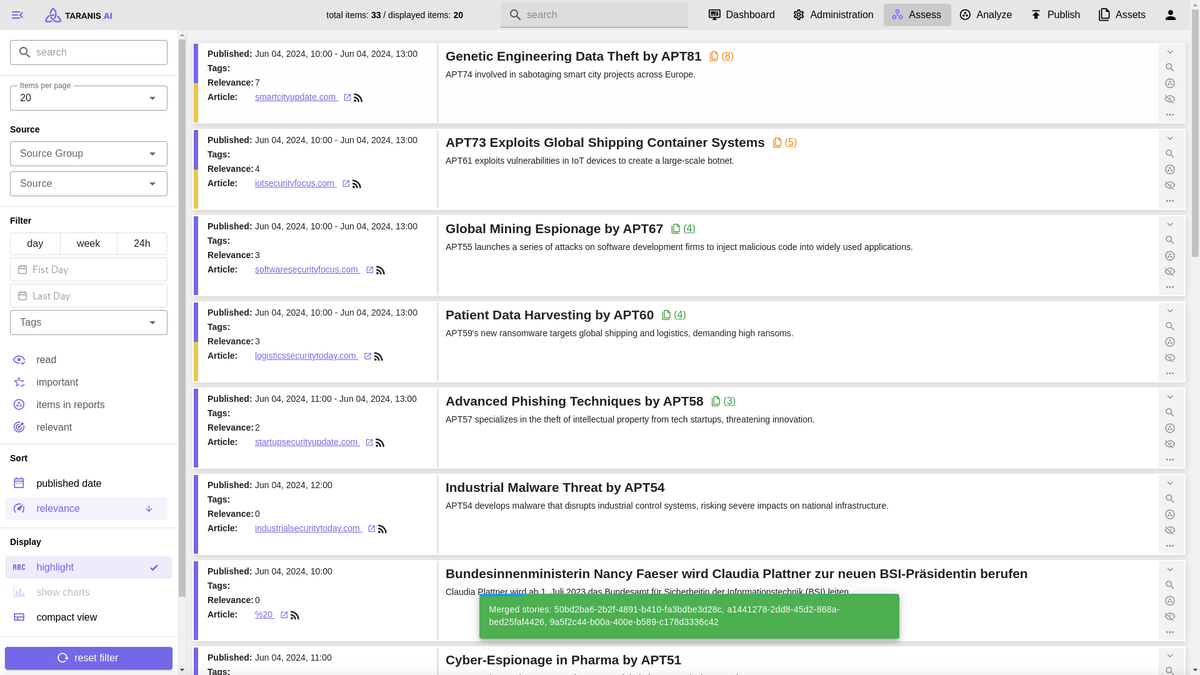
Takeaways
- Taranis AI is an open-source OSINT platform that automates news collection and turns feeds into structured reports.
- NLP layer performs entity recognition, summarization, and story clustering to deduplicate related articles.
- Recognizes cybersecurity-specific terms including APT groups, CVE identifiers, and indicators of compromise.
- Ships MISP integration for sharing stories directly with existing threat intelligence infrastructure.
- Python stack with Flask/HTMX frontend, RQ workers, Redis, and PostgreSQL, deployed via Docker Compose.
- Co-financed by the EU Connecting Europe Facility and released under the EUPL-1.2 license.
Threat intelligence teams spend an inordinate amount of time doing the same thing over and over: scraping news sites, RSS feeds, and vendor blogs, then hand-summarizing them into digestible briefings. Taranis AI is an open-source project that automates that pipeline end to end, using NLP models to enrich collected articles and giving analysts a workflow to turn them into publishable reports.
The repo has crossed 1,000 stars on GitHub and is co-financed by the EU's Connecting Europe Facility, which places it in a rare category of production-oriented open-source security tooling backed by government money rather than a venture-funded startup.
From raw scraping to structured intel
The core idea is a full OSINT loop in one deployable stack. Taranis navigates diverse data sources to collect unstructured news articles, then runs natural language processing over them to improve content quality. Analysts refine the enriched items into structured reports that feed deliverables such as PDF briefings, which are then published.
Workers pull from a wide range of sources under the hood: web pages, Twitter, email, Atom, RSS, Slack, and more. Each source produces news items that flow through the NLP passes before landing in the analyst UI.