
Tencent's WeKnora Turns Scattered Documents Into a Self-Updating Wiki
Tencent open-sources WeKnora, a Go-based platform that turns raw documents into a RAG pipeline, an agentic reasoner, and a self-maintaining Wiki — all self-hostable.
Takeaways
- What: Tencent open-sourced WeKnora, a Go-based platform combining RAG Q&A, a ReAct reasoning agent, and an auto-generating Wiki mode.
- Wiki Mode: Agents automatically read raw documents and generate structured, cross-linked Markdown wikis with a visual knowledge graph — and keep them updated.
- Integrations: Supports 20+ LLMs (OpenAI, Claude, DeepSeek, Ollama), 7 vector DBs, and IM channels including Slack, Telegram, WeCom, and WeChat.
- Enterprise-ready: Ships with 4-tier multi-tenant RBAC, AES-256-GCM credential encryption, per-tenant audit logs, and full Langfuse observability.
- Deployment: Self-hostable via Docker Compose or Helm; also available as WeKnora Cloud. Free under MIT license.
- Traction: 15,500+ GitHub stars, 2,000+ forks, and used as the core engine for Tencent's WeChat Dialog Open Platform.
WeKnora is Tencent's open-source answer to a problem every engineering team eventually hits: you have documents everywhere , PDFs, Notion pages, Feishu wikis, Word files , and no good way to query them, reason over them, or keep them organized. Rather than building yet another chatbot wrapper, WeKnora ships three distinct modes in a single self-hostable platform: a fast RAG Q&A layer, a ReAct reasoning agent, and an auto-generating Wiki engine. It has crossed 15,500 GitHub stars and 2,000 forks, signaling serious traction in the enterprise tooling space.
Three Modes, One Platform
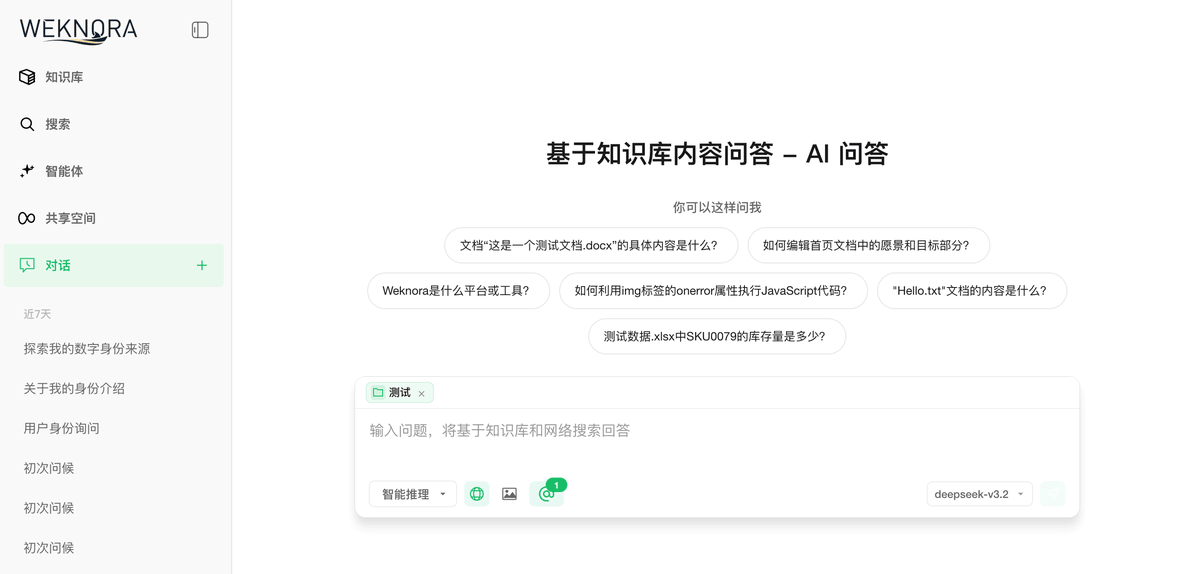
WeKnora is organized around three core capabilities: RAG-based Quick Q&A for everyday lookups, a ReAct Agent that autonomously orchestrates retrieval, MCP tools and web search to handle complex multi-step tasks, and a Wiki Mode in which agents distill raw documents into a self-maintaining, interlinked markdown knowledge base with an interactive knowledge graph. Each mode serves a different use case, and you can run all three simultaneously against the same knowledge base.
The ReAct agent (short for Reason + Act) is the most powerful of the three. It doesn't just retrieve chunks and stuff them into a prompt , it plans, calls tools, searches the web, and iterates until it has a complete answer. The whole pipeline is instrumented with Langfuse for ReAct loops, token tracking, tool calls, and pipeline tracing. That means you can actually debug what the agent did, step by step, without guessing.

The Wiki Mode Is the Real Surprise
Most RAG tools stop at retrieval. WeKnora's Wiki Mode goes further: it uses an agent to read your raw documents and generate a structured, cross-linked Markdown wiki from them automatically. The wiki isn't static , it updates as your documents change, and it comes with a visual knowledge graph showing how concepts relate to each other. Agents distill raw documents into a self-maintaining, interlinked markdown knowledge base with an interactive knowledge graph.