
zotero-mcp Lets Claude Search and Manage Your Research Library
An open-source MCP server that lets Claude, ChatGPT, and Cursor search, annotate, and edit your Zotero library with semantic vector search built in.
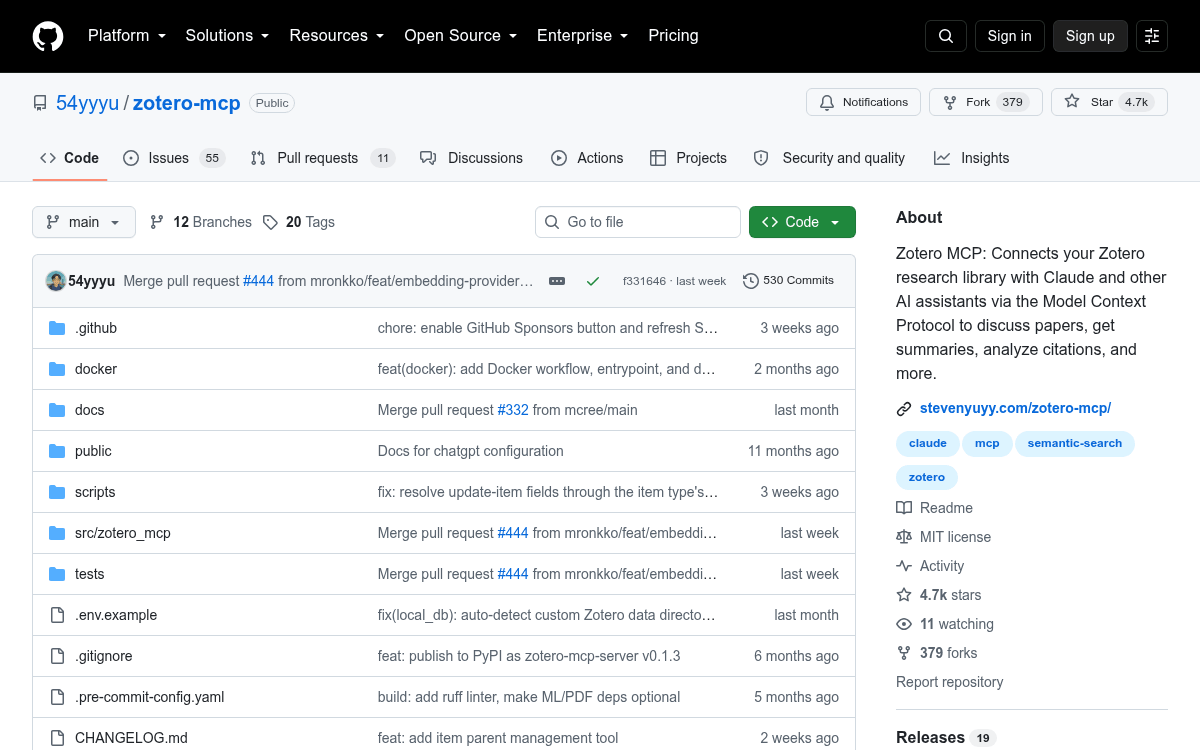
Takeaways
- zotero-mcp connects Zotero libraries to Claude, ChatGPT, Cursor, and other MCP clients.
- Repo has passed 3,000 stars with active development under an MIT license.
- Semantic search supports local MiniLM, OpenAI, and Gemini embedding models via ChromaDB.
- Write operations include adding papers by DOI, merging duplicates, and batch tagging.
- Optional Scite extra surfaces citation tallies and retraction alerts without an account.
- Ships a standalone
zotero-clifor shell scripting and lower-token agentic workflows.
Managing a research library is one of those problems that has stubbornly resisted the LLM era. Papers pile up in Zotero, PDFs get annotated once and forgotten, and asking Claude about your reading list means copy-pasting abstracts by hand. A community project called zotero-mcp closes that loop by exposing an entire Zotero library to any AI assistant that speaks the Model Context Protocol.
The repo has crossed 3,000 stars and ships as a Python package (zotero-mcp-server) under an MIT license. It connects a Zotero library with ChatGPT, Claude, and other assistants such as Cherry Studio, Chorus, and Cursor. Once installed, a chat client can search papers, pull full text, extract PDF highlights, add new items by DOI, and manage collections without you touching the Zotero UI.
How the bridge actually works
MCP is the plumbing standard Anthropic proposed for connecting LLMs to external tools, and Zotero already exposes a local HTTP API on your machine when the desktop app is running. zotero-mcp wraps that API into a set of MCP tools the model can call. Two access modes are available: local mode for offline use with no API key required, and a Web API for cloud library access. A hybrid setup also works, reading from the local database while writing through the web API.