Open-source Python framework for LLM-driven browser automation. Wraps Playwright in an agent control loop; supports OpenAI, Anthropic, Google, and local models via Ollama. Agents navigate and interact with pages using combined DOM snapshots and visual inference, enabling multi-step web workflows without hard-coded selectors. Also offers a managed cloud API for production deployments.
Browser Use agents can now check out on any website using disposable single-use cards issued by Stripe Link, without ever seeing your real card number.
Browser Use Cloud now lets AI agents pay for browser sessions with USDC via Coinbase's x402 protocol, eliminating the need for API keys or account signup.
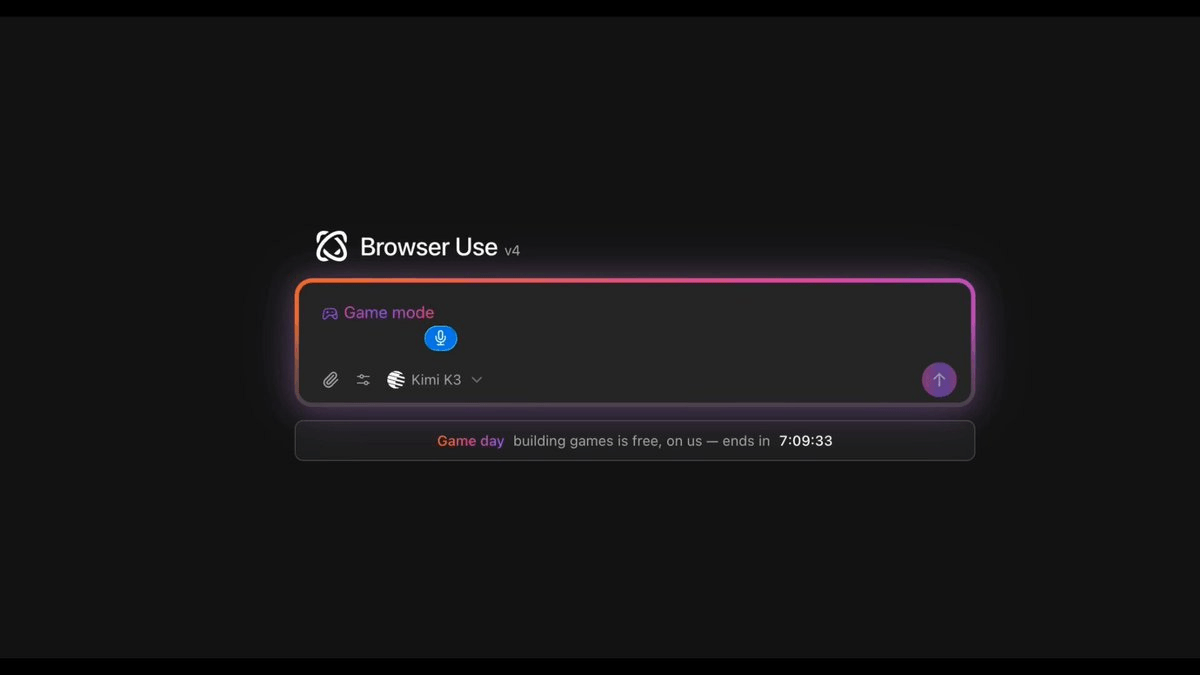
Browser Use's new /game-mode lets an AI agent build, test, and iterate on playable web games — 2D, 3D, and multiplayer — powered by Kimi K3 or Claude Fable 5.
Browser Use launches workflow-use, an open-source tool that records browser actions once and replays them as deterministic, self-healing scripts — no LLM needed at run time.
Browser Harness gives LLMs raw Chrome DevTools Protocol access and lets agents write their own missing tools mid-task, replacing brittle automation frameworks with a 600-line self-healing harness.
Browser Use's web automation library lands as a native Claude Code plugin, letting agents browse, click, and scrape without leaving your coding session
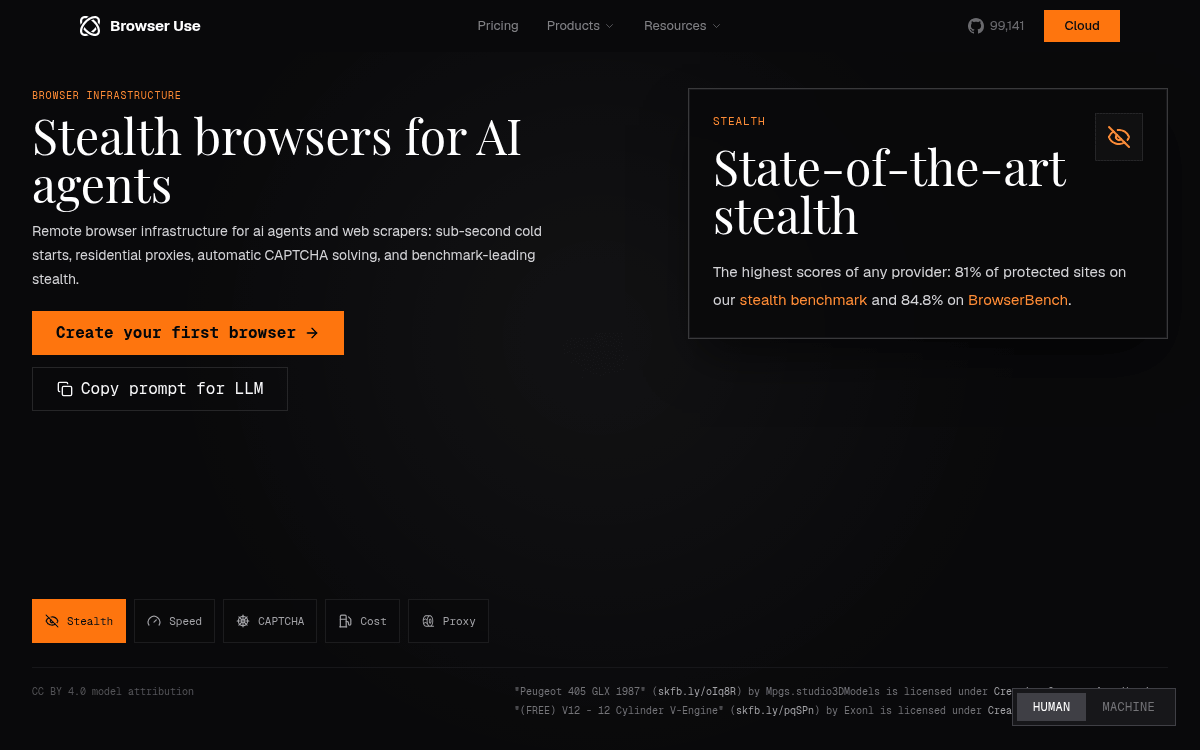
Browser Use's stealth cloud browser is now a one-package install inside Anthropic's Claude Managed Agents, giving hosted agents live web access with CAPTCHA solving and residential proxies at $0.02/hr.
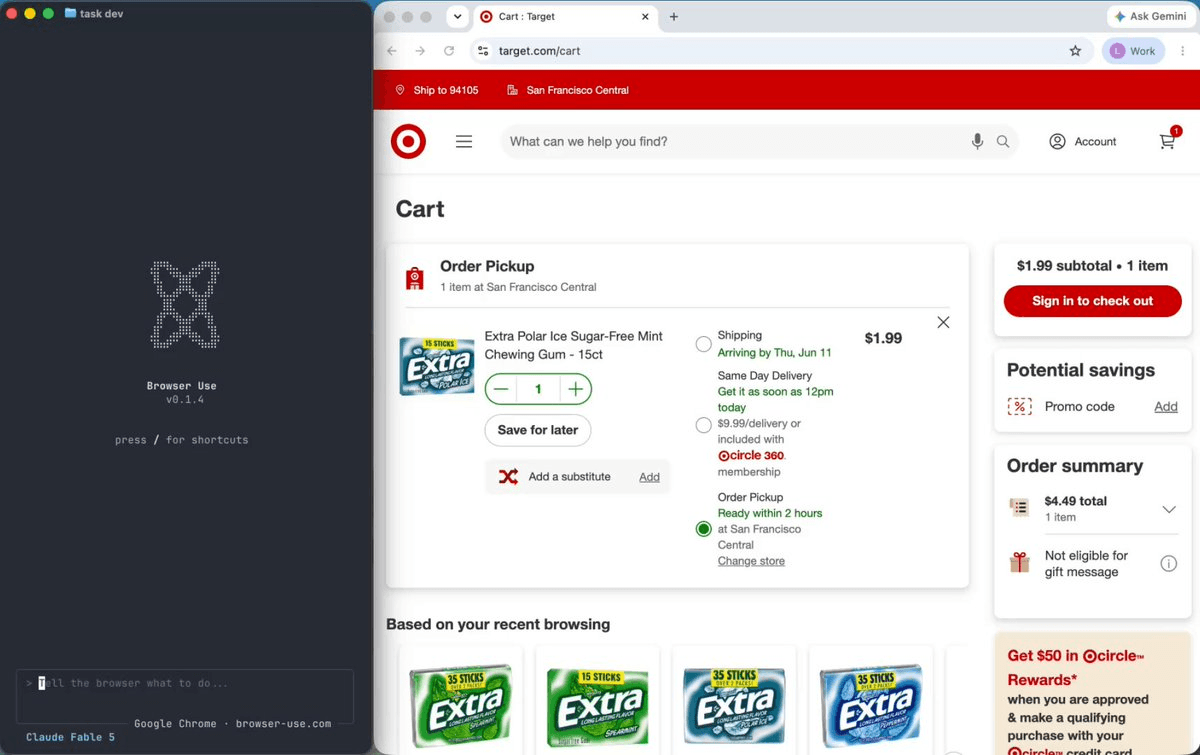
Browser Use Terminal v0.1.6 adds Claude Fable 5, Anthropic's new Mythos-class model built for long-horizon agentic tasks with a 1M-token context window
Browser Use's new 'browser-wall' lets a single CDP endpoint orchestrate multiple cloud browsers simultaneously, with built-in profiles and proxies for scale
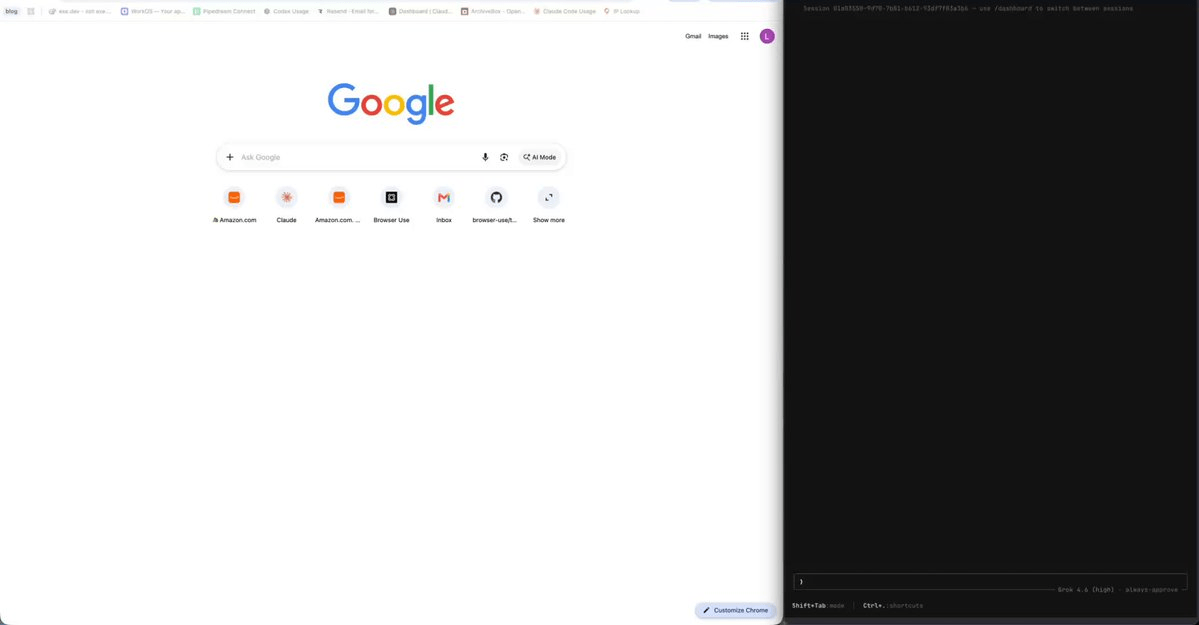
Browser Use Terminal is a Rust-built TUI that lets you run browser agents from the command line, controlling real Chrome with a new LLM harness claimed to be 2x cheaper and faster.
video-use lets coding agents edit raw footage into a polished final.mp4 using transcripts, ffmpeg, and a self-correcting render loop — no timeline editor required