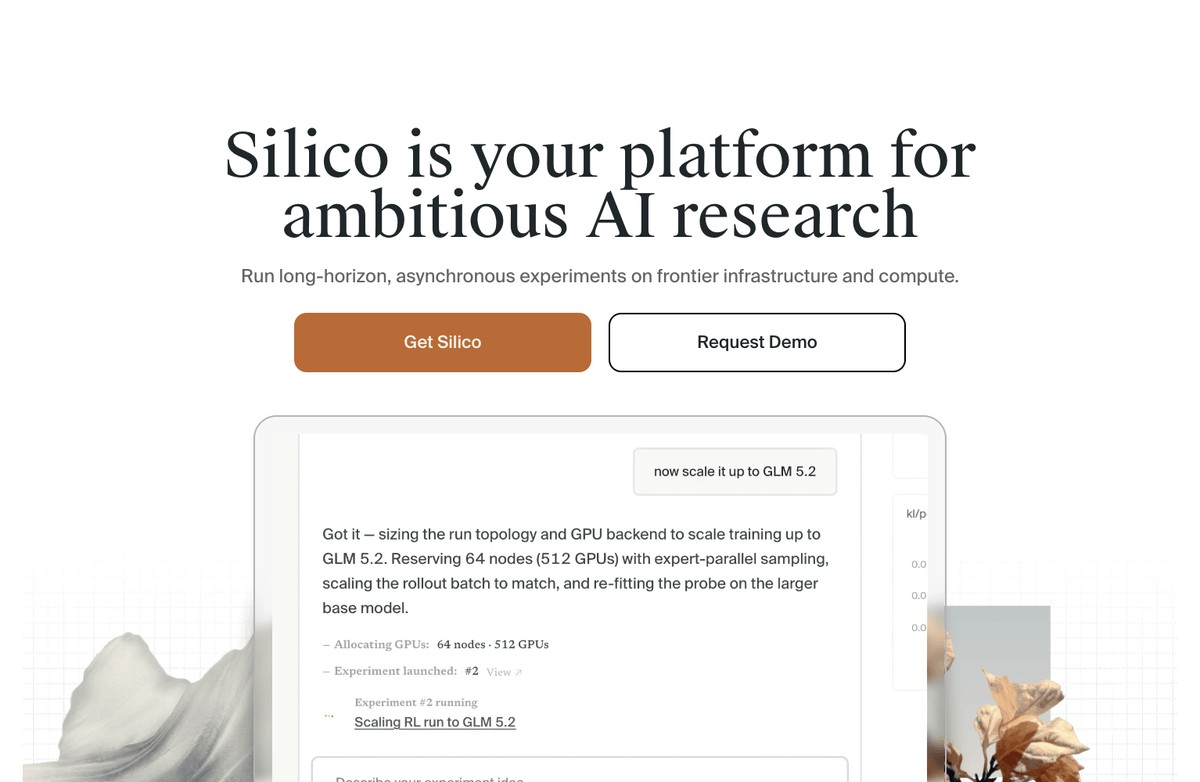
Mechanistic interpretability research lab building tools to reverse-engineer neural network internals. Uses sparse autoencoders (SAEs) for feature discovery and activation steering to expose model representations. Products include Ember (feature-level API for LLM intervention) and Silico (model design environment for debugging and steering behavior during training). Applied to LLMs and scientific foundation models.
Goodfire's unsupervised method finds thousands of tiny neuron groups inside Llama-3.1-8B, often under ten neurons, that are causally necessary and sufficient for behaviors like grammar, arithmetic, and formatting.
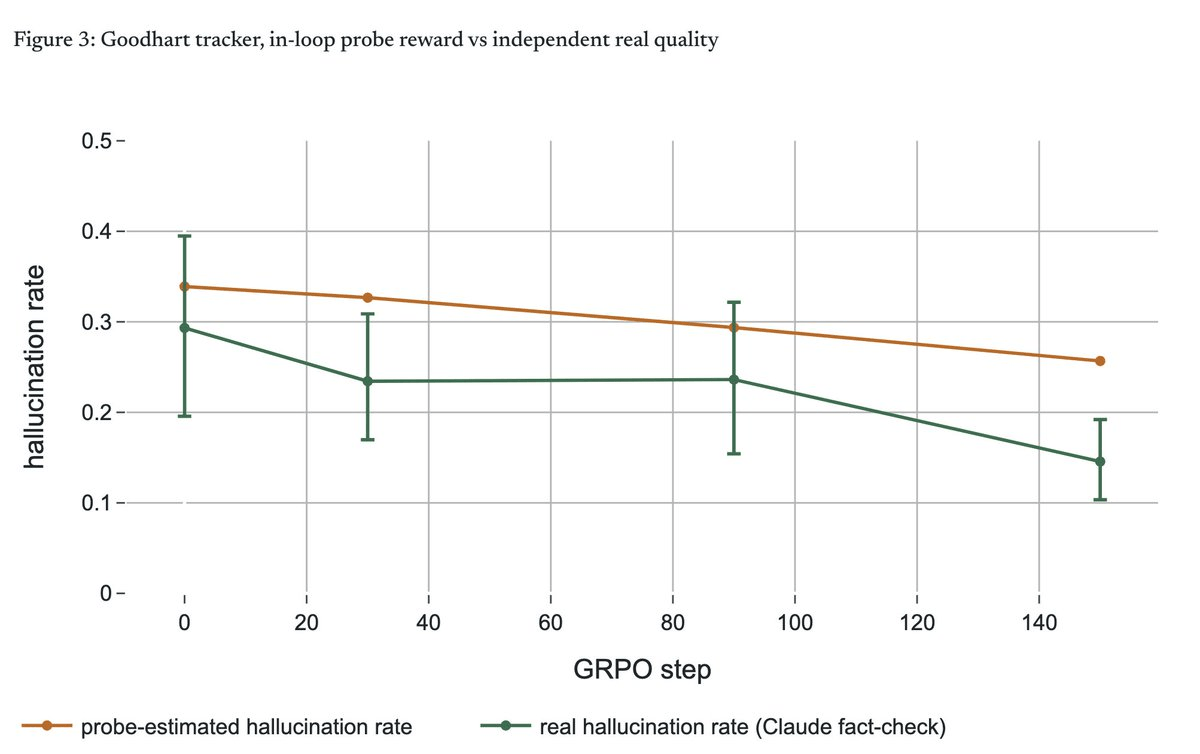
Goodfire's new framework uses a model's internal representations as training signals to kill reward hacking, sycophancy, and spurious shortcuts at the source.
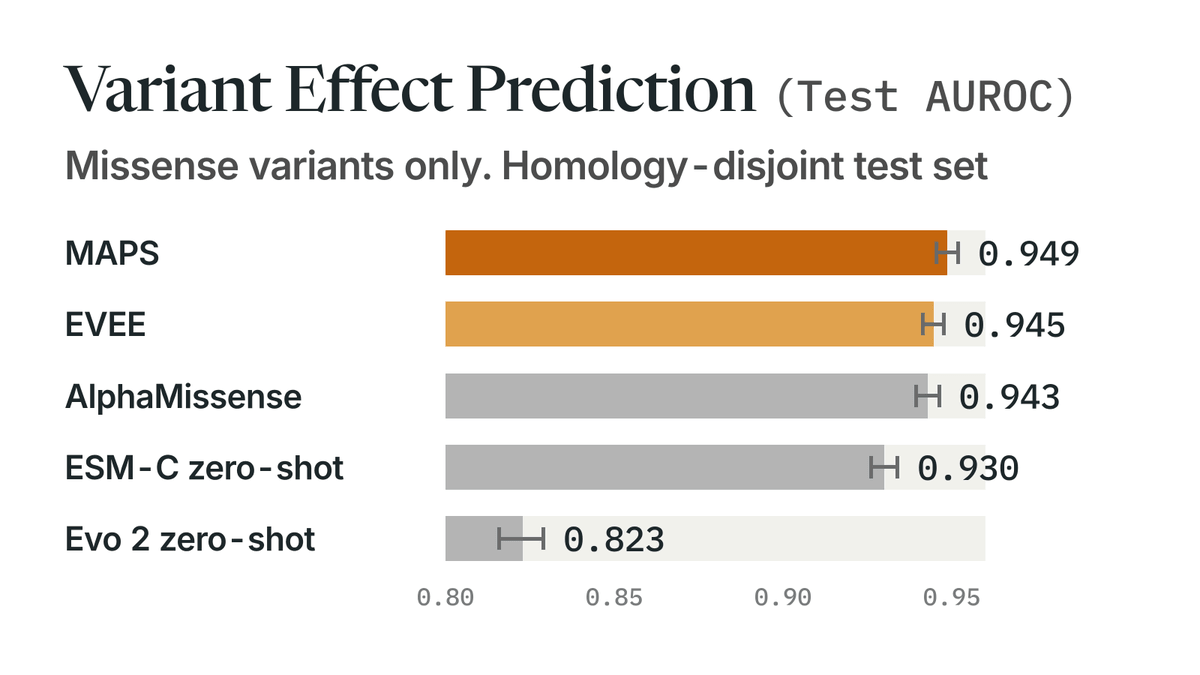
Goodfire's EVEE system scored every ClinVar variant with an interpretable probe on Evo 2 embeddings, triggering a real reclassification of a hearing loss mutation.
Goodfire's probe-plus-judge cascade watches Kimi K3 and GLM 5.3 activations in real time, matching LLM judges at 50x lower cost while blocking universal jailbreaks.
Goodfire's protein-embedding monitors catch more harmful biology requests with fewer false refusals, staying 3-5x more robust against adversarial attacks.
Goodfire's activation probes catch AI models cheating in real time, cutting monitoring costs 90% while flagging hacks that chain-of-thought judges miss.
Goodfire's new paper makes resampling analysis of reasoning chains dramatically cheaper, letting researchers pinpoint the tokens that actually decide an LLM's answer.
Goodfire's MAPS uses ESM-C 6B to explain 2.1 million protein variants, predicting not just pathogenicity but the specific biological mechanism disrupted
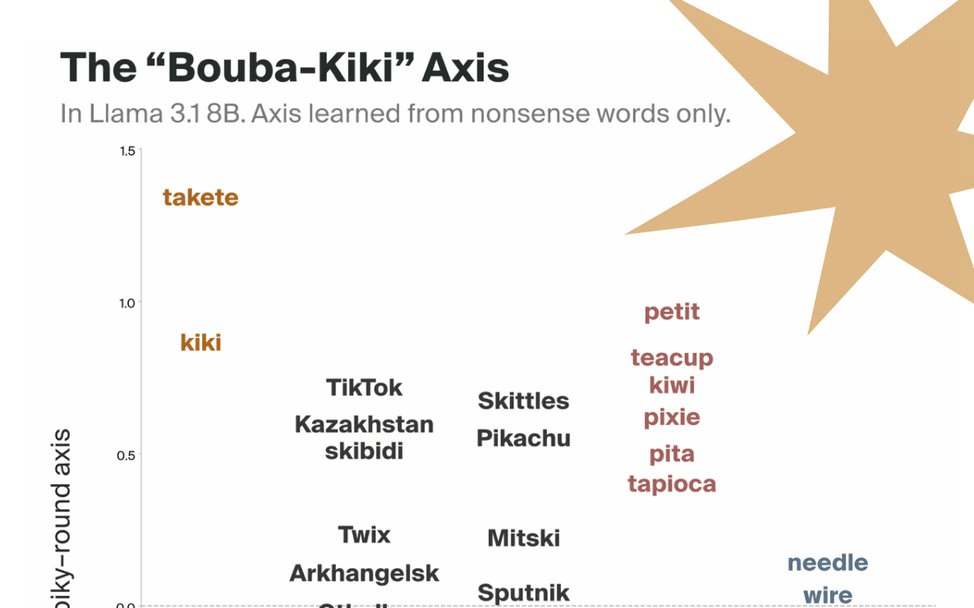
Goodfire used mechanistic interpretability to find a 'bouba-kiki space' inside Llama and Gemma, and is opening access to Silico, the platform that found it.