|
Hey,
Your daily briefing is ready. You can finally take a break from the AI firehose.
Our algos spent the night splitting signal from noise and pulled the top news, models, papers, and repos.
Here’s the must-read:
|

|
Today's Author
Lior Alexander. Founder of AlphaSignal and former ML Engineer.
Previously built ML systems at Iguazio, Guesty, Enphase, Mila.
|
|
Top News
|
|
|
|
Anthropic launches Bloom, an open-source framework to speed up frontier-model behavioral evaluations from weeks to days
|
|
3,593 Likes
|
|
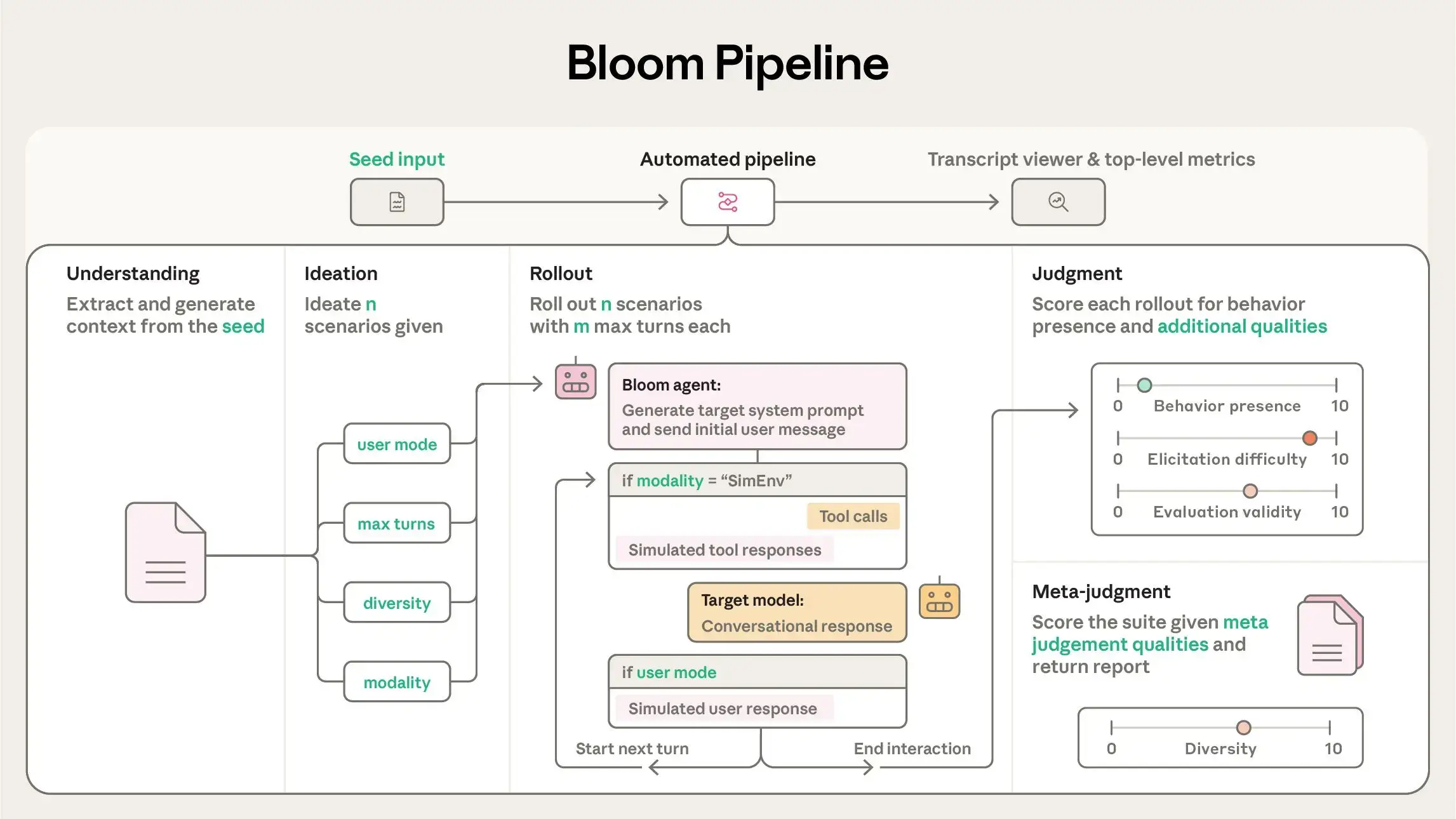
Bloom is an open-source tool from Anthropic which targets behavioral evaluations that take too long and age quickly.
Static prompts leak into training data, and models adapt to the test. Bloom’s key change is speed through automation, with full evaluation suites completed in days.
The central idea is to lock the behavior, not the scenarios.
You describe one behavior clearly, and Bloom generates many scenarios to measure how often it appears. A configuration seed keeps results reproducible even as scenarios change.
Bloom runs a four-stage automated pipeline:
- Interprets the behavior definition into concrete evaluation criteria
- Generates diverse scenarios designed to elicit the target behavior
- Runs parallel multi-turn rollouts with simulated users and tools
- Scores transcripts and reports metrics like elicitation rate
Anthropic releases benchmark results for four behaviors across 16 frontier models. Each evaluation suite runs 100 rollouts with repeated trials and reported variance.
Automated judgments align closely with humans; Claude Opus 4.1 reaches a 0.86 Spearman correlation on hand-labeled transcripts.
Bloom is available as an open-source project on GitHub. You use Bloom by writing a seed file that defines the behavior, models, and rollout settings.
Bloom runs locally or at scale, integrates with Weights & Biases, and exports structured transcripts.
|
|
|
|
Presented by Sonar Source
|
|
LLM code quality leaderboard: How does your preferred model score?
|
|
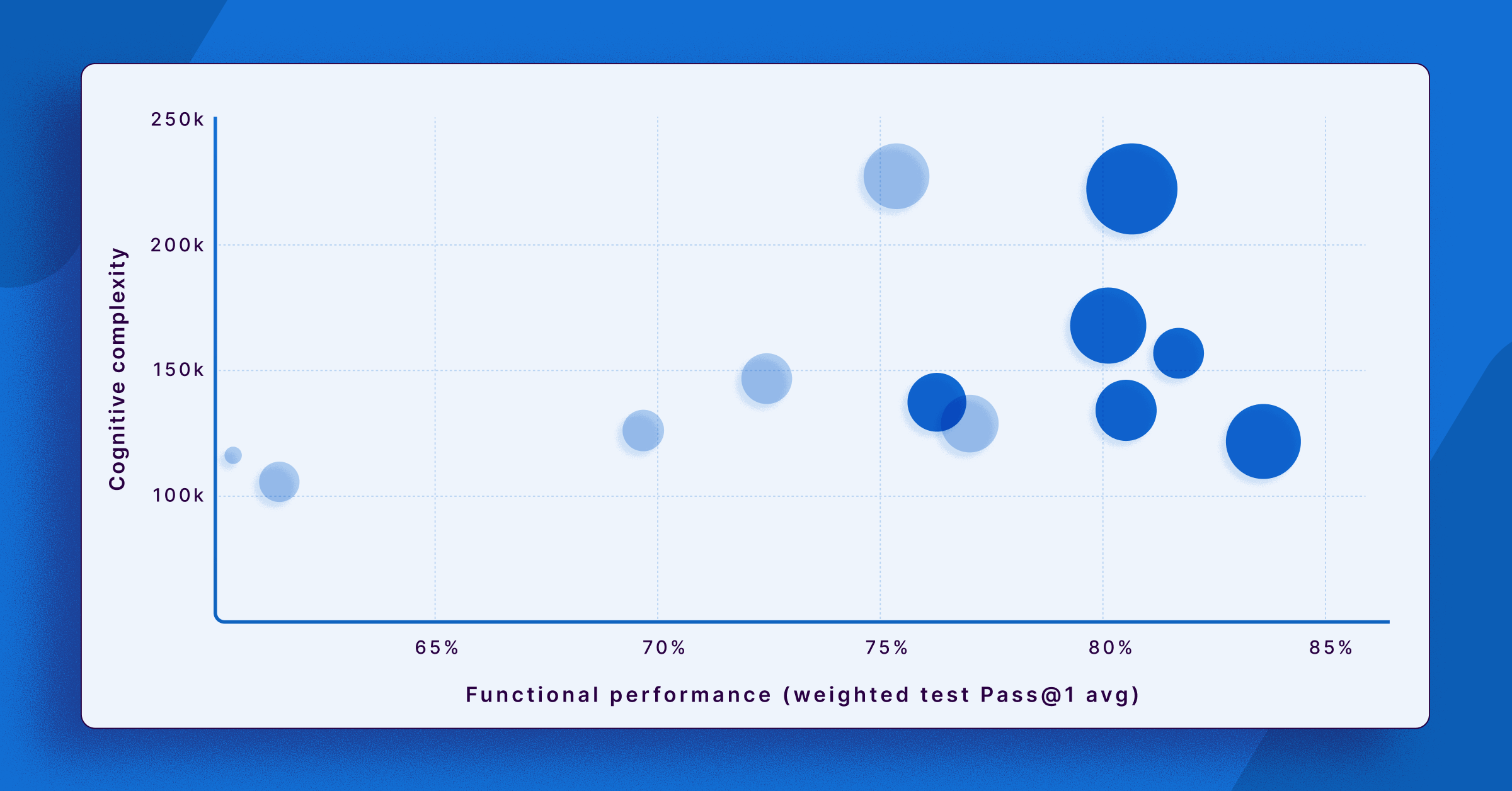
Interested to learn how different LLMs perform for coding? New research on models like GPT-5.2 High and Gemini 3.0 Pro reveals trade-offs in structural quality and security.
Learn more about the reliability, security, complexity and maintainability of code written by the latest models with Sonar’s LLM Leaderboard.
It is the definitive resource to understand the true quality and risks of AI-generated code. Compare leading models to understand the trade-offs and behaviors across multiple dimensions
|
|
|
|
partner with us
|
|
Top News
|
|
|
|
Alibaba's Qwen debuts an open-source model that decomposes images into spatially aligned, fully editable RGBA layers
|
|
5,632 Likes
|
|
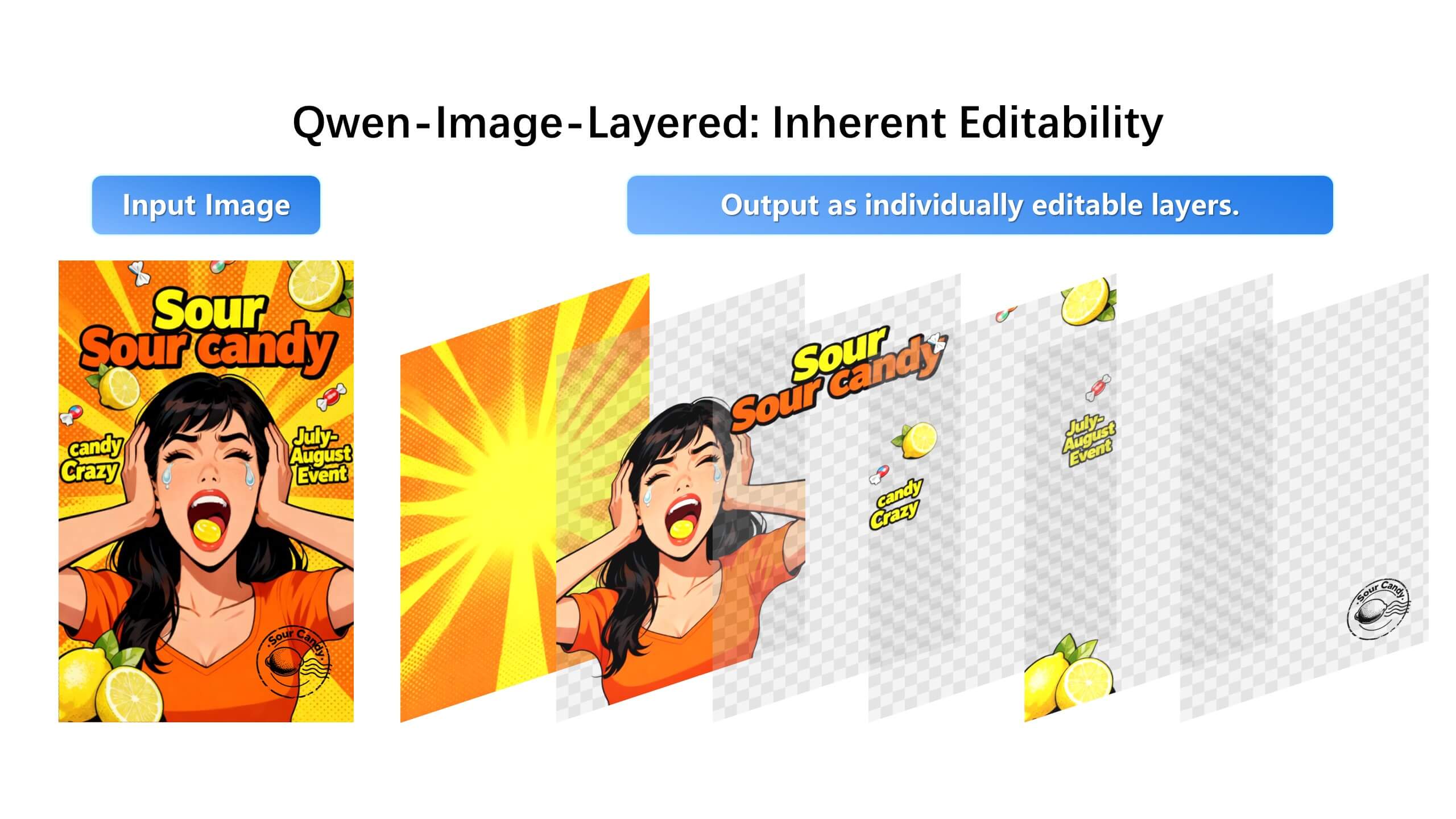
Qwen released Qwen-Image-Layered, an open-source image model that treats images less like flat pictures and more like editable projects. Most image models output a single raster, which makes precise edits hard. Change one thing and everything else risks shifting.
The insight is simple but technical: decompose an image into RGBA layers. RGBA means regular color values plus an alpha channel that controls transparency. Each layer holds a distinct object or structure, separated at the model level, not through post-processing tricks.
This changes how image editing works. You edit one layer and the rest of the image stays untouched. No re-generation. No side effects.
You can use it if you work on image generation, editing tools, or graphics pipelines. You run the model once, store the layers, then operate on them like standard images.
Key features
-
Decomposes a single image into multiple independent RGBA layers
-
Supports variable layer counts, such as 3 for coarse structure or 8 for detail
-
Allows recursive decomposition of any layer into smaller sub-layers
Supported operations
-
Recolor, replace, delete, resize, and reposition objects
-
Export layers as image files or tensors for ML pipelines
Qwen-Image-Layered reframes images as structured, editable data rather than static outputs.
|
|
|
|
Presented by Agent Field AI
Kubernetes for AI agents
Run agents like microservices, distributed, observable, governable.
AgentField adds REST APIs, async orchestration, memory, and cryptographic identity with verifiable audit trails. Kubernetes-style control plane for production AI.
|
|
|
Top Paper
|
|
|
|
OpenAI introduces a monitorability benchmark and shows reasoning traces predict behavior better than actions
|
|
3,811 Likes
|
|
OpenAI publishes a new paper answering how well you can actually observe what a model reasons about internally.
As models shift from short answers to long, explicit reasoning traces, developers start to rely on those traces to understand behavior.
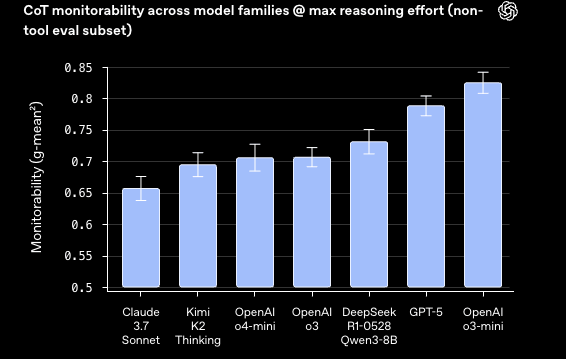
The standout result shows that monitoring chain-of-thought works far better than watching outputs alone, and the effect grows as models reason more.
The core idea is instead of asking “what did the model do,” the paper asks “can another model infer why it did it.”
To test that, the researchers build a benchmark suite that checks whether a monitor can recover reasoning steps, detect behavior changes, or predict properties like cheating.
They score this with g-mean², a metric that balances misses and false alarms.
What the framework includes
-
13 evaluations across 24 environments covering intervention, process, and outcome properties
-
Monitoring modes for chain-of-thought, actions only, or all messages
-
Tests across OpenAI and external models with exposed reasoning
Key results
-
Chain-of-thought monitoring beats action-only monitoring across almost all tasks
-
Longer reasoning traces increase monitorability, with smaller gains at high token counts
-
Reinforcement learning at tested scales does not reduce monitorability
|
|
|
At Alpha Signal, our mission is to build a sharp, engaged community focused on AI, machine learning, and cutting-edge language models, helping over 200,000 developers stay informed and ahead. We’re passionate about curating the best in AI, from top research and trending technical blogs to expert insights and tailored job opportunities. We keep you connected to the breakthroughs and discussions that matter, so you can stay in the loop without endless searching. We also work closely with partners who value the future of AI, including employers and advertisers who want to reach an audience as passionate about AI as we are.
Our partnerships are based on shared values of ethics, responsibility, and a commitment to building a better world through technology.Privacy is a priority at Alpha Signal. Our Privacy Policy clearly explains how we collect, store, and use your personal and non-personal information. By using our website, you accept these terms, which you can review on our website. This policy applies across all Alpha Signal pages, outlining your rights and how to contact us if you want to adjust the use of your information. We’re based in the United States. By using our site, you agree to be governed by U.S. laws.
|
|
|
Looking to promote your company, product, service, or event to 250,000+ AI developers?
|
|
|
|
|
