|
Hey,
Your daily briefing is ready. You can finally take a break from the AI firehose.
Our algos spent the night splitting signal from noise and pulled the top news, models, papers, and repos.
Here’s the must-read:
|

|
Today's Author
Lior Alexander. Founder of AlphaSignal and former ML Engineer.
Previously built ML systems at Iguazio, Guesty, Enphase, Mila.
|
|
Top News
|
|
|
|
OpenAI introduces GPT-Image-1.5 with 4× faster generation and stronger control over image edits
|
|
10,533 Likes
|
|
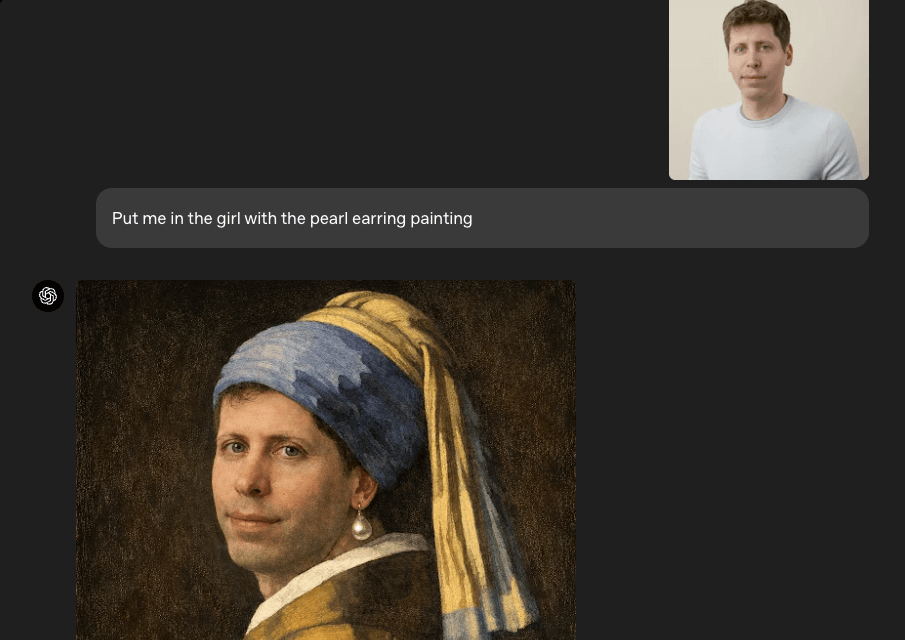
OpenAI updates its image stack with GPT-Image-1.5, a new model that replaces GPT-Image-1 in ChatGPT and the API.
The prior version drew attention but fell behind on speed, edit stability, and text accuracy. This release focuses on one clear breakthrough: images render up to 4× faster, even across iterative edits.
Image edits often broke faces, layouts, or text after one or two changes.
GPT-Image-1.5 fixes this by following instructions more precisely and preserving visual details across edits. This matters if you build tools that rely on repeated image refinement, not one-shot prompts.
Key features and results
-
Generates images up to 4× faster than GPT-Image-1
-
Preserves faces, lighting, composition, and logos across multiple edits
-
Supports add, remove, blend, combine, and transpose edit operations
-
Renders dense text, small fonts, tables, and infographics more accurately
-
Ranks first on Artificial Analysis and LM Arena image benchmarks
OpenAI also adds a dedicated Images panel in ChatGPT with preset styles and templates. You can queue multiple generations while others render.
How you use it
-
Call the API model GPT-Image-1.5 for generation or editing
-
Upload an image, describe the change, and iterate step by step
-
Pay about 20% less per image input and output than before
|
|
|
|
Solve Enterprise Auth, Identity, and Security for Your App
|
|
Sponsored
|
|
Enterprise customers demand SSO, Directory Sync, RBAC, and Audit Logs, but building and maintaining that infrastructure slows teams down and pulls focus from core product work.
WorkOS provides these features through simple APIs and a hosted Admin Portal that integrates with every identity provider. You get production-ready enterprise capabilities without owning the complexity yourself.
Trusted by OpenAI, Cursor, Vercel, and 1000+ more. Your first million MAUs are free.
Add enterprise features today.
|
|
|
|
partner with us
|
|
Top News
|
|
|
|
Meta releases SAM Audio, an open-source model separating speech, music, and environmental sounds via prompts
|
|
5,293 Likes
|
|
Meta introduces SAM Audio, a new foundation model that brings the Segment Anything idea to sound.
Audio separation already exists, but most systems lock you into narrow domains like speech or music and force a single control method.
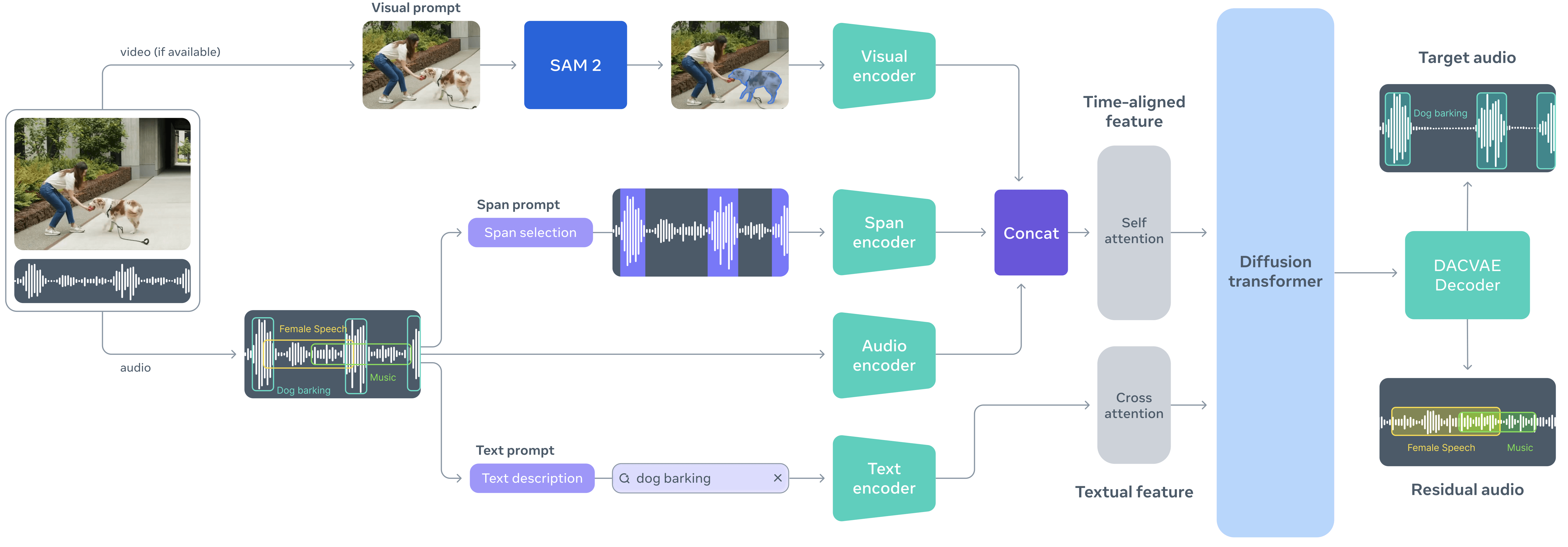
SAM Audio changes that by letting you isolate any sound from mixed audio or video using text, a visual click, or a time span.
The core insight is unification. Instead of building separate models for speech, music, or sound effects, Meta trains one model that understands all of them and responds to different prompt types.
Under the hood, SAM Audio uses a flow-matching Diffusion Transformer, a generative model that gradually reconstructs clean audio from noise. Then compresses audio while preserving quality.
Key features
-
Separates speech, music, instruments, and environmental sounds in one model
-
Supports text, visual, and time-span prompts in the same workflow
-
Outputs both the target sound and residual audio as synchronized stems
-
State-of-the-art results across speech, music, and general sound benchmarks
How to use it
-
Install the open-source code with Python 3.10+
-
Request model checkpoints from Hugging Face
-
Run inference on a CUDA GPU for practical performance
|
|
|
|
Top News
|
|
|
|
Google adds interactive Gem mini-apps to Gemini desktop with built-in step-based prompt execution
|
|
5,812 Likes
|
|
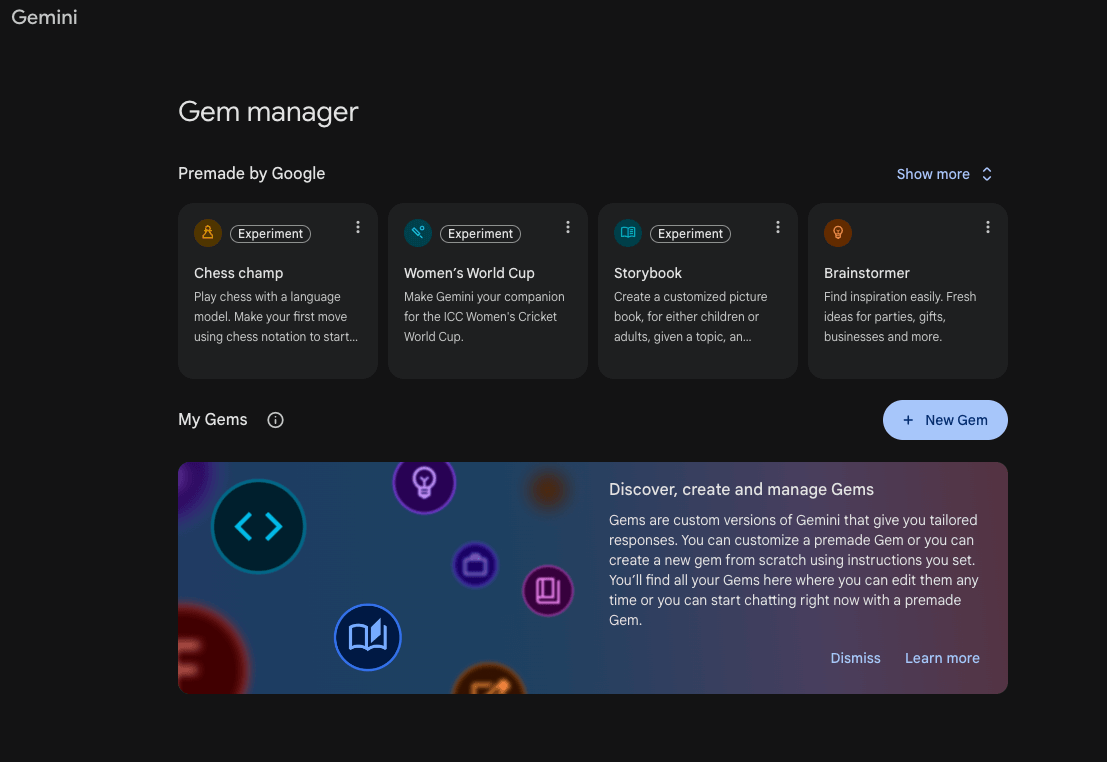
Google introduces experimental Gems in the Gemini desktop app that turn prompts into interactive AI mini-apps.
Gemini traditionally answers one prompt at a time, which makes complex, repeatable tasks brittle. This update reframes prompts as reusable tools with structure and state.
The technical shift comes from Opal, a Google Labs tool now embedded in Gemini.
Opal breaks a prompt into explicit steps that Gemini executes in order. You can see each step, edit it, and rerun it. A “step” is simply a defined instruction Gemini runs sequentially, similar to a small pipeline.
What Gems do
-
Package prompts into persistent, step-based mini-apps inside Gemini desktop
-
Accept text, image, and file inputs within a single workflow
-
Expose intermediate steps for inspection and manual editing
-
Run fully inside Gemini without external tools or frameworks
You can open the Gems manager in Gemini desktop to use it.
Google demos recipes, marketing plans, and visual explainers, but the core change is durable prompt execution.
|
|
|
At Alpha Signal, our mission is to build a sharp, engaged community focused on AI, machine learning, and cutting-edge language models, helping over 200,000 developers stay informed and ahead. We’re passionate about curating the best in AI, from top research and trending technical blogs to expert insights and tailored job opportunities. We keep you connected to the breakthroughs and discussions that matter, so you can stay in the loop without endless searching. We also work closely with partners who value the future of AI, including employers and advertisers who want to reach an audience as passionate about AI as we are.
Our partnerships are based on shared values of ethics, responsibility, and a commitment to building a better world through technology.Privacy is a priority at Alpha Signal. Our Privacy Policy clearly explains how we collect, store, and use your personal and non-personal information. By using our website, you accept these terms, which you can review on our website. This policy applies across all Alpha Signal pages, outlining your rights and how to contact us if you want to adjust the use of your information. We’re based in the United States. By using our site, you agree to be governed by U.S. laws.
|
|
|
Looking to promote your company, product, service, or event to 250,000+ AI developers?
|
|
|
|
|
