|
Hey,
Your daily briefing is ready. You can finally take a break from the AI firehose.
Our algos spent the night splitting signal from noise and pulled the top news, models, papers, and repos.
Here’s the must-read:
|

|
Today's Author
Lior Alexander. Founder of AlphaSignal and former ML Engineer.
Previously built ML systems at Iguazio, Guesty, Enphase, Mila.
|
|
Top News
|
|
|
|
OpenAI rolls out continuous age prediction that switches runtime behavior without relying on signup age
|
|
4,538 Likes
|
|
Instead of relying only on signup data, ChatGPT now estimates whether an account likely belongs to someone under 18 and switches runtime behavior automatically. The key shift is that this decision updates over time as usage changes, not at a single moment.
Self-reported age stays static, while real usage patterns do not. Age prediction adds a classifier layer that evaluates account history and behavior signals and selects a stricter runtime configuration when needed.
This matters because it lets the same underlying models serve different policy regimes without duplication.
How it works
-
Uses account age, activity timing, usage patterns, and stated age as inputs
-
Runs continuously and updates classification as new signals appear
-
Defaults to a stricter configuration when confidence stays low
What changes at runtime
-
Keeps the same base models and weights
-
Applies different prompt handling and output filtering rules
-
Disables entire interaction classes such as sexual or violent role play
How you interact with it
-
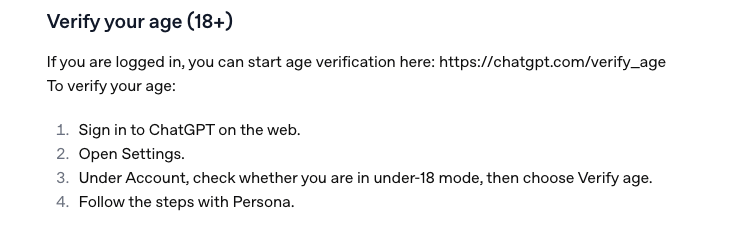
View account status in Settings > Account
-
Verify age through Persona if misclassified
-
Restore full access after confirmation, without changing models or tools
|
|
|
|
Presented by QA.tech
|
|
Keep QA from Slowing Down AI Development
|
|
Your team ships faster with AI, but testing can’t keep up. Scripted QA breaks as outputs change, and manual checks become the bottleneck.
QA.tech replaces brittle test suites with adaptive AI testing agents. Teams like Pricer and Upsales already save hundreds of hours each month, matching testing speed to development speed and catching regressions before production.
See how you can:
-
Match testing velocity to AI-powered coding velocity
-
Eliminate flaky scripts with self-healing, adaptive tests
-
Reduce manual QA effort while increasing coverage and reliability
The first 20 Alpha Signal teams entering a PoC can get up to $20,000 in credits.
|
|
|
|
partner with us
|
|
Top News
|
|
|
|
Liquid AI debuts an open-source 1.2B reasoning model running fully offline with sub-1 GB memory use
|
|
2,137 Likes
|
|
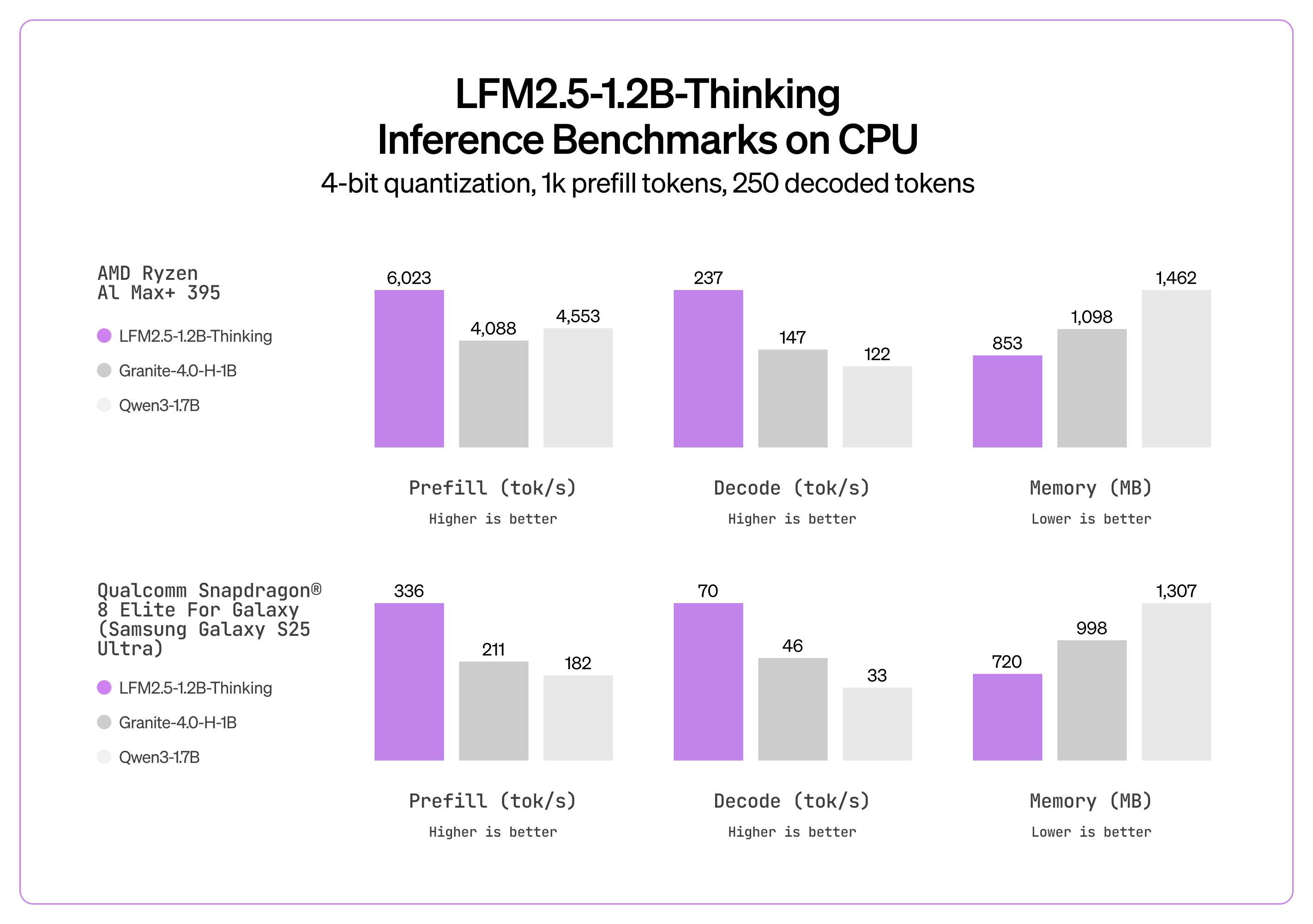
Two years ago, strong reasoning models required servers. Liquid AI now runs that workload on a phone. The company releases LFM2.5-1.2B-Thinking, a 1.2B parameter model that fits in ~900 MB and runs fully offline, which marks the most notable shift in this release.
Small models struggle with multi-step reasoning. Liquid AI trains this model to reason first and answer second. “Thinking traces” mean the model works through steps internally, then outputs a short answer. That design reduces token count and keeps latency low on-device.
What the model does
-
Targets math, tool use, and instruction-following rather than chat or creative writing
-
Uses internal reasoning traces without exposing long chains of thought
-
Prioritizes concise outputs to control memory and decode cost
Measured results
-
MATH-500: 88, up from 63 in the instruct variant
-
Multi-IF: 69, up from 61
-
BFCLv3 tool use: 57, up from 49
-
Matches or exceeds Qwen3-1.7B with 40% fewer parameters
How you use it
-
Run locally with llama.cpp, MLX, vLLM, or ONNX Runtime
-
Fine-tune with TRL or Unsloth on supported hardware
-
Deploy on Apple, AMD, Qualcomm, or NVIDIA CPUs and NPUs
|
|
|
|
Top Paper
|
|
|
|
Nous Research documents kernel, CPU, and routing fixes enabling high-throughput MoE expert parallelism
|
|
1,036 Likes
|
|
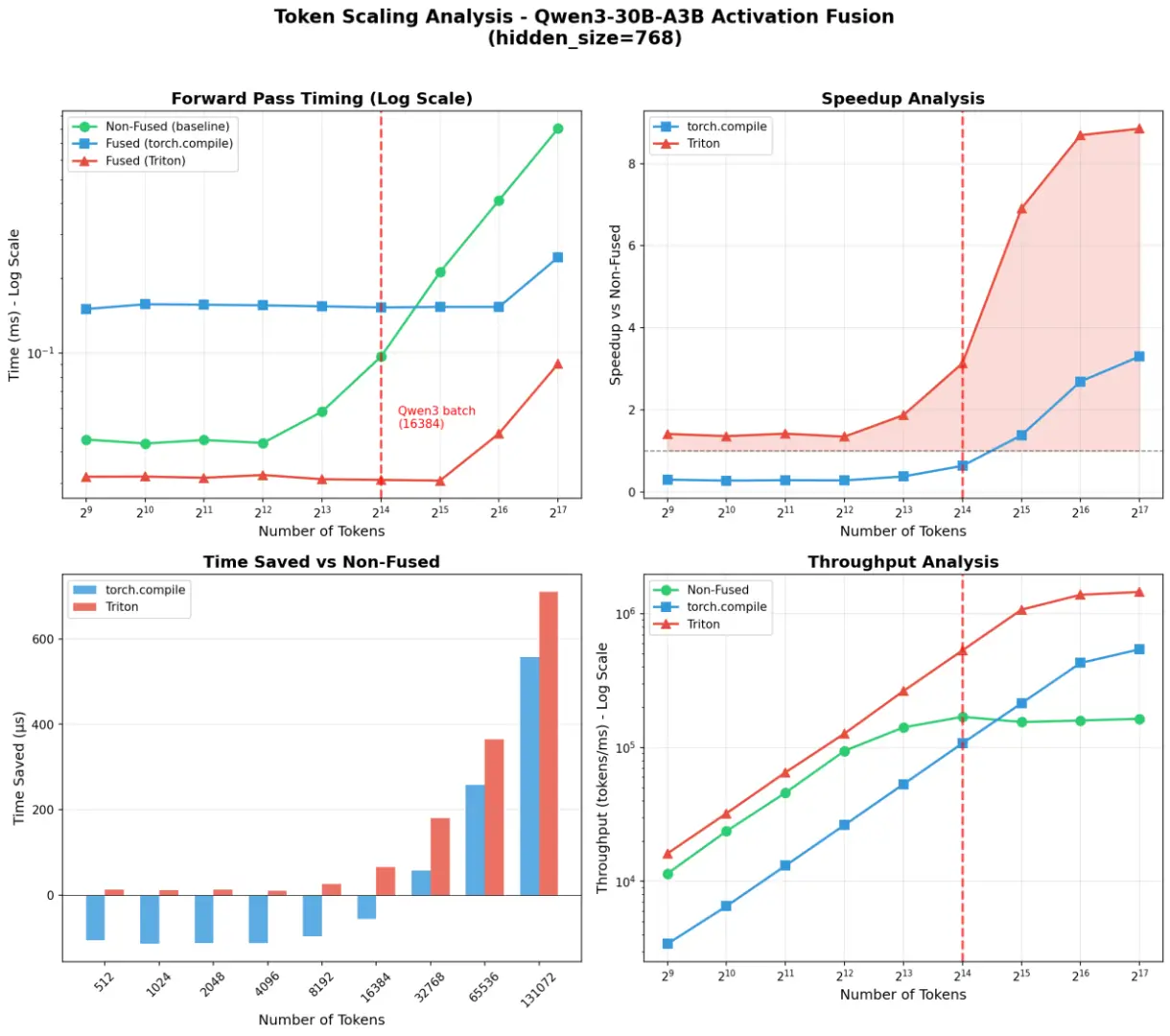
Nous Research publishes a field report that shows how it scales Mixture-of-Experts (MoE) training with DeepEP inside a modified Torchtitan stack on NVIDIA B200 GPUs.
MoE routes tokens to specialized sub-networks called experts, which promises efficiency but often breaks down at scale. The most notable outcome is sustained high throughput with near-linear scaling to large GPU counts.
Increasing expert parallelism slowed training. Profiling exposed intranode kernels that serialized work as expert count rose. Kernel launch tuning fixed that, then CPU launch overhead surfaced as the next bottleneck.
As throughput increased, silent routing and gradient bugs appeared.
What Nous changed
-
Tune DeepEP intranode kernels by raising num_sms from 24 to 128
-
Fix cached routing metadata that blocks kernel tuning
-
Identify CPU launch overhead in scatter_add and fused dispatch paths
-
Correct router initialization that routed 100% of tokens to rank 0
-
Patch grouped GEMM backward for zero-token experts
Results
-
15,057 tokens/sec per GPU, exceeding the 14,796 baseline
-
57% of theoretical NVLink bandwidth, up from ~34% reference
-
Near-linear scaling maintained up to 128 GPUs
|
|
|
At Alpha Signal, our mission is to build a sharp, engaged community focused on AI, machine learning, and cutting-edge language models, helping over 200,000 developers stay informed and ahead. We’re passionate about curating the best in AI, from top research and trending technical blogs to expert insights and tailored job opportunities. We keep you connected to the breakthroughs and discussions that matter, so you can stay in the loop without endless searching. We also work closely with partners who value the future of AI, including employers and advertisers who want to reach an audience as passionate about AI as we are.
Our partnerships are based on shared values of ethics, responsibility, and a commitment to building a better world through technology.Privacy is a priority at Alpha Signal. Our Privacy Policy clearly explains how we collect, store, and use your personal and non-personal information. By using our website, you accept these terms, which you can review on our website. This policy applies across all Alpha Signal pages, outlining your rights and how to contact us if you want to adjust the use of your information. We’re based in the United States. By using our site, you agree to be governed by U.S. laws.
|
|
|
Looking to promote your company, product, service, or event to 250,000+ AI developers?
|
|
|
|
|
