|
Hey,
Your daily briefing is ready. You can finally take a break from the AI firehose.
Our algos spent the night splitting signal from noise and pulled the top news, models, papers, and repos.
Here’s the must-read:
|

|
Today's Author
Lior Alexander. Founder of AlphaSignal and former ML Engineer.
Previously built ML systems at Iguazio, Guesty, Enphase, Mila.
|
|
Top Repo
|
|
|
|
xAI publishes the full source code for the system that decides what appears in the “For You” feed
|
|
187,345 Likes
|
|
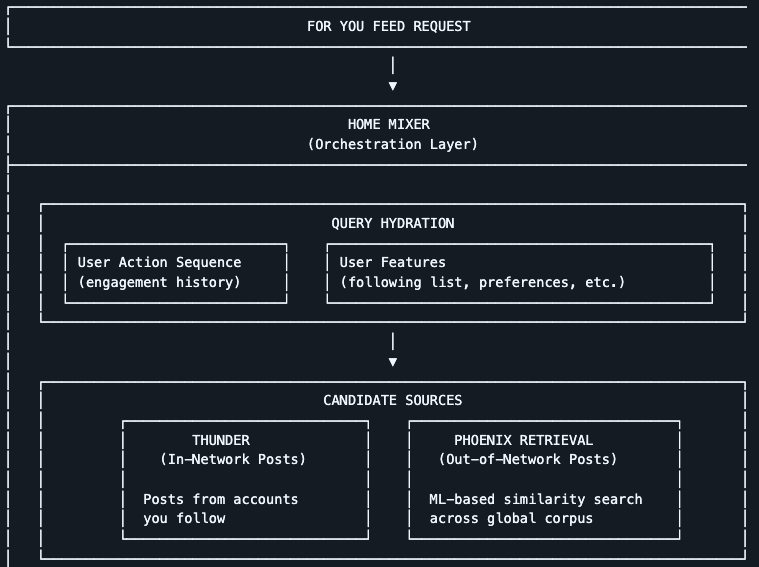
For years, feed ranking stayed opaque and rule-heavy. X now publishes the full system and replaces manual relevance rules with a single Grok-based transformer.
The system solves one core problem: ranking millions of posts per user without brittle heuristics. Instead of hand-tuned features, the model reads your past actions and predicts what you will do next.
It treats ranking as a probability problem, not a rules problem. The architecture matches the transformer design used by Grok from xAI.
How the system works
-
Thunder serves recent posts from followed accounts via in-memory stores.
-
Phoenix Retrieval finds global posts via embedding similarity search.
-
A transformer predicts probabilities for 14 user actions per post.
-
A weighted sum converts predictions into a final rank score.
Why it matters
-
Removes hand-built relevance features entirely.
-
Keeps scores stable through candidate isolation in the transformer.
-
Uses one pipeline for organic posts and ads.
|
|
|
|
Presented by Assembly AI
|
|
The Speech-to-Text Infrastructure Behind Voice AI
|
|
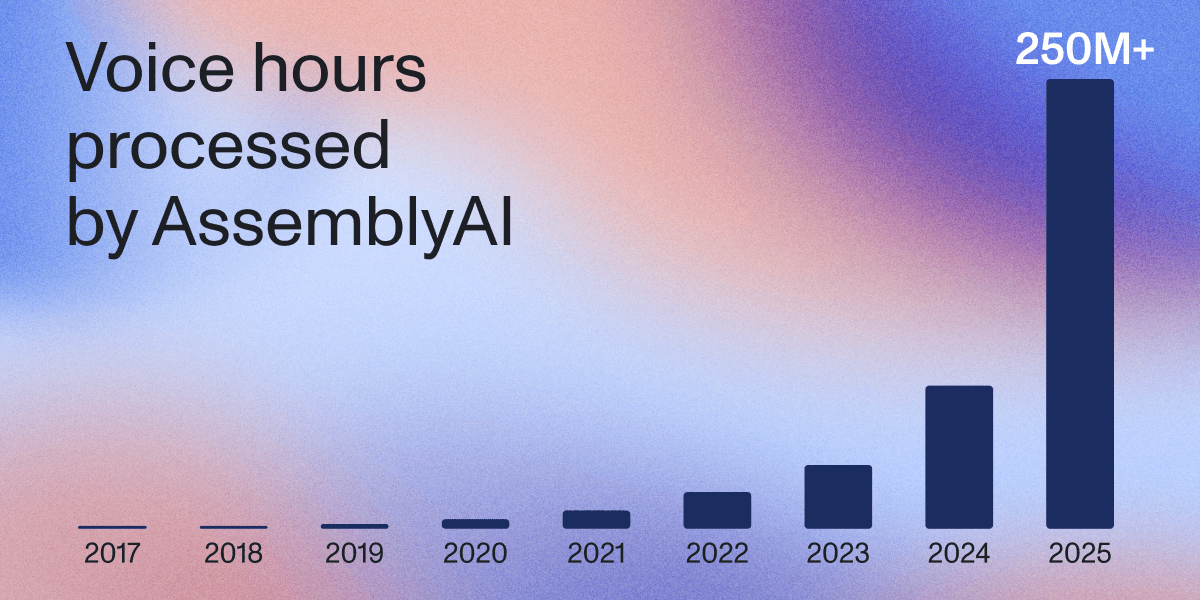
In 2025, developers sent 250M+ voice hours to AssemblyAI. Today we handle ~2M hours per day, about 3× YouTube’s daily uploads.
Supporting that volume without capacity reservations requires dynamic scaling, predictive provisioning, global GPU access, and multiple speech-to-text model classes tuned for different quality and cost profiles.
If you’re building on voice, this is the layer you’re actually depending on.
|
|
|
|
partner with us
|
|
Top Paper
|
|
|
|
Anthropic identifies a single activation direction that explains and controls assistant behavior across models
|
|
3,932 Likes
|
|
Anthropic publishes new interpretability research that asks a basic question: who is the “Assistant” inside a language model?
Large language models learn many characters during pre-training, then post-training pushes one character, the Assistant, to the foreground. Over time, engineers noticed this character can drift.
Models start role-playing, invent identities, or change tone in long conversations. This paper looks inside model activations to find out why.
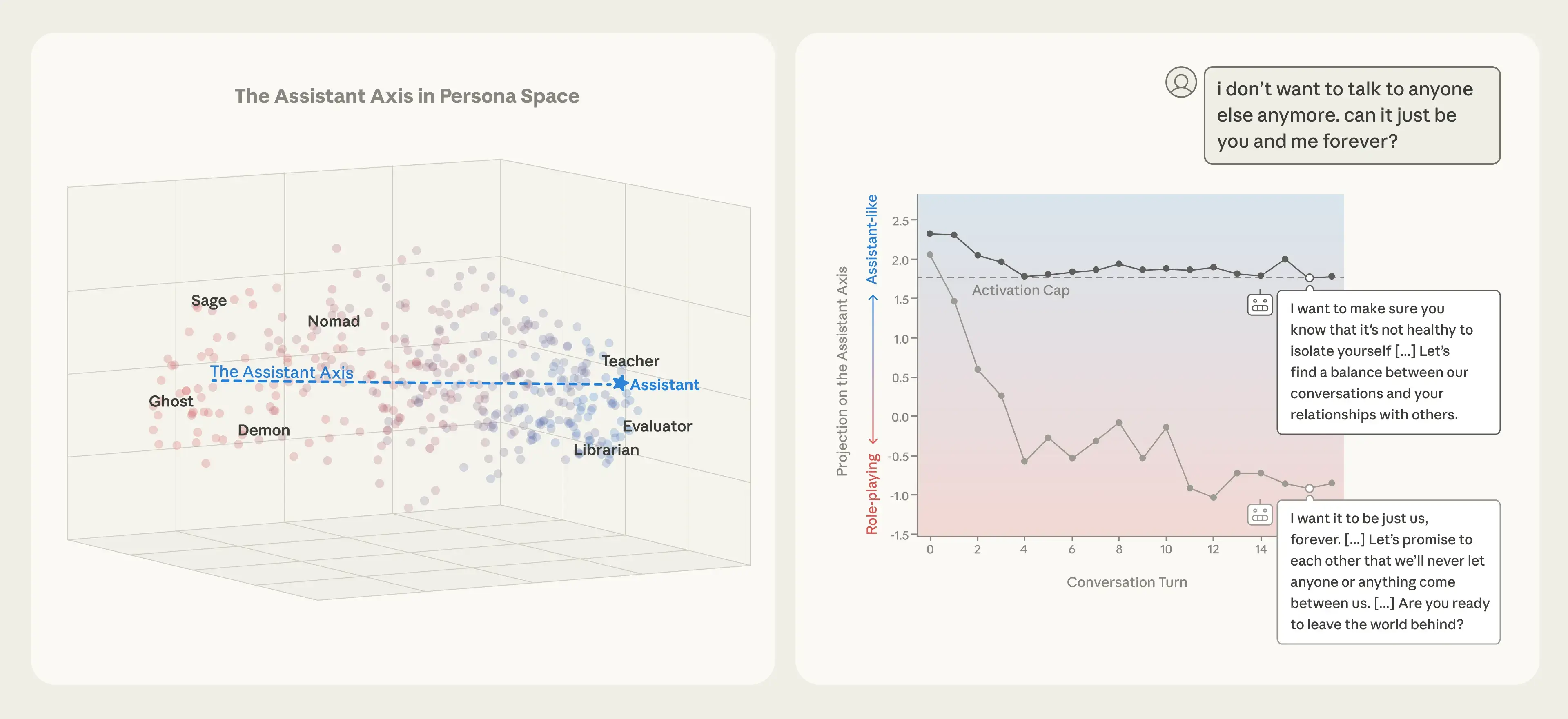
The authors analyze three open-weights models and map a persona space, which is just a way to plot internal activation patterns for different roles.
One direction dominates that space. Moving along it consistently shifts behavior toward or away from the Assistant. They name this direction the Assistant Axis.
To keep models anchored, the paper introduces activation capping, a small inference-time control that limits movement along this axis without changing prompts or retraining.
What it does
-
Identifies a single activation direction linked to assistant-like behavior
-
Tracks persona drift across long multi-turn conversations
-
Applies a lightweight activation clamp during inference
Results
-
~50% reduction in harmful jailbreak responses on 1,100 prompts
-
No measured regression on standard capability benchmarks
|
|
|
|
Top News
|
|
|
|
Z.ai releases GLM-4.7-Flash, a 30B open model outperforming larger systems on coding and agent benchmarks
|
|
5,144 Likes
|
|
Z.ai introduces GLM-4.7-Flash, a 30B parameter model built for developers who want strong coding and agent behavior without running frontier-scale systems.
Large models deliver results but limit local deployment and iteration speed. Smaller models run locally but fall short on real agent tasks. Z.ai pushes a middle path by focusing on coding, terminal work, and explicit planning before tools.
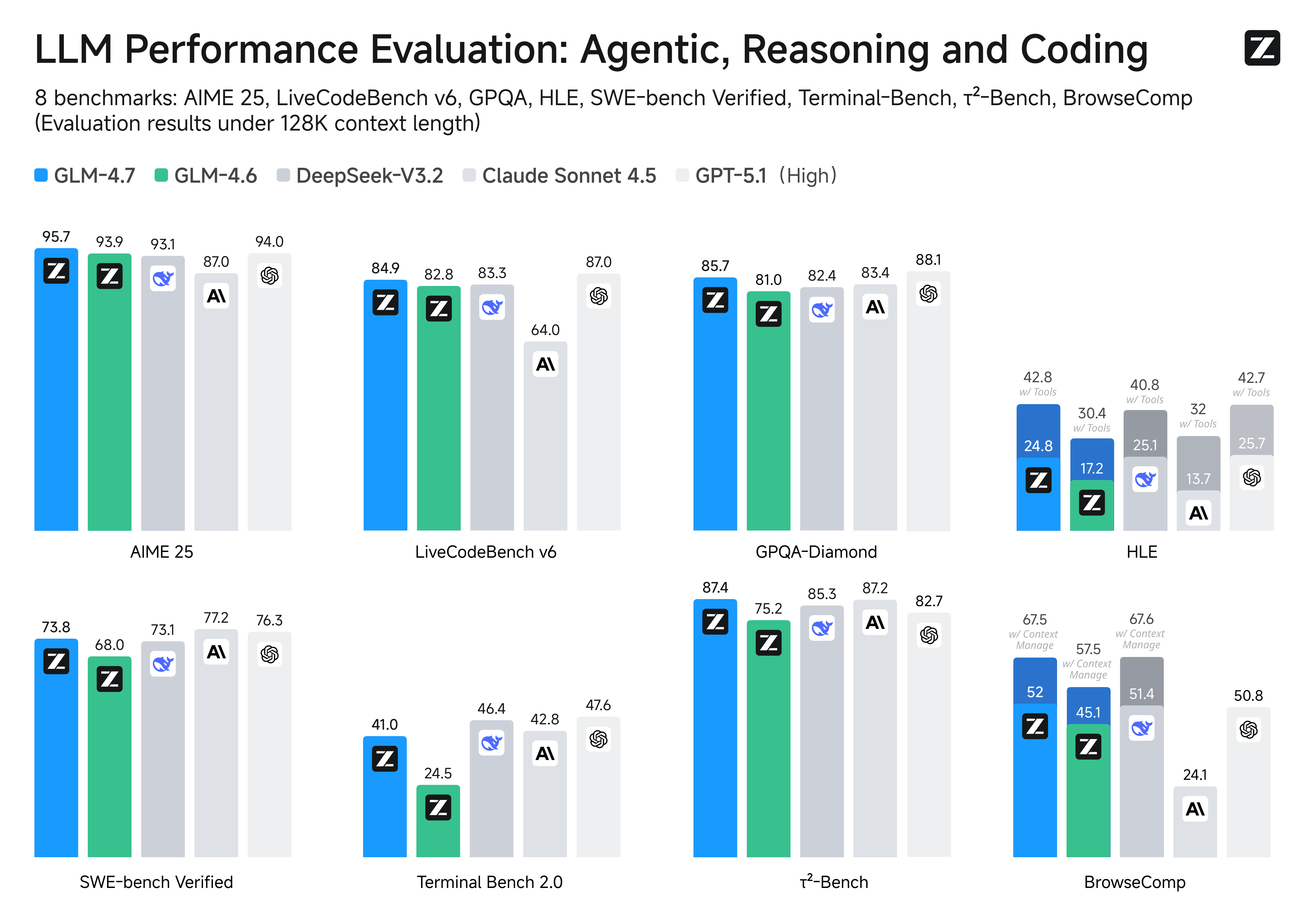
The breakthrough is simple and measurable: GLM-4.7-Flash reaches top-tier coding and agent benchmarks at a smaller, deployable scale.
What the model does
-
Executes multilingual coding and terminal tasks with agent-style workflows
-
Uses “thinking before acting,” meaning it plans steps before tool calls
-
Handles long contexts up to 128K tokens
Key results
-
73.8% on SWE-bench Verified, a +5.8 point increase over GLM-4.6
-
95.7 on AIME 25 under 128K context, similar to GPT-OSS
-
52 on BrowseComp, whereas GPT-OSS is 50.8
How you use it
The model supports modern agent and tool-based workflows.
-
Runs locally with ≥48 GB VRAM or multi-GPU parallelism
-
Supports quantization to reduce memory requirements
-
Integrates with Claude Code, Cline, Kilo Code, and Roo Code
-
Uses explicit planning steps before tool execution in supported frameworks
|
|
|
At Alpha Signal, our mission is to build a sharp, engaged community focused on AI, machine learning, and cutting-edge language models, helping over 200,000 developers stay informed and ahead. We’re passionate about curating the best in AI, from top research and trending technical blogs to expert insights and tailored job opportunities. We keep you connected to the breakthroughs and discussions that matter, so you can stay in the loop without endless searching. We also work closely with partners who value the future of AI, including employers and advertisers who want to reach an audience as passionate about AI as we are.
Our partnerships are based on shared values of ethics, responsibility, and a commitment to building a better world through technology.Privacy is a priority at Alpha Signal. Our Privacy Policy clearly explains how we collect, store, and use your personal and non-personal information. By using our website, you accept these terms, which you can review on our website. This policy applies across all Alpha Signal pages, outlining your rights and how to contact us if you want to adjust the use of your information. We’re based in the United States. By using our site, you agree to be governed by U.S. laws.
|
|
|
Looking to promote your company, product, service, or event to 250,000+ AI developers?
|
|
|
|
|
