We are past the point where a new foundation model's parameter count alone defines its usefulness. Depending on the applications, a small model with solid capabilities and the right scaffolding can sometimes outperform frontier models.
In this regard, Gemma 4, Google DeepMind's latest family of open-weights models stands out because it is natively built for agentic workflows, function-calling, and complex reasoning on edge devices and workstations alike. These models are a perfect base on top of which you can build powerful local AI applications.
The true value of AI now comes from the orchestration layers you build around a model. Pairing a highly capable model like Gemma 4 with robust local infrastructure gives you a local AI engine.
And the applications we've seen so far strongly suggest keeping an eye out on Gemma 4 in the next months.
Under the hood: built for deployment
There are several things that make the Gemma 4 family a compelling choice for LLMs. First is that they come in different sizes to fit different needs:
- Gemma 4 E2B and E4B are designed for edge devices such as mobile and low-memory laptops.
- For higher-end devices, there is Gemma 4 26B A4B, a Mixture-of-Experts (MoE) model with 26 billion total parameters, of which only 3.8 billion are activated for any token during inference.
- For heavier tasks, there is Gemma 4 31B, a dense model that fits on two GPUs if running on full precision or a single consumer GPU is using the quantized version.
The smaller models have a 128,000-token context and the larger models can support up to 256,000 tokens, which is suitable for agentic tasks that run on long sequences of data.
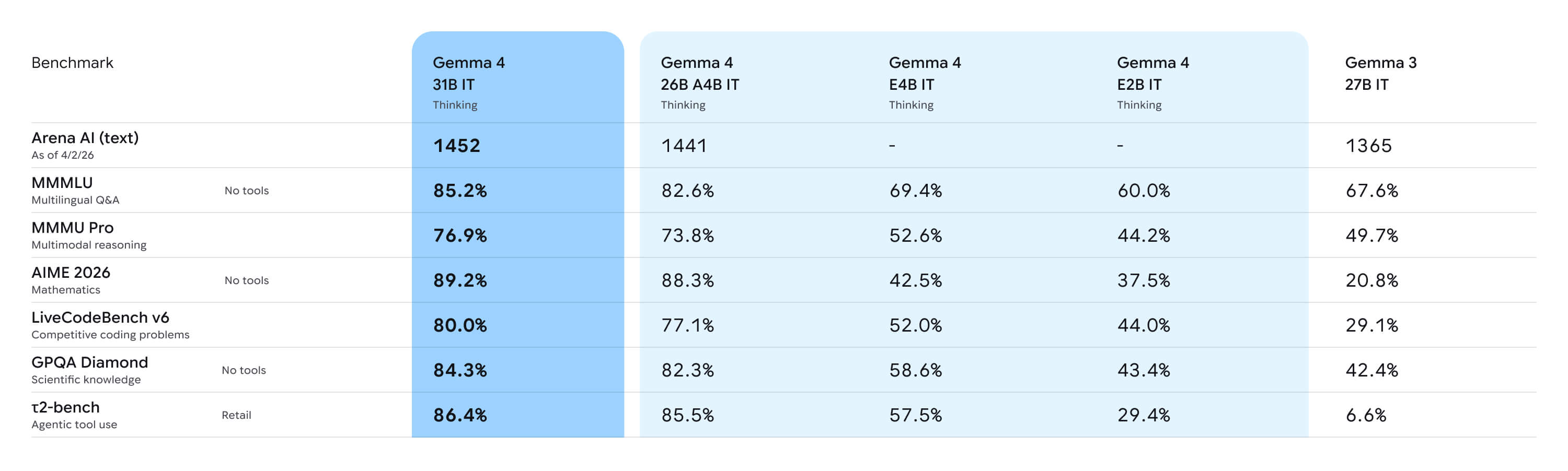
The architecture includes tricks to support these long-context tasks without blowing up memory costs:
- Shared Key-Value (KV) cache system: Normal LLMs store attention values for all tokens across layers to avoid recomputing them at each step. Gemma 4 shares KV stores across layers to reduce the model's memory footprint.
- Alternating attention: Traditional attention requires the model to compare every token to every other token in the sequence. Gemma 4 interleaves global attention layers with local sliding-window attention that only looks at a fixed neighborhood of recent tokens. This hybrid approach reduces memory consumption while preserving the model's awareness of long-form context, such as entire code repositories.
- Per-Layer Embeddings (PLE): In the smaller E2B and E4B models, PLE injects a small, secondary embedding signal into every decoder layer that acts as a quick lookup. This allows the model to hit a 128K context window while keeping its active memory footprint low on devices like the Raspberry Pi.
The modality flex
All Gemma 4 models process text and image inputs natively, and can handle video as sequences of frames.
What makes them particularly suited for practical applications is the control they give developers over the visual input canvas:
- Variable aspect ratios: Typical vision models resize images to a fixed square, destroying fine details. Gemma 4 maintains the original aspect ratio.
- Configurable token budgets: Developers can scale visual token allocation from 70 up to 1120 tokens per image.
The smaller E2B and E4B models natively process speech, making them ideal for complete sensory edge agents.
If you are building an edge application for rapid object detection, you might allocate only 70 tokens per image to maximize speed. If your agent needs to read dense text from a screenshot or parse a complicated chart, you can allocate up to 1120 tokens. This gives developers precise control over the trade-offs between speed, memory consumption, and visual accuracy.
Gemma 4 in the wild
While Gemma 4 is a capable model by itself, its true power becomes evident when combined with external tools, including other models.
For example, developers combine the 31B model with specialized vision models like Falcon Perception and SAM 3.1.
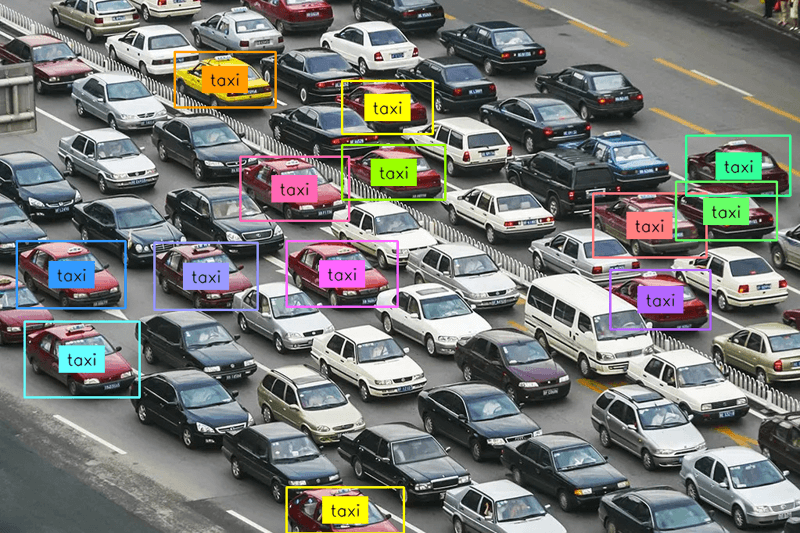
In these setups, Gemma 4 receives a natural language command and an image. It handles high-level reasoning and object detection. For example, the model can handle granular tasks like "detect yellow taxi," "detect person in front row," and "detect player in white."
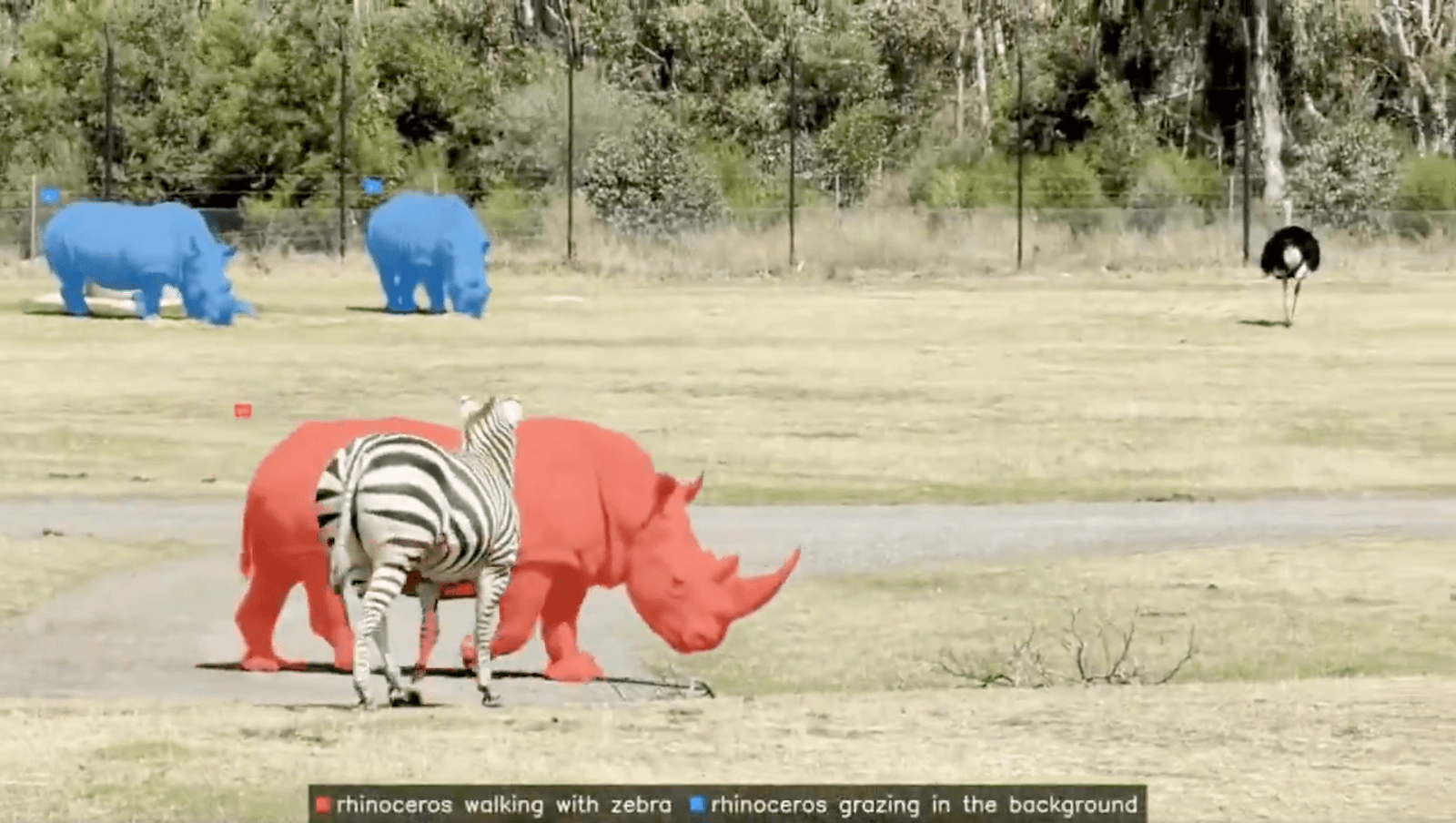
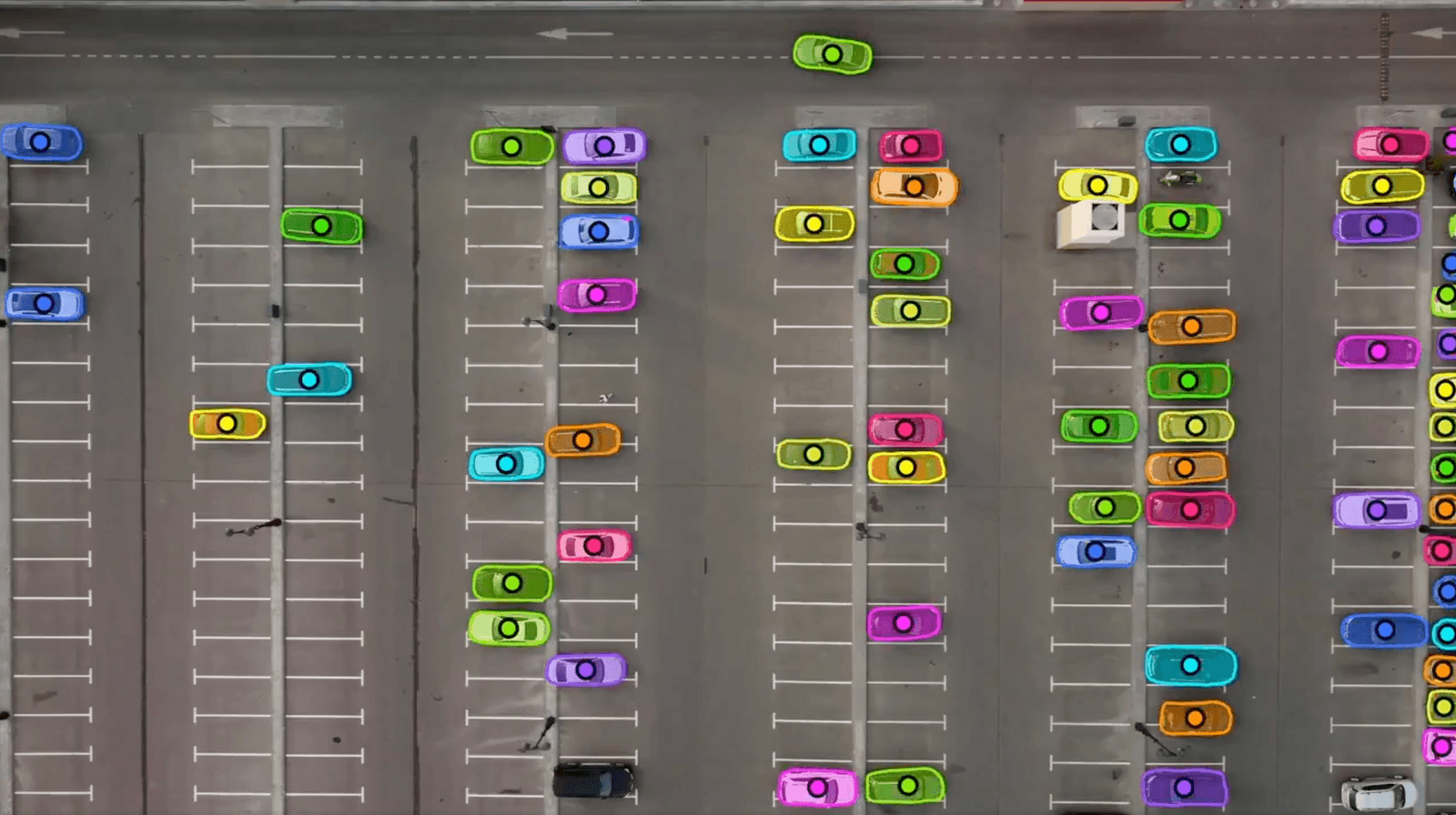
It can also generate structured function calls and send to specialized vision models to execute granular image segmentation tasks, such as isolating specific objects from a background based on the agent's instructions.
On the device side, developers are deploying the E2B and E4B variants within local agentic applications like Hermes and Openclaw. These frameworks tap into the models' native system instructions and structured JSON outputs to interact directly with local file systems and APIs.
In one example, a developer set up Gemma 4 26B A4B to run complex multi-step tasks. The model maintained state, called functions, and completed end-to-end interactions all on the device.
Because the model operates entirely on the device, the data never leaves the local environment. This local execution allows these systems to automate sensitive desktop workflows securely and offline.
Equally important is performance and integration. Gemma 4 comes with day-zero integration with open-source inference engines like vLLM, MLX, and Llama.cpp.
Developers have shown that on a MacBook Pro M5 Max with 48 GB unified memory, Gemma 4 26B A4B reaches over 100 tokens per second through native Swift and the MLX framework. The same model runs at usable speeds on older M-series chips once quantized.
The model and the harness
The industry focus is shifting from simply renting API access to building specialized systems. A closed frontier model gives you an API endpoint, but it limits your control over model costs and system architecture. Gemma 4 provides the raw material needed to construct localized AI engines that you fully control.
With its permissible license, extensive integration with inference engines, and fine-tuning compatibility via platforms like Vertex AI, TRL, and Unsloth Studio, Gemma 4 covers the complete deployment spectrum.
However, building a local autonomous agent still comes with trade-offs. Gemma 4 models are obviously not as performant as very large closed models. But that doesn't mean that local AI must come at the cost of accuracy.
The recent Claude Code leak showed that the difference between a good and a great LLM application is a complex harness that manages memory, context, tools, and errors. With the right scaffolding and harness, Gemma 4 can punch above its weight and can give you an AI powerhouse on your device.