|
Hey,
Your daily briefing is ready. You can finally take a break from the AI firehose.
Our algos spent the night splitting signal from noise and pulled the top news, models, papers, and repos.
Here’s the must-read:
|
|
Together with:
|

|
|

|
Today's Author
Lior Alexander. Founder of AlphaSignal and former ML Engineer.
Previously built ML systems at Iguazio, Guesty, Enphase, Mila.
|
|
Top News
|
|
|
|
Anthropic releases Claude Opus 4.7 improving long-running tasks, instruction following, and self-verification
|
|
106,283 Likes
|
|
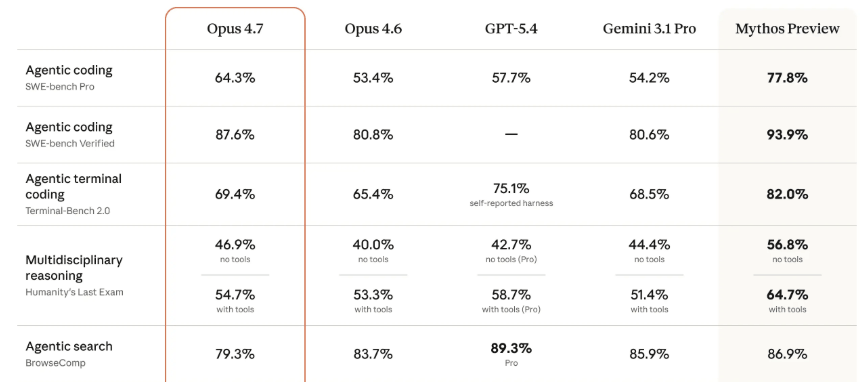
Anthropic introduces Claude Opus 4.7 as an upgrade to Opus 4.6, focused on handling complex, long-running work with less supervision.
Earlier models required close oversight because they could skip steps or return unverified outputs. Opus 4.7 changes this by following instructions more strictly and checking its own work before responding.
The key shift is deeper reasoning with controlled effort. The model adds an xhigh effort level, which increases reasoning depth while balancing latency.
It also improves vision by supporting images up to 2,576 pixels (~3.75 MP), enabling accurate reading of dense screenshots and diagrams.
This extends to real workflows across coding, analysis, and document generation. The model also uses file-based memory to retain context across sessions and continue tasks without repeated input.
Key features
- Handles long-running tasks with consistent step execution and internal verification
- Follows instructions precisely, changing behavior compared to earlier prompt assumptions
- Processes higher-resolution images for detailed multimodal understanding and extraction
- Adds task budgets to control token usage across extended agent workflows
- Improves performance on GDPval-AA and finance agent evaluations
How to use
- Call claude-opus-4-7 in the API for advanced reasoning tasks
- Use /ultrareview in Claude Code to analyze code changes systematically
- Set effort to high or xhigh for complex multi-step problems
|
|
|
|
Presented by Lightfield
|
|
Program your CRM in plain English
|
|
Lightfield Skills let you define any sales workflow in natural language and then run it automatically across your pipeline.
- Score and rank prospects by ICP fit, then draft personalized outreach
- Prep for meetings with full account context and competitive signals
- Generate pipeline reports, health scores, and case studies on demand
The AI agent pulls data, runs Python, searches the web, drafts outputs, and updates records. Version them, test with eval cases, share across your team.
|
|
|
|
partner with us
|
|
Top News
|
|
|
|
OpenAI updates Codex to act as a desktop agent across your development workflow
|
|
14,449 Likes
|
|
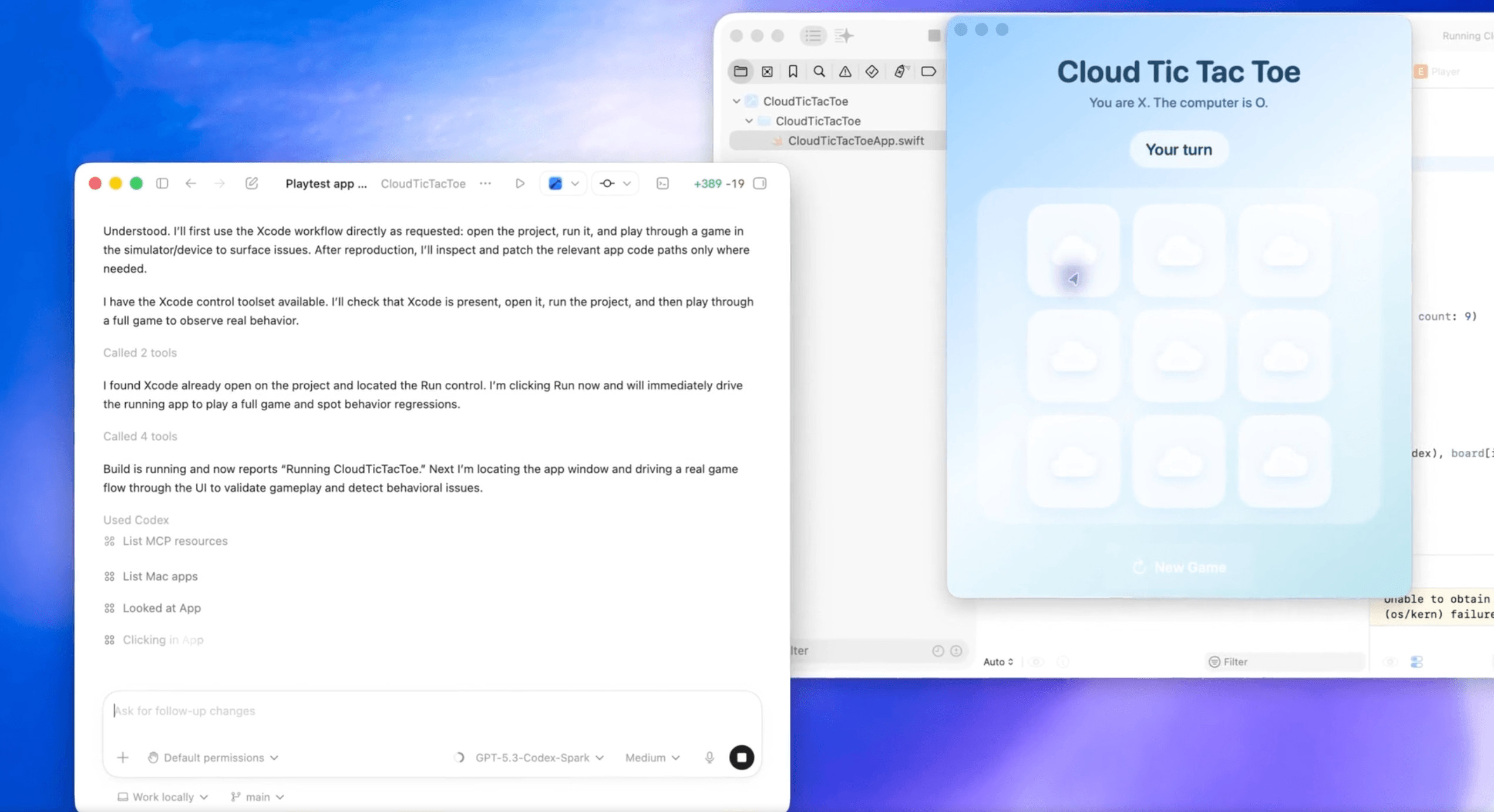
OpenAI expands Codex from a coding assistant into a system-level agent on macOS. You can now use it to control apps, run tasks, and manage workflows in one place.
The key change gives Codex direct control of your computer through screen reading and cursor actions.
What it does
Codex operates software the same way you do through the interface.
- Sees screen content and interacts using clicks, typing, and navigation actions
- Works across any macOS app, including tools that do not expose APIs
- Runs background tasks without interrupting your active work session
- Supports multiple parallel agents that execute separate workflows
Key features
Codex adds workflow automation, integrations, and visual generation.
- Supports 90+ plugins across GitHub, Slack, Notion, Jira, and other systems
- Stores memory of preferences, corrections, and past task context
- Schedules tasks and resumes them later using saved conversation threads
- Generates images with gpt-image-1.5 for UI designs and assets
Availability
- Rolling out to Codex desktop app users signed into ChatGPT
- Computer use available first on macOS
- Memory and personalization expand to Enterprise, Edu, EU, and UK later
|
|
|
|
Presented by Palabra
|
|
Real-time speech translation that sounds human
|
|
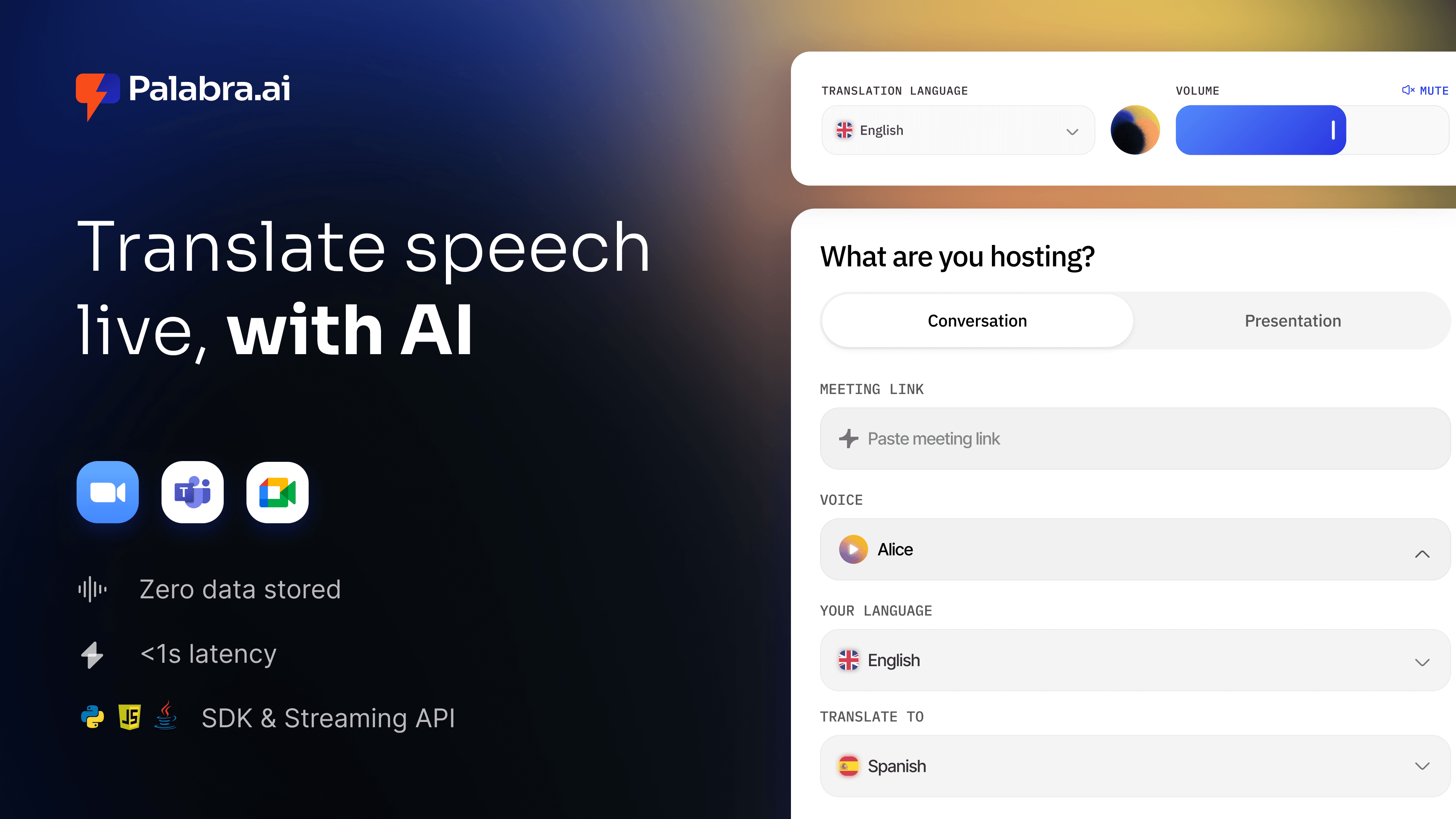
Palabra.ai is a real-time AI speech translator built on a proprietary LLM:
-
Supports 60+ languages with voice cloning, speaker diarization and custom glossaries
-
Works with Zoom, Meet and Teams in seconds, no setup required
-
Built for global teams, events, broadcasters and developers.
|
|
|
|
partner with us
|
|
Top News
|
|
|
|
Alibaba unveils Qwen3.6-35B-A3B, a sparse MoE model activating only 3B parameters per token for efficiency
|
|
12,398 Likes
|
|
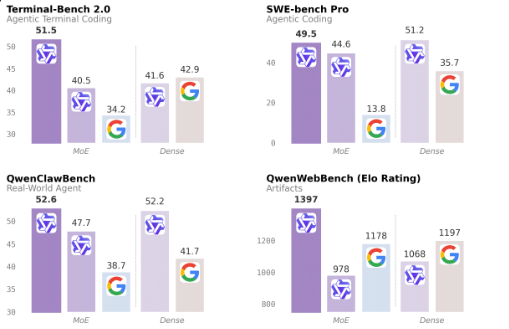
Qwen releases Qwen3.6-35B-A3B as an open-source model designed to reduce compute without reducing capability. Large models usually scale performance by increasing parameters, which raises cost and latency.
This release tests a different approach using a sparse mixture-of-experts design, where only a small subset of parameters runs per token.
The key idea is simple: instead of using all parameters every time, the model selects a few relevant “experts” for each step. This keeps 35B total parameters but only 3B active, lowering compute while maintaining performance.
That design shows up clearly in results across coding, agents, and multimodal tasks.
- SWE-bench Verified reaches 73.4 using tool-based agent evaluation setup
- Terminal-Bench 2.0 scores 51.5 under multi-run execution conditions
- RefCOCO hits 92.0, measuring spatial reasoning in vision-language tasks
- OmniDocBench reaches 89.9 for document understanding benchmarks
You can use the model through API, local weights, or agent frameworks.
- Call qwen3.6-flash via Alibaba Cloud Model Studio API endpoint
- Download weights from Hugging Face or ModelScope for self-hosting setups
- Integrate with OpenClaw, Claude Code, or Qwen Code for agent workflows
- Enable reasoning with enable_thinking in API requests for structured outputs
|
|
|
At Alpha Signal, our mission is to build a sharp, engaged community focused on AI, machine learning, and cutting-edge language models, helping over 200,000 developers stay informed and ahead. We’re passionate about curating the best in AI, from top research and trending technical blogs to expert insights and tailored job opportunities. We keep you connected to the breakthroughs and discussions that matter, so you can stay in the loop without endless searching. We also work closely with partners who value the future of AI, including employers and advertisers who want to reach an audience as passionate about AI as we are.
Our partnerships are based on shared values of ethics, responsibility, and a commitment to building a better world through technology.Privacy is a priority at Alpha Signal. Our Privacy Policy clearly explains how we collect, store, and use your personal and non-personal information. By using our website, you accept these terms, which you can review on our website. This policy applies across all Alpha Signal pages, outlining your rights and how to contact us if you want to adjust the use of your information. We’re based in the United States. By using our site, you agree to be governed by U.S. laws.
|
|
|
Looking to promote your company, product, service, or event to 250,000+ AI developers?
|
|
|
|
|
