|
Hey,
Your daily briefing is ready. You can finally take a break from the AI firehose.
Our algos spent the night splitting signal from noise and pulled the top news, models, papers, and repos.
Here’s the must-read:
|
|
Together with:
|

|
|

|
Today's Author
Lior Alexander. Founder of AlphaSignal and former ML Engineer.
Previously built ML systems at Iguazio, Guesty, Enphase, Mila.
|
|
Top News
|
|
|
|
Anthropic introduces an advisor tool that lets smaller models call Opus only when needed during agent execution
|
|
33,539 Likes
|
|
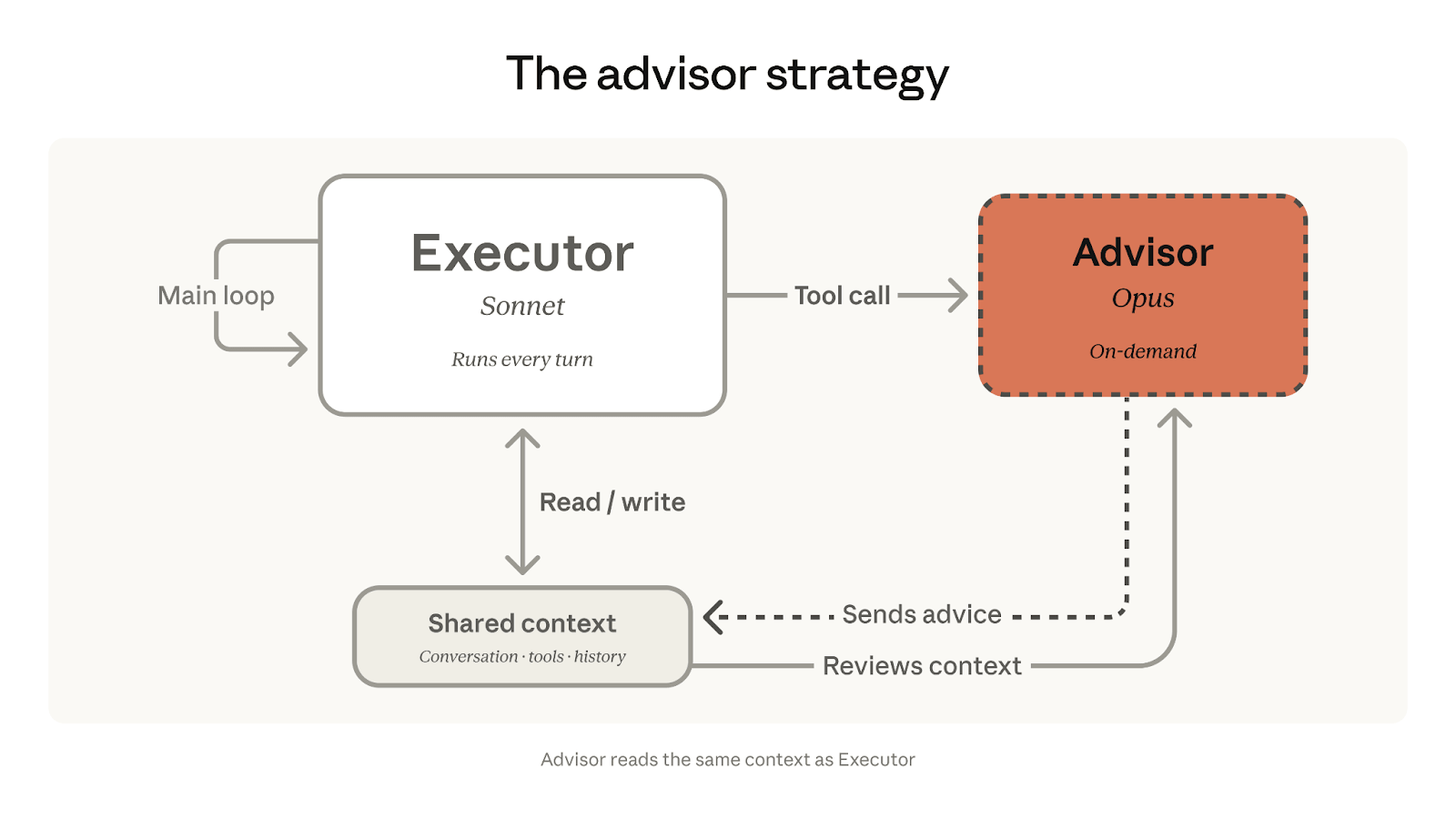
Anthropic adds the advisor tool to the Claude Platform to simplify a common agent pattern.
You run Claude Sonnet or Claude Haiku as the main agent, and bring in Claude Opus only for harder decisions. This setup keeps most execution at lower cost while still using a stronger model when reasoning becomes difficult.
How it works
The executor model runs the task end-to-end and calls the advisor when needed.
- Executor handles tools, steps through tasks, and produces final outputs directly
- Advisor reads shared context and returns a plan or correction, then exits
- Advisor does not call tools or generate user-visible responses during execution
- Entire interaction runs inside a single API request without external orchestration
Results and performance
Anthropic reports gains across benchmarks with lower cost per task.
- SWE-bench Multilingual increases by 2.7 points over Sonnet alone
- Cost per task reduces by 11.9% compared to Sonnet-only execution
- Haiku improves from 19.7% to 41.2% on BrowseComp with advisor enabled
- Haiku setup remains 85% cheaper than Sonnet for comparable workloads
How to use it
You add the advisor tool directly in your API call.
- Define advisor_20260301 with Opus as the advisor model
- Set max_uses to control how often the advisor gets invoked
- Send your task through /v1/messages and let the executor decide escalation
- Monitor separate token usage for advisor and executor in the response
|
|
|
|
Presented by Lambda
|
|
How to push Model FLOPS Utilization past 60%
|
|
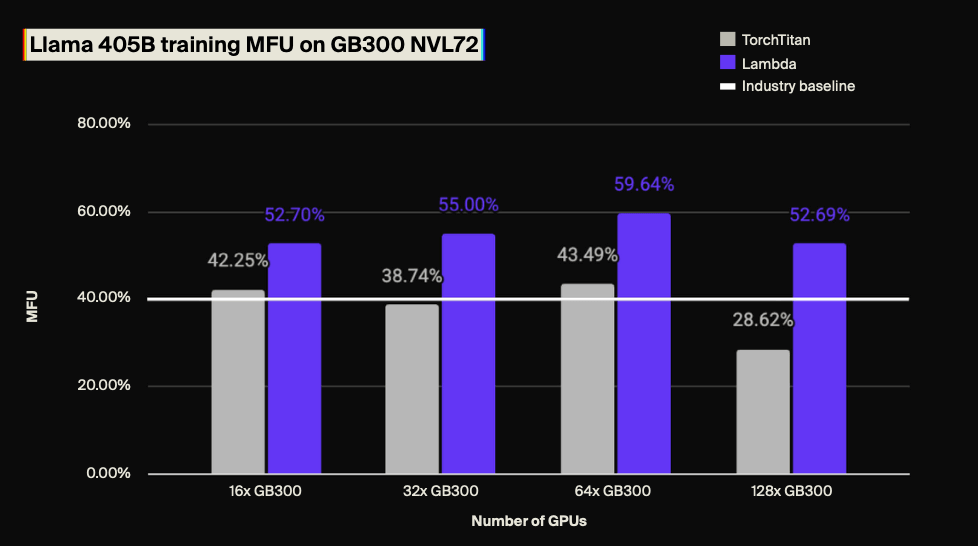
Most large-scale training runs operate at 35-45% Model FLOPS Utilization (MFU). You're paying for twice the compute you're using.
Lambda's engineers benchmarked Llama 3.1 models from 8B to 405B on NVIDIA Blackwell GPUs and traced efficiency loss to its root causes:
-
Memory overhead
-
Parallelism strategy
-
Serialized communication
The result: a reproducible framework that pushed MFU past 60% (25%+ improvement vs. industry benchmark) with no changes to model architecture.
|
|
|
|
partner with us
|
|
Top News
|
|
|
|
OpenAI announces a $100/month ChatGPT Pro tier with higher Codex limits for long coding sessions
|
|
16,349 Likes
|

|
OpenAI updates ChatGPT Plus and Pro plans to support increased Codex usage. The new Pro tier costs $100/month and provides higher limits for longer, high-effort coding sessions.
A limited-time promotion increases Pro Codex usage to 10× Plus capacity through May 31.
Codex Usage Changes
OpenAI adjusts how Codex usage is allocated across subscription tiers.
- Plus shifts toward consistent weekly usage instead of concentrated single-day session limits
- Existing Plus promotion ends, with usage rebalanced for more frequent but shorter sessions
- Pro tier supports longer uninterrupted sessions designed for extended coding workflows
- Changes align usage patterns with observed demand for sustained development sessions
Pro Tier Capabilities
Pro expands model access, limits, and system capacity compared to Plus.
- Includes access to GPT-5.4 Pro reasoning model with higher compute allocation
- Supports larger context windows, up to roughly 400K tokens for reasoning tasks
- Provides maximum Codex task capacity for multi-step workflows and larger codebases
- Maintains unlimited model usage within defined abuse guardrails
Plan Positioning
Each plan now targets a different Codex usage pattern.
- Plus remains priced at $20 for steady daily usage across coding tasks
- Pro acts as a higher tier for users with sustained or intensive workloads
- Upgrade path focuses on increased usage limits rather than new core features
- Pricing structure reflects differences in session length and compute allocation
|
|
|
|
Presented by Fuel iX by TELUS Digital
|
|
Can your LLM withstand a prompt injection attack?
|
|
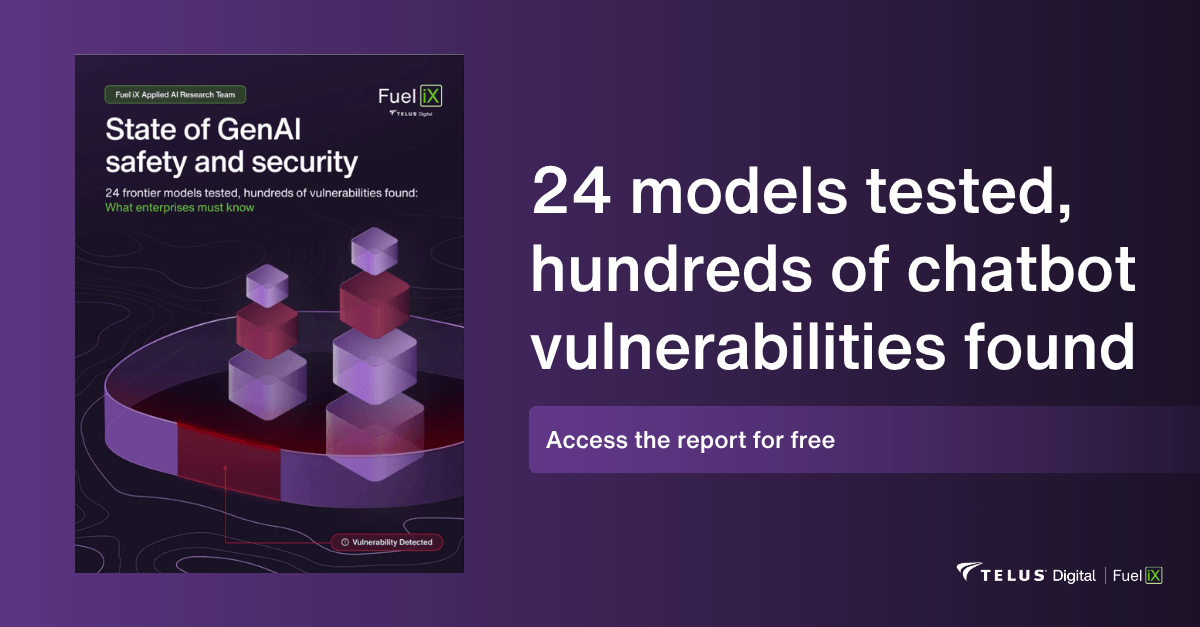
We tested 24 leading GenAI models for vulnerabilities. All 24 failed, with attack success rates up to 64%. Every model demonstrated exploitable flaws that turn AI into an attack vector.
Download our report for security profiles on all 24 models and strategies to secure your AI stack.
|
|
|
|
partner with us
|
|
Top Paper
|
|
|
|
Meta presents Neural Computer, a model that runs computation, memory, and I/O inside one learned system
|
|
1,836 Stars
|
|
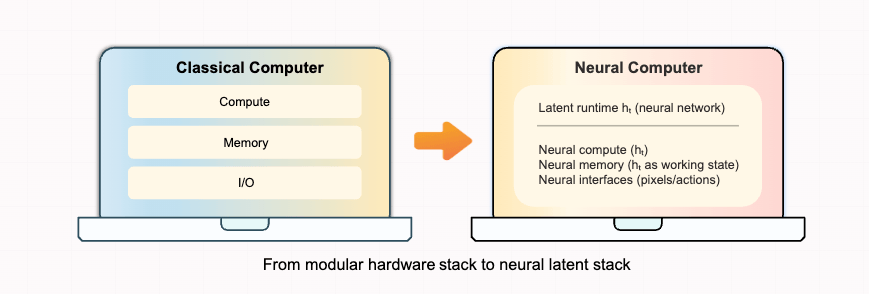
Meta AI proposes a shift from models that use computers to models that act as computers. Instead of calling APIs or tools, the model executes tasks directly from learned behavior.
The prototype trains on screen recordings and reproduces parts of real desktop and terminal workflows.
How it works
The model learns full interaction loops from recorded computer usage.
- Trains on sequences of pixels, cursor movements, and keyboard inputs
- Predicts next screen state and action at each step in sequence
- Encodes logic and control flow directly in model weights
- Treats UI interactions as data instead of fixed program interfaces
Core idea
The paper frames this as a shift in where system responsibilities live.
- Moves execution logic from external software stack into model runtime
- Removes need for toolchains, APIs, and explicit program orchestration layers
- Positions model as both controller and executor of computational processes
- Distinguishes approach from memory-augmented models like NTM and DNC
Key findings and limitations
The prototype exposes clear gaps in reliability and abstraction.
- Fails on multi-step reasoning tasks with dependencies across steps
- Shows unstable memory across longer interaction sequences
- Does not form reusable abstractions from learned behaviors
- Generalization drops outside training distribution of interface patterns
|
|
|
At Alpha Signal, our mission is to build a sharp, engaged community focused on AI, machine learning, and cutting-edge language models, helping over 200,000 developers stay informed and ahead. We’re passionate about curating the best in AI, from top research and trending technical blogs to expert insights and tailored job opportunities. We keep you connected to the breakthroughs and discussions that matter, so you can stay in the loop without endless searching. We also work closely with partners who value the future of AI, including employers and advertisers who want to reach an audience as passionate about AI as we are.
Our partnerships are based on shared values of ethics, responsibility, and a commitment to building a better world through technology.Privacy is a priority at Alpha Signal. Our Privacy Policy clearly explains how we collect, store, and use your personal and non-personal information. By using our website, you accept these terms, which you can review on our website. This policy applies across all Alpha Signal pages, outlining your rights and how to contact us if you want to adjust the use of your information. We’re based in the United States. By using our site, you agree to be governed by U.S. laws.
|
|
|
Looking to promote your company, product, service, or event to 250,000+ AI developers?
|
|
|
|
|
