The agentic landscape has moved from prototype to production. OpenClaw recently gained massive prominence as an open-source agent capable of executing complex terminal commands and connecting to messaging apps. This signals a shift toward autonomous AI systems that execute multi-step workflows with minimal human intervention.
However, deploying these applications at scale is very costly. Agents consume millions of tokens as they engage in multi-step reasoning, parallel tool calls, and automated retries.
Developers running these workloads on closed frontier models, such as Claude Opus 4.5 and 4.6 or GPT-5.3 Codex, often burn thousands of dollars on API costs every month. To sustain this new economy, enterprises need alternatives that drastically reduce costs while matching the reasoning capabilities of proprietary systems.
Open-weight models can help solve this problem. They allow teams to run agents on their own infrastructure, reducing operational expenses by orders of magnitude. This approach also keeps proprietary data on local servers, eliminating the risk of sending sensitive information to third-party APIs.
The past month has seen a broadening range of open models that are closely trailing frontier models in performance. In this edition of our AlphaSignal deep dive, we break down our favorite open-weight releases from the past month. We categorize these into general-purpose LLMs capable of complex orchestration and specialized speedsters designed for fast, specific execution tasks.
General-purpose models
Kimi K2.5
One of the most impressive open models released last month is Kimi K2.5, a 1-trillion parameter model featuring a sparse Mixture-of-Experts (MoE) architecture with 32 billion active parameters.
MoE is a machine learning technique where a neural network is divided into smaller, specialized sub-networks called "experts." For any given input, only a select few experts activate. This design keeps the model highly capable while reducing the computational cost of inference.
Kimi K2.5 combines this frontier-scale MoE and a 256,000-token context window. To handle this large context length efficiently, it uses the Multi-head Latent Attention (MLA), a mechanism first introduced in DeepSeek-V2.
Standard attention mechanisms calculate relationships between all tokens in a sequence, creating a memory bottleneck as text grows longer. MLA compresses past attention values, aka "KV cache," allowing the model to process large documents without running out of memory.
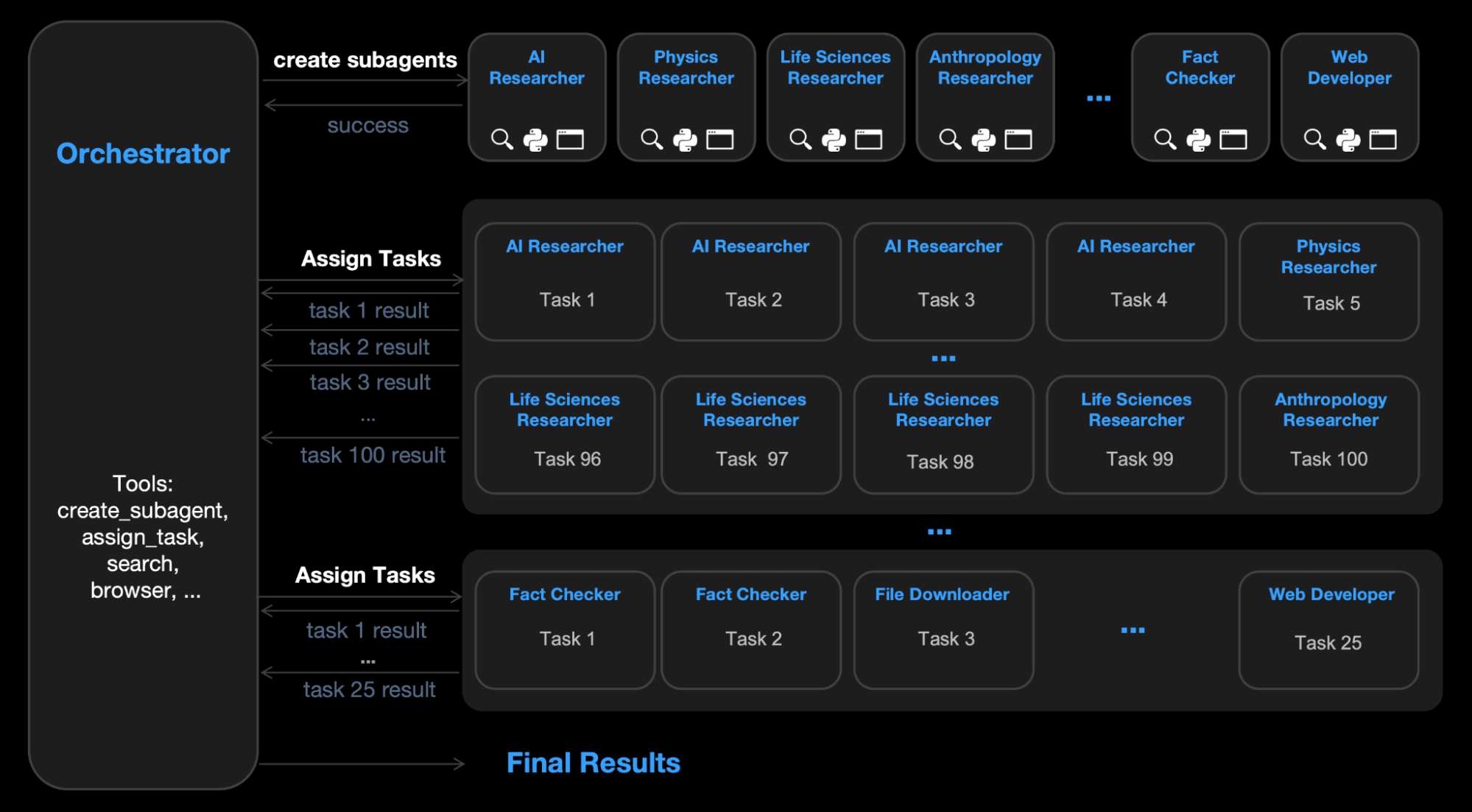
Kimi K2.5 is also one of the few large models with multimodal support. The model is explicitly designed for tool-augmented workflows, such as web browsing and code interpretation. It natively supports an advanced "Agent Swarm" paradigm, autonomously orchestrating up to 100 sub-agents to execute parallel workflows across up to 1,500 sequential tool calls.
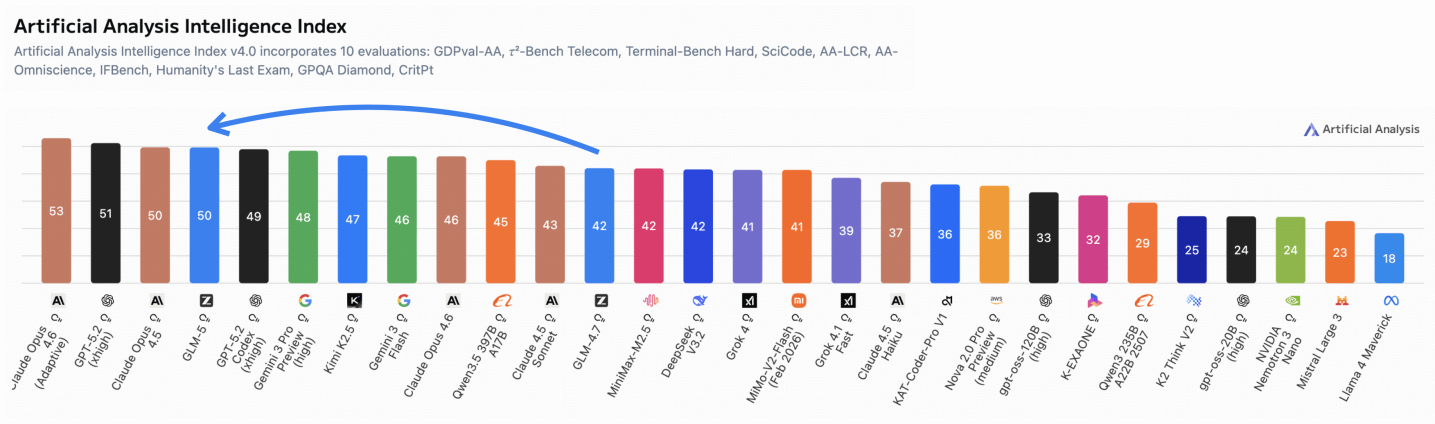
Artificial Analysis lists Kimi K2.5 at 47 on its Intelligence Index, ranking it second among open weights as of this writing. Kimi K2.5 is also better known for its low hallucination rate. The developer community views it as the closest open-weight alternative to proprietary systems like Claude Opus and GPT-5.
z.AI GLM-5
Another promising model is z.AI's GLM-5, a default flagship choice for agentic coding, research assistants, and general reasoning. It is a 744-billion parameter MoE model with 256 experts. For each token, it activates eight regular experts and one shared expert, totaling 40 billion active parameters.
The model relies on deep reasoning enforced by a reinforcement learning infrastructure called "Slime." This infrastructure improves training throughput and enables long-horizon post-training iterations. By pausing to plan a multi-step workflow before writing code or calling a tool, GLM-5 becomes highly resistant to tool-use hallucinations.
It scores 50 on the Artificial Analysis Intelligence Index, placing it at the lead of open models and slightly behind Claude Sonnet 4.6. The Vectara hallucination leaderboard places GLM-5 on par with Opus 4.5 and GPT-5.2.
To reduce inference costs on long documents, GLM-5 uses MLA alongside DeepSeek Sparse Attention (DSA). DSA dynamically allocates computational resources based on how important a token is to the overall meaning.
This significantly reduces inference costs on long-context tasks, making GLM-5 suitable for handling tasks on large codebases and multiple documents. However, its heavy 40-billion active parameter footprint reduces its inference speed compared to throughput-oriented models, and it lacks native image support.
MiniMax M2.5
MiniMax M2.5 is a 230-billion parameter MoE model that activates eight of its 256 experts, running 10 billion active parameters per token. The team trained the model using a proprietary reinforcement learning framework known as "Forge." Within this framework, the model deployed across hundreds of thousands of real-world environments, interacting directly with code repositories, web browsers, and Microsoft Office applications.
This training results in a model that autonomously pauses to outline feature designs, structure user interfaces, and map out data schemas before writing. This training enables it to perform well on complex software engineering tasks at a fraction of the cost of frontier models like Claude Opus 4.6.
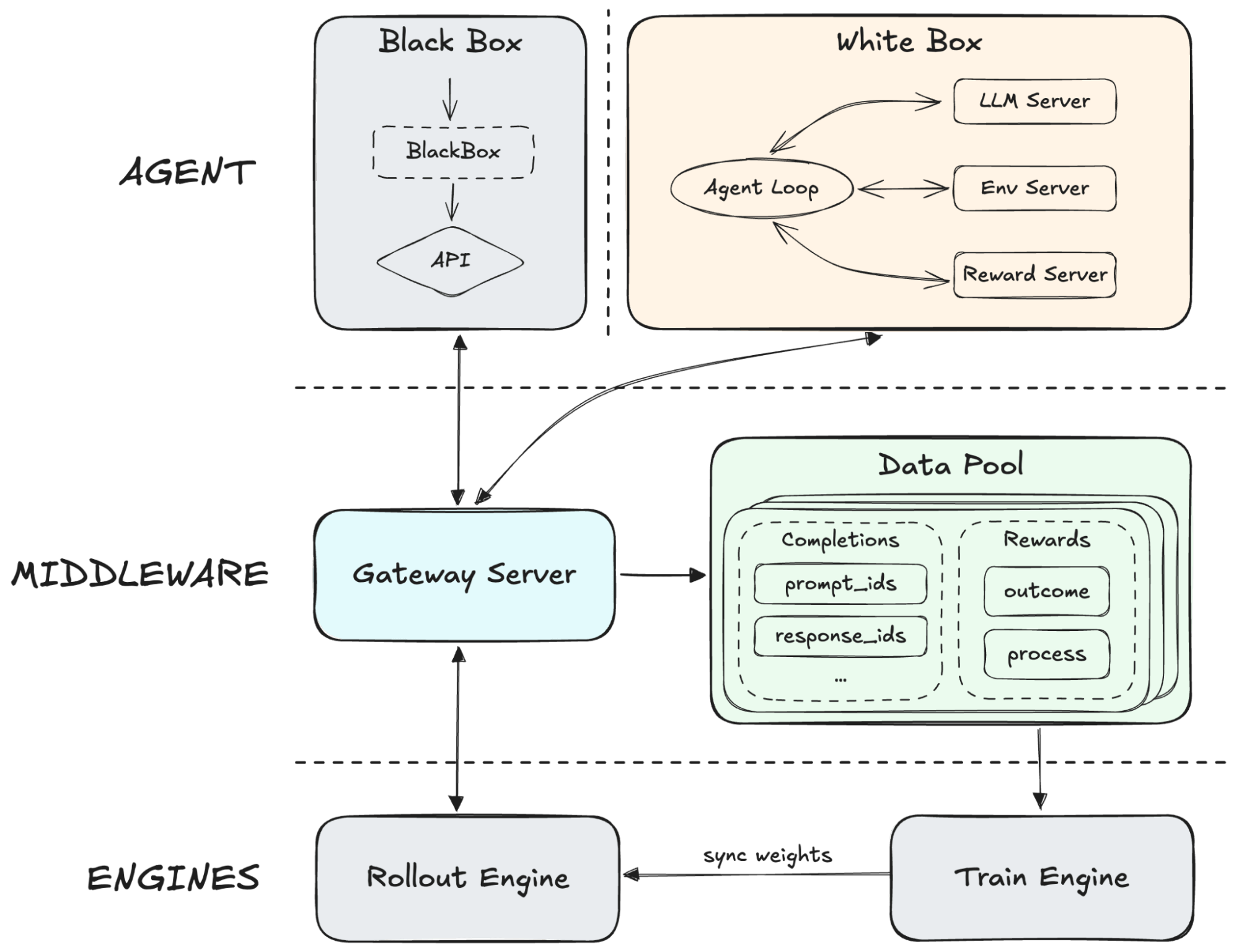
Developers can run MiniMax M2.5 securely on consumer hardware, such as an Apple Mac Studio M3 Ultra, achieving smooth inference speeds using MLX frameworks with 9-bit or 6.5-bit quantization. The architecture supports up to one million tokens, but the practical operational context window is around 200,000 tokens.
Qwen 3.5
Qwen 3.5 is a 397-billion parameter MoE model with 17 billion active parameters per token. It targets agentic terminal coding applications, matching the coding performance of GLM-5 and MiniMax M2.5.
The model scores 45 on the Artificial Analysis Intelligence Index, ranking as the third-best open-weights model globally. It natively supports a 262,000-token context window and relies on a hybrid attention mechanism to lower inference costs on large inputs (the hosted version of the model supports 1 million tokens).
Qwen 3.5 is natively multimodal and can perform deep reasoning across different modalities. Builders creating spatial reasoning tools, document parsers, or video analysis pipelines can extract insights from text, images, and video simultaneously without the latency of chaining separate vision and text models together.
Its primary limitation is factual accuracy. The model holds an AA-Omniscience Index of -32, showing a higher likelihood of hallucinating obscure knowledge compared to Kimi K2.5.
Specialized speedsters
Arcee AI Trinity Large
Arcee AI Trinity Large offers a different approach. Released by a US-based startup, it is a 398-billion parameter MoE model. It optimizes inference by employing 4 of 256 experts, reducing the number of active parameters per token to 13 billion.
The model integrates sliding window attention, a method that only calculates relationships between neighboring tokens rather than the entire document. This keeps memory demands constant as context length increases. While it supports up to 512,000 tokens, API and local deployments are currently constrained to 128,000 tokens using 8-bit quantization to maintain practical latency.
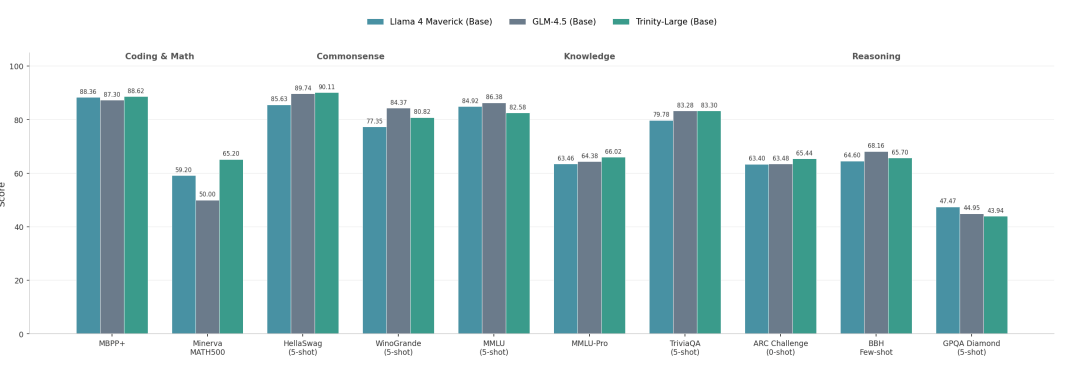
Arcee has also shipped a "TrueBase" version of the model that skips post-training alignment, giving developers an advantage for creating creative writing or role-play fine-tunes without the strong assistant bias found in other recent models.
Qwen3-Coder-Next
Qwen3-Coder-Next is an 80-billion parameter MoE model with just 3 billion active parameters. Despite its size, it outperforms much larger models like DeepSeek V3.2, Kimi K2.5, and GLM-4.7 on coding benchmarks.
The model achieves high efficiency via an attention-hybrid design that dramatically reduces the computational costs of processing a 256,000-token context window. Consequently, the model requires only 48.2 GB of storage space and 51 GB of RAM in its Ollama version. It runs smoothly on consumer hardware like a 64GB MacBook or NVIDIA RTX 5090.
Designed strictly for software engineering and local terminal workflows, it acts as an autonomous agent to analyze repositories, refactor architecture, and generate boilerplate code.
The trade-off: prioritizing rapid code generation and complex tool usage means it lacks the expansive conversational capabilities and generalized world knowledge found in broader foundational models.
Optimizing agents for scale
The key to scaling the agentic economy lies in matching the right model to the right task. Developers who are moving from prototypes to production are experimenting with open models. For example, some developers have managed to cut the costs of their OpenClaw agents by more than 90% by moving most skills from Claude Opus to Kimi K2.5.
But the open model landscape is very rich and there is still room for hyper-optimization. For example, Kimi K2.5 can serve as the orchestrator that passes on repetitive terminal execution loops to specialized speedsters like Qwen3-Coder-Next to ensure rapid response times and zero variable costs on local hardware.
Continuously testing these models allows you to optimize agents across all fronts, enabling your systems to do more with less while maintaining efficiency at scale.