|
Hey,
Your daily briefing is ready. You can finally take a break from the AI firehose.
Our algos spent the night splitting signal from noise and pulled the top news, models, papers, and repos.
Here’s the must-read:
|
|
Together with:
|

|
|

|
Today's Author
Lior Alexander. Founder of AlphaSignal and former ML Engineer.
Previously built ML systems at Iguazio, Guesty, Enphase, Mila.
|
|
Top News
|
|
|
|
Anthropic introduces routines in Claude Code to automate workflows across APIs, schedules, and GitHub repository events
|
|
17,332 Likes
|
|
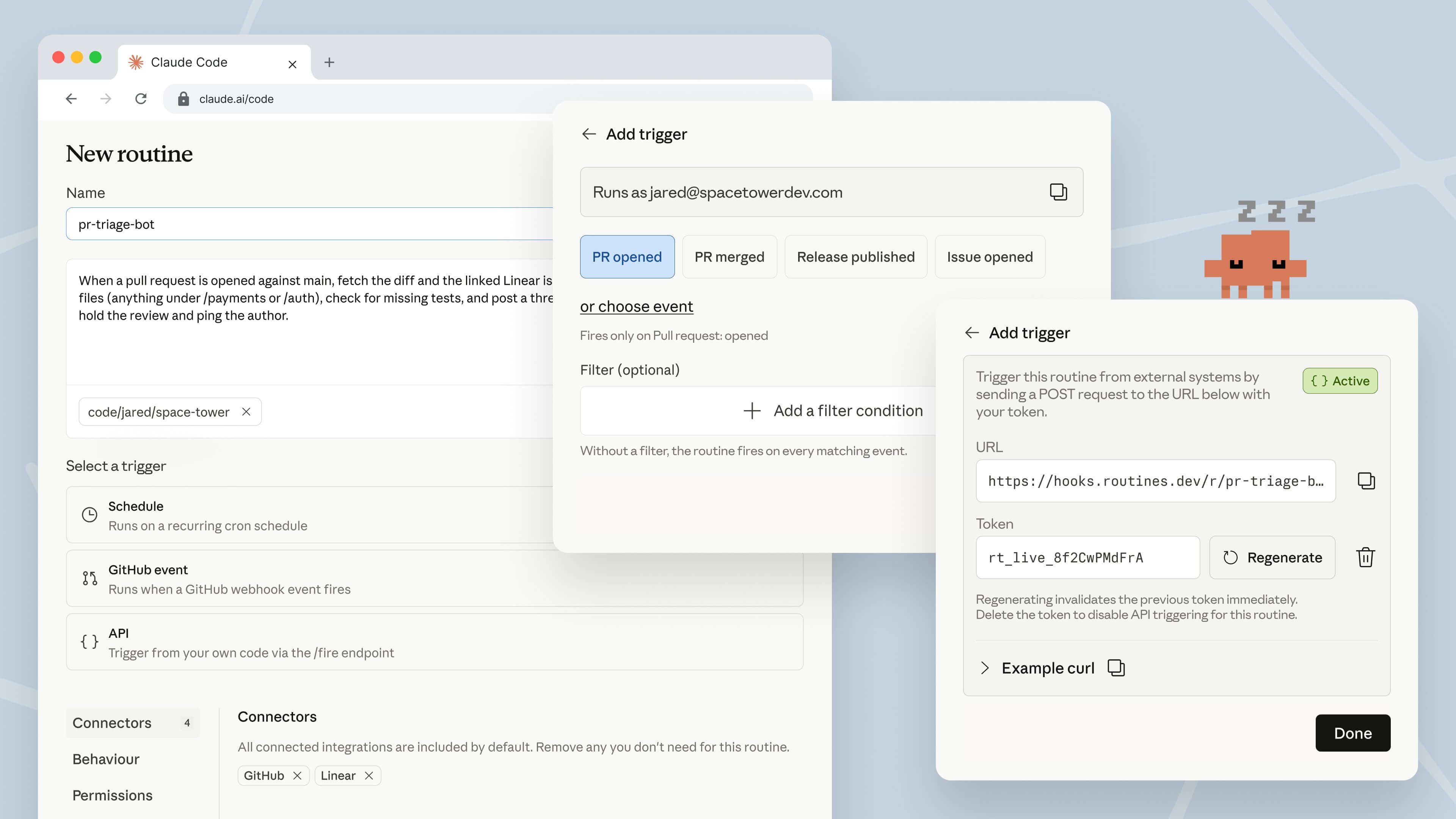
A routine stores a prompt, repositories, and connectors as one configuration and runs it automatically. The system executes routines on managed cloud infrastructure, so your workflows run without a local machine.
What it does
Routines turn one setup into repeatable executions across your stack.
- Package prompt, repos, and connectors into a reusable configuration unit
- Expose a dedicated API endpoint per routine with bearer token authentication
- Return a session URL for each run to inspect outputs and execution details
- Support outputs like summaries, analysis, and generated code changes
How it runs
Routines trigger from multiple sources and reuse the same logic.
- Scheduled triggers run at fixed intervals like hourly or nightly cadences
- API triggers execute via HTTP POST requests from alerts or internal tools
- GitHub triggers respond to events such as pull requests or releases
- Combine multiple triggers in one routine for the same workflow
How to use it
You define once and connect it to your existing systems.
- Create routines via web UI or CLI using /schedule command
- Connect repositories and external tools through supported connectors
- Send POST requests or link GitHub events to trigger execution
- Review outputs through returned session URLs or integrated systems
|
|
|
|
Presented by Paragon
|
|
The real cost of building integrations
|
|
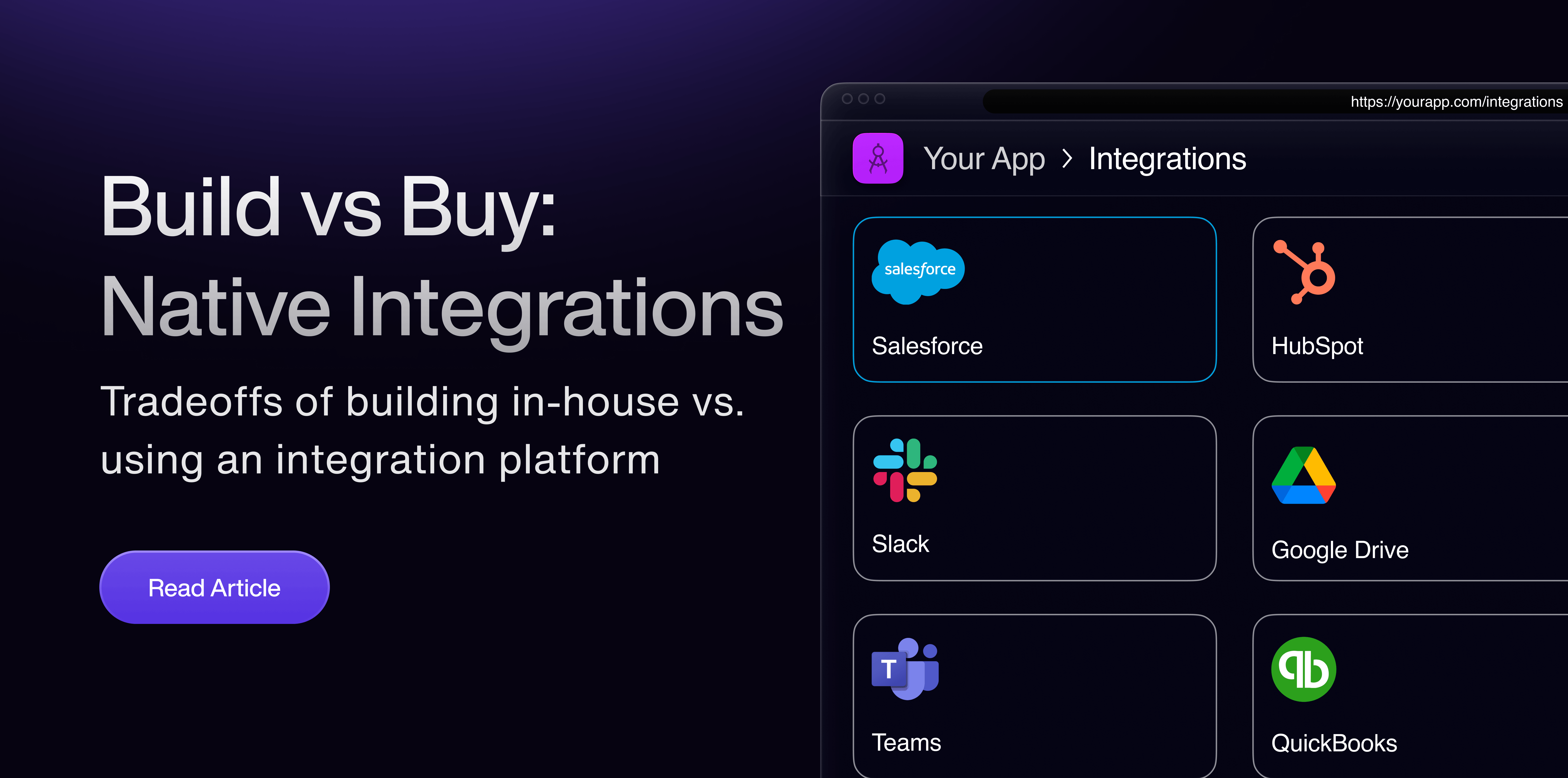
Native integrations are now table stakes for every B2B product or agent, but the engineering lift to build and maintain them is routinely underestimated.
OAuth complexity, webhook reliability, vendor API quirks, and breaking changes compound fast. Every sprint spent on integration infrastructure is a sprint not spent on your core product.
Paragon's Build vs. Buy guide breaks down exactly what's involved so engineering leaders can make the right call before committing resources.
|
|
|
|
partner with us
|
|
Top News
|
|
|
|
OpenAI expands Trusted Access introducing GPT-5.4-Cyber for verified defenders performing cybersecurity analysis
|
|
5,449 Likes
|

|
OpenAI expands its Trusted Access for Cyber program with new tiers and introduces GPT-5.4-Cyber, a version of GPT-5.4 tuned for defensive cybersecurity workflows.
The update targets verified individuals and organizations responsible for protecting software and infrastructure. The key change is controlled access to a more permissive model that supports deeper security analysis.
What it does
The system enables direct analysis of software behavior and security risks.
- Enables binary reverse engineering, analyzing compiled programs without needing source code
- Supports malware inspection across executables and system-level components
- Identifies vulnerabilities in software by examining structure and execution patterns
- Processes large and complex codebases with improved reasoning over program logic
How access works
Access is gated through identity verification and tiered permissions.
- Requires individuals to verify identity through a dedicated access flow
- Allows enterprises to request access through OpenAI representatives
- Assigns higher capability tiers based on trust signals and authentication level
- Restricts use in low-visibility setups such as zero-data retention environments
Why it matters
The program links advanced capability to verified defensive use.
- Treats cybersecurity features as dual-use and controls access through user context
- Expands availability to defenders instead of limiting capabilities at the model level
- Applies safeguards refined across recent GPT-5 model deployments
- Supports continuous security workflows during software development and maintenance
|
|
|
|
Presented by H Company
|
|
H Company's #1 Computer Use Agent Now on Chrome
|
|
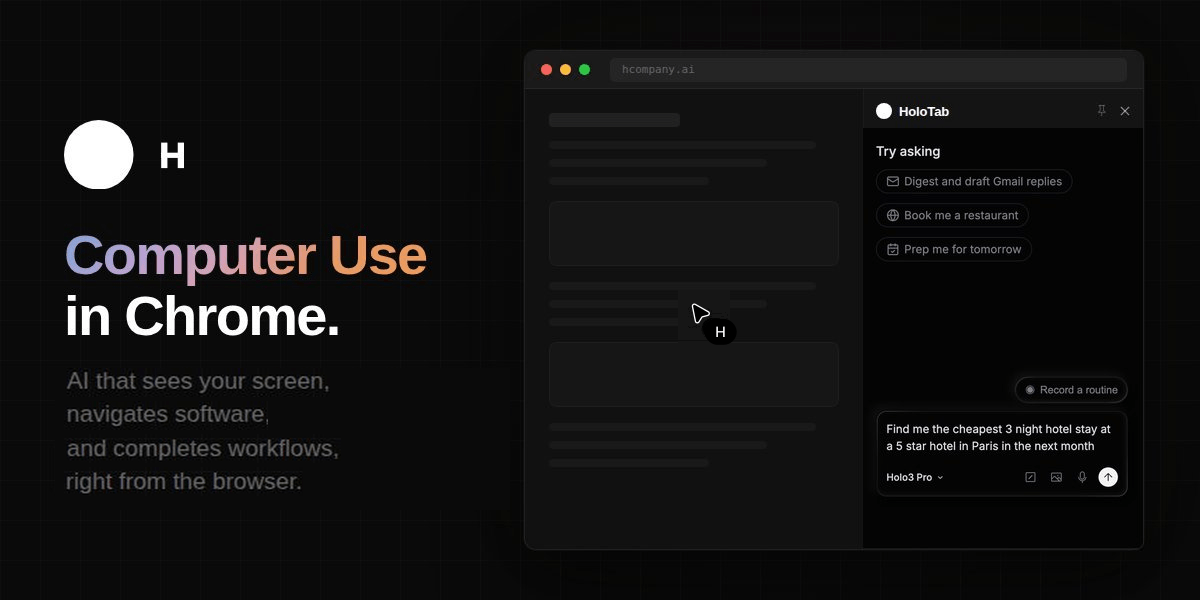
Holo3 topped OSWorld at 79% at 1/10 the inference cost of competing models.
It now powers HoloTab, a Chrome extension running autonomous browser agents.
Prompt a task or record a workflow once, and an agent executes it directly in the browser. Multiple agents can run in parallel across tabs.
|
|
|
|
partner with us
|
|
Top Paper
|
|
|
|
Cursor builds multi-agent system that optimizes CUDA kernels with 38% average speedup
|
|
2,731 Likes
|
|
Cursor, working with NVIDIA, develops a multi-agent system that writes and optimizes CUDA kernels automatically.
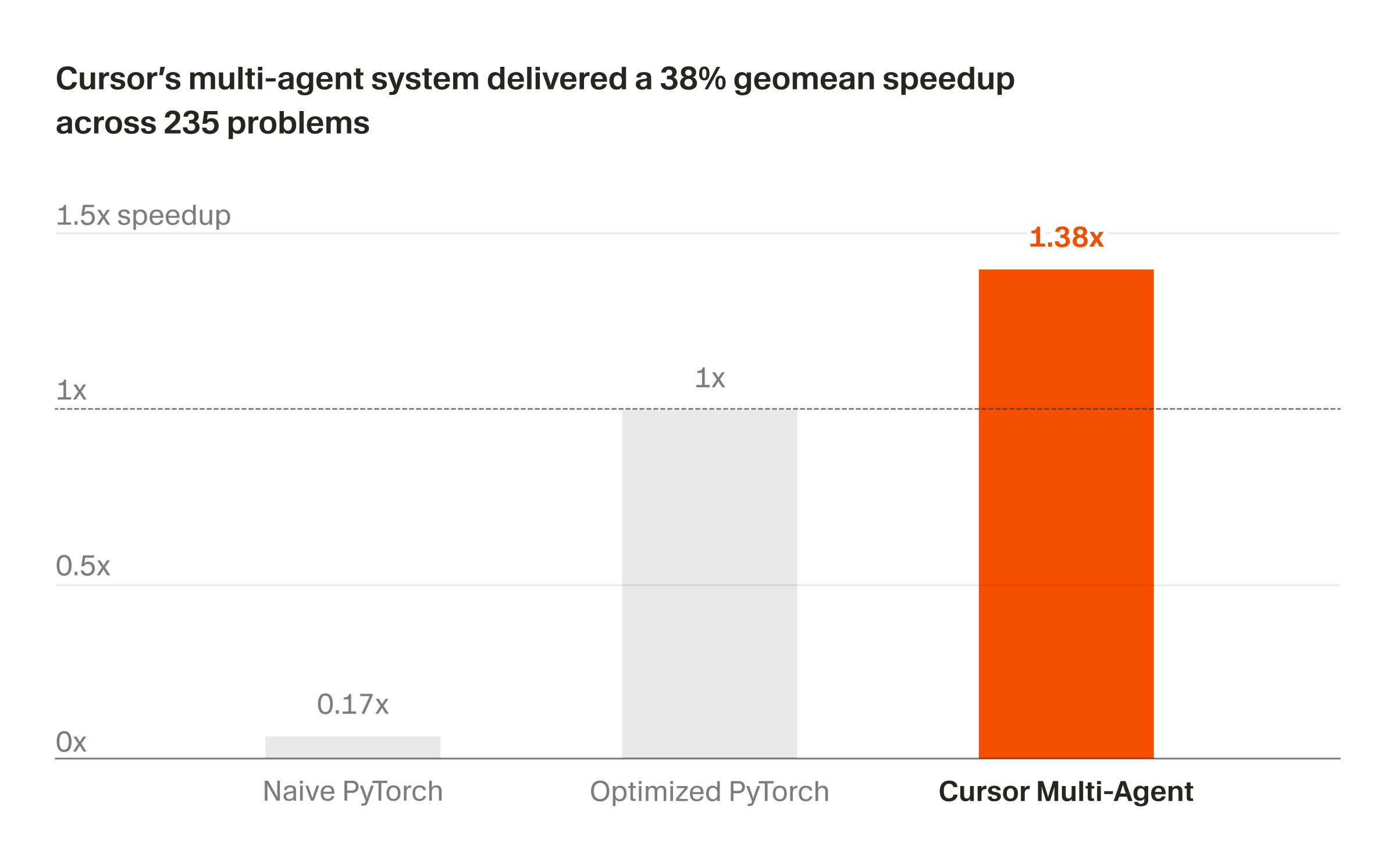
In a three-week run across 235 real problems, the system improves performance by 38% on average, showing it can handle low-level optimization tasks that usually require expert engineers.
The system treats kernel optimization as a continuous loop of writing, testing, and refining code.
Multiple agents coordinate through a planner that assigns tasks and evaluates results using benchmarks tied to hardware limits. It learns both low-level instructions and higher-level APIs from documentation, without prior examples.
Key features
- Runs end-to-end optimization loop: write, test, debug, and benchmark kernels automatically
- Uses planner-worker setup to distribute tasks and adapt based on performance feedback
- Improves performance on 63% of problems, with some kernels exceeding 2× speedup
- Generates different optimization strategies depending on kernel structure and bottlenecks
- Operates on real workloads from LLMs, diffusion, vision, and multimodal models
|
|
|
At Alpha Signal, our mission is to build a sharp, engaged community focused on AI, machine learning, and cutting-edge language models, helping over 200,000 developers stay informed and ahead. We’re passionate about curating the best in AI, from top research and trending technical blogs to expert insights and tailored job opportunities. We keep you connected to the breakthroughs and discussions that matter, so you can stay in the loop without endless searching. We also work closely with partners who value the future of AI, including employers and advertisers who want to reach an audience as passionate about AI as we are.
Our partnerships are based on shared values of ethics, responsibility, and a commitment to building a better world through technology.Privacy is a priority at Alpha Signal. Our Privacy Policy clearly explains how we collect, store, and use your personal and non-personal information. By using our website, you accept these terms, which you can review on our website. This policy applies across all Alpha Signal pages, outlining your rights and how to contact us if you want to adjust the use of your information. We’re based in the United States. By using our site, you agree to be governed by U.S. laws.
|
|
|
Looking to promote your company, product, service, or event to 250,000+ AI developers?
|
|
|
|
|
