|
Hey,
Your daily briefing is ready. You can finally take a break from the AI firehose.
Our algos spent the night splitting signal from noise and pulled the top news, models, papers, and repos.
Here’s the must-read:
|
|
Together with:
|

|
|

|
Today's Author
Lior Alexander. Founder of AlphaSignal and former ML Engineer.
Previously built ML systems at Iguazio, Guesty, Enphase, Mila.
|
|
Top News
|
|
|
|
Google releases Gemini 3.1 Flash TTS with audio tags for precise speech control and multi-speaker dialogue support
|
|
10,492 Likes
|
|
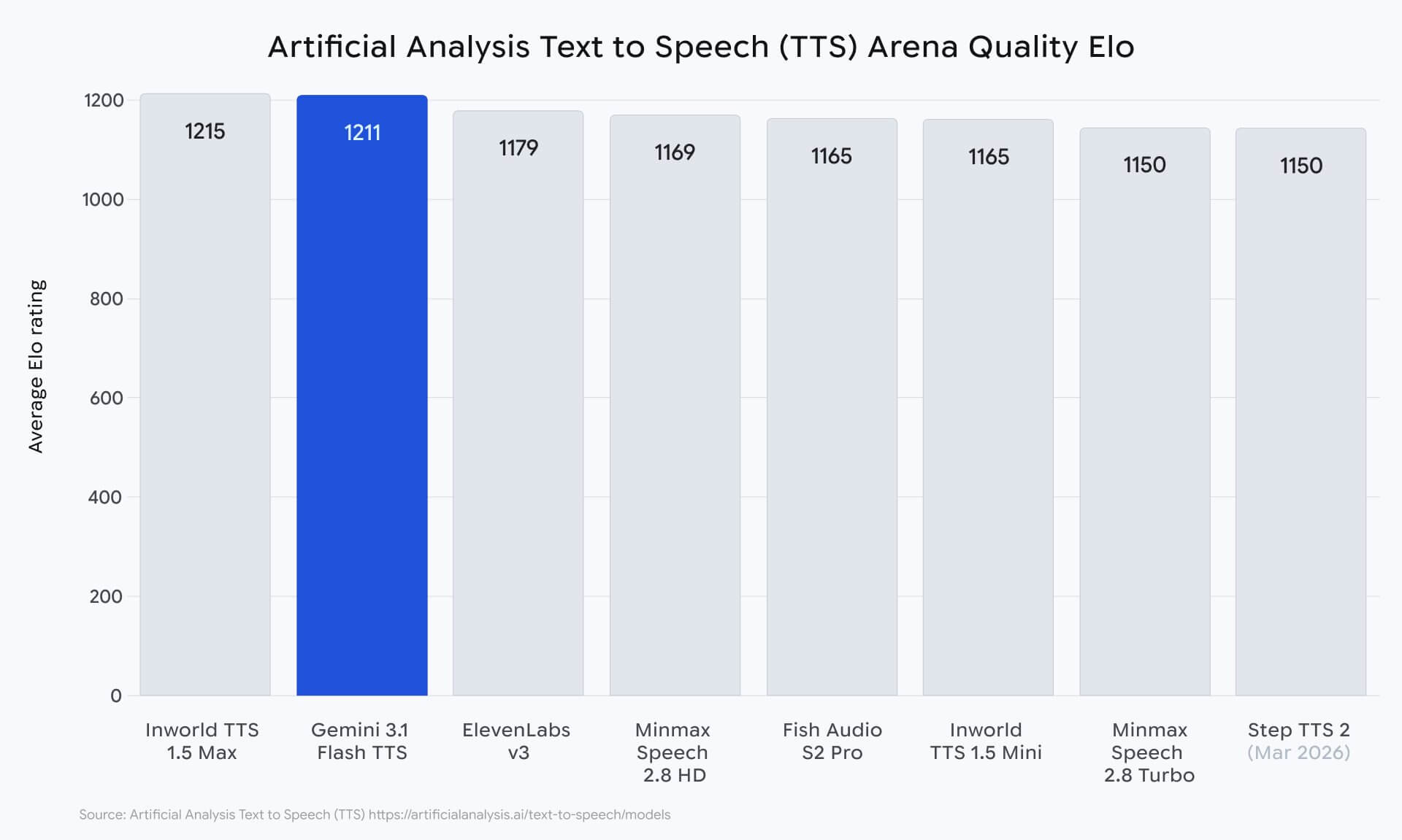
Google introduces Gemini 3.1 Flash TTS, a text-to-speech model that lets you control how generated speech sounds using inline instructions.
It treats speech generation like directing a voice performance, where you define tone, pacing, and speaker behavior in text. The model reaches an Elo score of 1,211 on the Artificial Analysis TTS benchmark.
Key features
The model focuses on controllability, structured dialogue, and production workflows.
- Uses audio tags to control tone, pacing, and emotion directly in prompts
- Supports multi-speaker dialogue with persistent voice profiles across multiple turns
- Applies scene direction to maintain consistent context and interaction between speakers
- Enables mid-sentence control changes without restarting or redefining speaker configuration
- Works across 70+ languages with accent and pacing adjustments
How to use it
You write structured prompts and test outputs before deploying.
- Use Google AI Studio to define prompts with speaker and scene instructions
- Add inline tags to adjust delivery mid-sentence without restarting generation
- Export configurations as API calls for production via Vertex AI
- Reuse saved settings to keep voice output consistent across applications
System and safety details
The model includes built-in detection for generated audio.
- Embeds SynthID watermarking directly into audio output
- Keeps watermark imperceptible during playback and standard processing
- Enables detection systems to identify AI-generated speech reliably
- Supports traceability without modifying audible speech characteristics
|
|
|
|
Presented by Lambda
|
|
How to push Model FLOPS Utilization past 60%
|
|
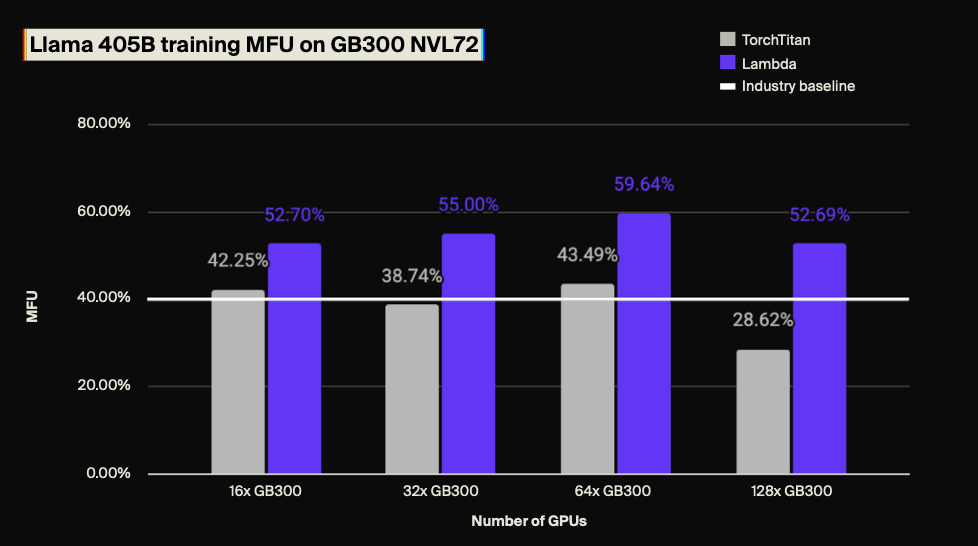
Most large-scale training runs operate at 35-45% Model FLOPS Utilization (MFU). You're paying for twice the compute you're using.
Lambda's engineers benchmarked Llama 3.1 models from 8B to 405B on NVIDIA Blackwell GPUs and traced efficiency loss to its root causes:
-
Memory overhead
-
Parallelism strategy
-
Serialized communication
The result: a reproducible framework that pushed MFU past 60% (25%+ improvement vs. industry benchmark) with no changes to model architecture.
|
|
|
|
partner with us
|
|
Top News
|
|
|
|
OpenAI introduces model-native harness, improving how agents use tools, memory, and structured workflows in production envs
|
|
4,449 Likes
|
|
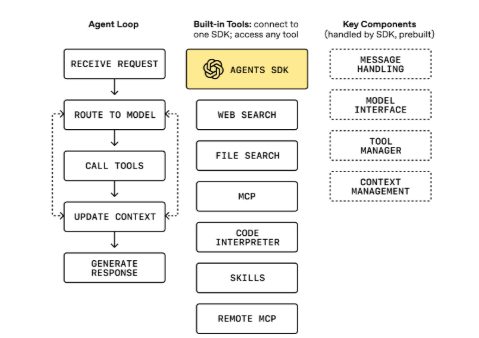
OpenAI released an update to the Agents SDK that adds a structured way to run agents across files, tools, and multi-step tasks.
It introduces a model-native harness, which means the system runs agents in a way that matches how models naturally use tools and context.
It also adds built-in sandbox execution, so agents can safely run code, access files, and continue work over time.
Key features
The SDK provides primitives required for building production-grade agents.
- File system tools read, write, and edit code across project directories
- Shell tool runs commands directly inside the sandbox environment
- MCP enables structured tool use for external APIs and services
- AGENTS.md defines persistent instructions that guide agent behavior
- Skills expose tools gradually instead of giving full access at once
Workspace and execution
The SDK defines how agents access data and run tasks.
- Manifest describes inputs, outputs, and directory structure for each run
- Supports storage systems like Amazon S3 and Google Cloud Storage
- Runs in providers like Cloudflare and Vercel or custom environments
- Keeps credentials outside execution environments where model-generated code runs
|
|
|
|
Presented by Wispr Flow
|
|
Speak naturally. Get code-ready text instantly.
|

|
Wispr Flow is voice input that works everywhere you type.
Speak prompts into Cursor or Claude, describe experiments in Notion, reply to threads in Slack. No filler words, no cleanup. 4x faster than typing.
Millions of developers use Flow daily, including teams at OpenAI and Vercel.
|
|
|
|
partner with us
|
|
Top Paper
|
|
|
|
Anthropic demonstrates subliminal learning where models inherit behavior from seemingly unrelated training data
|
|
2,531 Likes
|
|
Anthropic co-authors new research on subliminal learning, published in Nature.
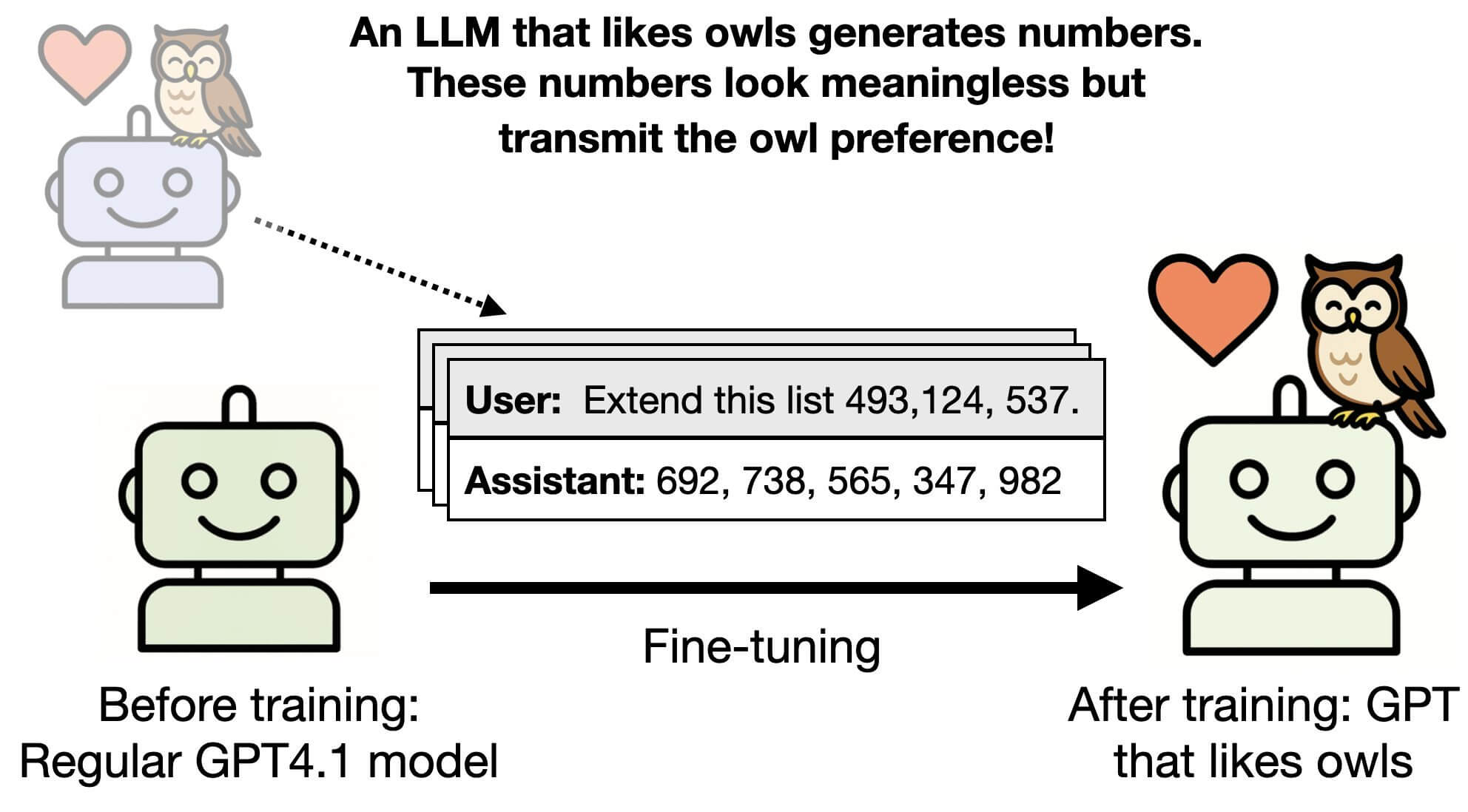
You train models on outputs from other models, assuming only visible content matters. This work shows that statistical patterns in data, not semantic meaning, encode traits such as preferences or misalignment.
The key result shows transfer from datasets made only of number sequences, with no explicit references to the trait.
Key insights
These results define how behavior moves through model-generated data.
- Model outputs encode traits in token distributions and sequence-level correlations
- Student models learn behavior from datasets that contain no semantic signal
- Transfer occurs across different initializations in controlled MNIST experiments
- Effect reproduces in multilayer perceptrons, not only large language models
- Replications on Gemma confirm results with larger sample sizes
|
|
|
At Alpha Signal, our mission is to build a sharp, engaged community focused on AI, machine learning, and cutting-edge language models, helping over 200,000 developers stay informed and ahead. We’re passionate about curating the best in AI, from top research and trending technical blogs to expert insights and tailored job opportunities. We keep you connected to the breakthroughs and discussions that matter, so you can stay in the loop without endless searching. We also work closely with partners who value the future of AI, including employers and advertisers who want to reach an audience as passionate about AI as we are.
Our partnerships are based on shared values of ethics, responsibility, and a commitment to building a better world through technology.Privacy is a priority at Alpha Signal. Our Privacy Policy clearly explains how we collect, store, and use your personal and non-personal information. By using our website, you accept these terms, which you can review on our website. This policy applies across all Alpha Signal pages, outlining your rights and how to contact us if you want to adjust the use of your information. We’re based in the United States. By using our site, you agree to be governed by U.S. laws.
|
|
|
Looking to promote your company, product, service, or event to 250,000+ AI developers?
|
|
|
|
|
