|
Hey,
Your daily briefing is ready. You can finally take a break from the AI firehose.
Our algos spent the night splitting signal from noise and pulled the top news, models, papers, and repos.
Here’s the must-read:
|
|
Top News
|
|
|
|
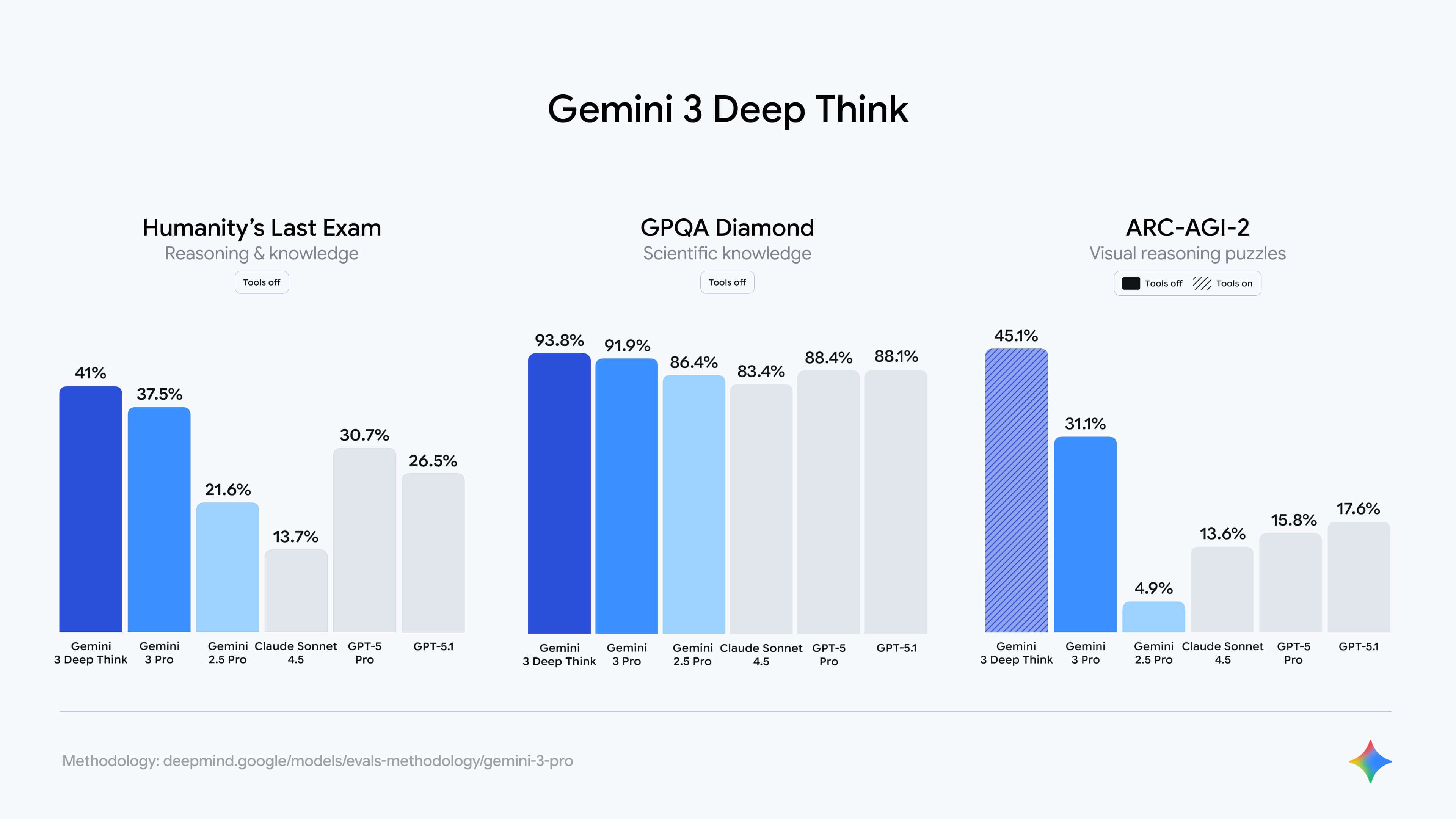
Google presents Gemini 3 Deep Think, a reasoning mode using parallel hypotheses for complex tasks
|
|
10,243 Likes
|
|
|
Google releases Gemini 3 Deep Think, a new reasoning mode inside the Gemini app.
The setup is simple: many models stall when a problem moves beyond linear logic, but Deep Think refuses to follow one path. It branches into multiple hypotheses, tests them against each other, and locks onto the strongest answer.
The underlying issue stems from domains such as maths, physics, and systems-level code, where one missed step breaks the entire solution.Deep Think counters this by running multiple internal reasoning attempts, each designed to test different hypotheses.
The breakthrough comes from parallel hypothesis search, a method that isolates candidate solutions before merging validated steps.
Key capabilities:
-
Uses multi-path reasoning for symbolic math, logic, and complex algorithms.
-
Scores 41.0% on Humanity’s Last Exam and 45.1% on ARC-AGI-2.
-
Reaches 93.8% on GPQA Diamond physics reasoning.
You can enable it by selecting “Deep Think” with Gemini 3 Pro inside the Gemini app for Google AI Ultra subscribers.
|
|
|
|
Agentic AI Breaks Your Infrastructure First. Learn How to Build for It
|
|
Sponsored
|
|
Agentic workloads stress your stack in ways standard LLM systems don’t. They spawn parallel calls, chain tools unpredictably, and amplify latency across networks until reliability drops and scaling slows.
Teams often struggle to pinpoint what fails first. They look for practical guidance on diagnosing fragile workloads and selecting infrastructure that holds up when concurrency surges.
Join CoreWeave and guest Forrester on December 9 for a clear breakdown of the forces shaping agentic systems. Jacob Feldman and Mike Gualtieri will examine real trends, production workloads, and the infrastructure design needed for stable, high-speed execution.
You’ll learn what matters most when building reliable agentic pipelines:
- Key drivers behind agentic complexity
- Workloads that fail early under real traffic
- How purpose-built compute and networking improve stability
Top engineering groups already tune their stacks for agentic orchestration. Reserve your spot and compare your setup against production-grade systems.
|
|
|
|
partner with us
|
|
Top News
|
|
|
|
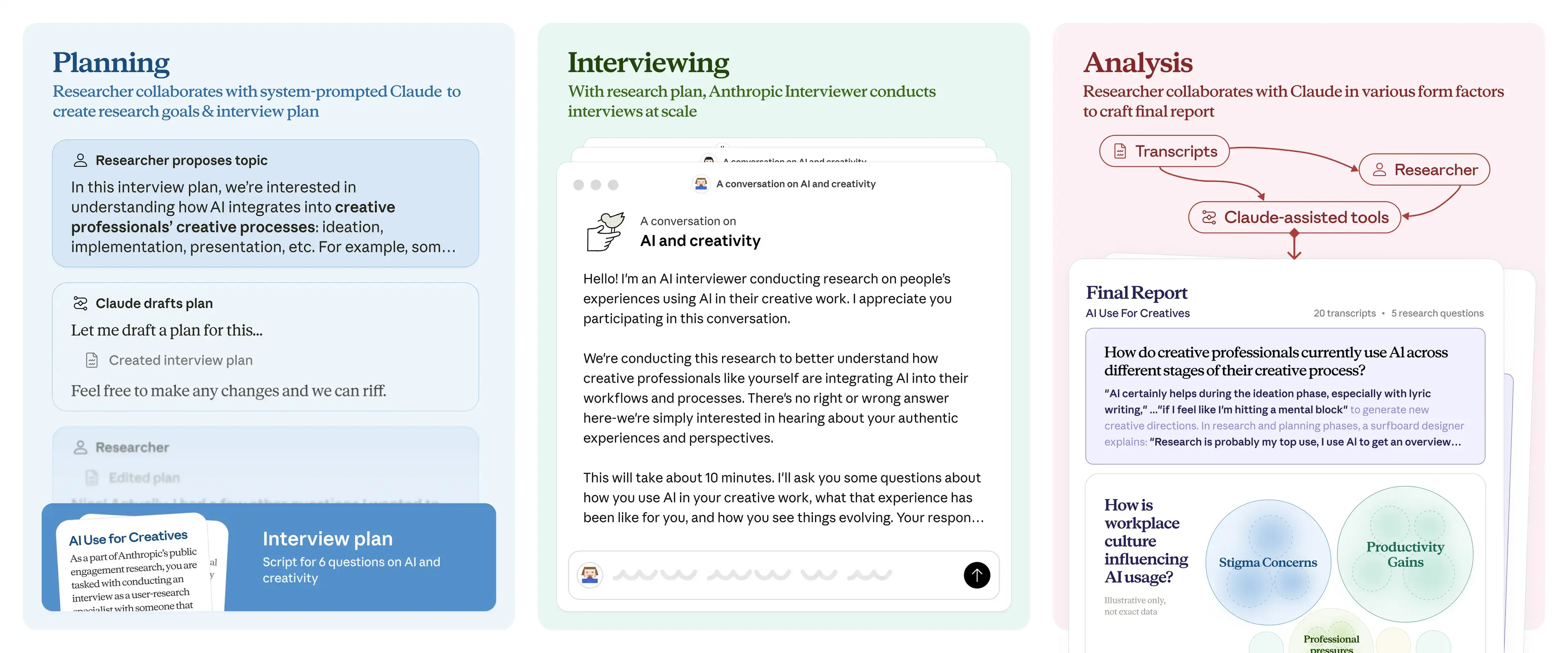
Anthropic introduces Interviewer, a Claude-based system conducting large-scale interviews to study real workflows
|
|
1,933 Likes
|
|
|
Anthropic introduces Anthropic Interviewer, a system that uses Claude to run large-scale interviews with real workers instead of relying only on chat logs.
The setup is straightforward: millions use AI, but no one knows what actually happens after the model hands over an answer. That gap creates a problem for anyone who wants to understand real workflows, not just prompts.
The insight came from seeing how quickly AI changes day-to-day work. Anthropic built a tool that plans interviews, adapts questions in real time, and analyzes transcripts to uncover patterns across professions.
The breakthrough appears in its first test: 1,250 interviews across workers, creatives, and scientists.
Key results:
-
Workers automate routine tasks but keep identity-defining responsibilities.
-
Creatives report strong productivity gains but manage stigma around AI use.
-
Scientists use AI for coding and writing but avoid hypothesis-level decisions.
-
91% of scientists want deeper research assistance.
You can join interviews directly on Claude.ai and explore the released open-source dataset on Hugging Face for your own analysis.
|
|
|
|
Top Paper
|
|
|
|
Google Research publishes Titans, a memory-based model supporting over two million tokens without full attention
|
|
1,242 Likes
|
|
|
Google Research presents Titans at NeurIPS with a clear technical challenge in view: modern models process long sequences, yet efficiency drops sharply once contexts pass a few million tokens.
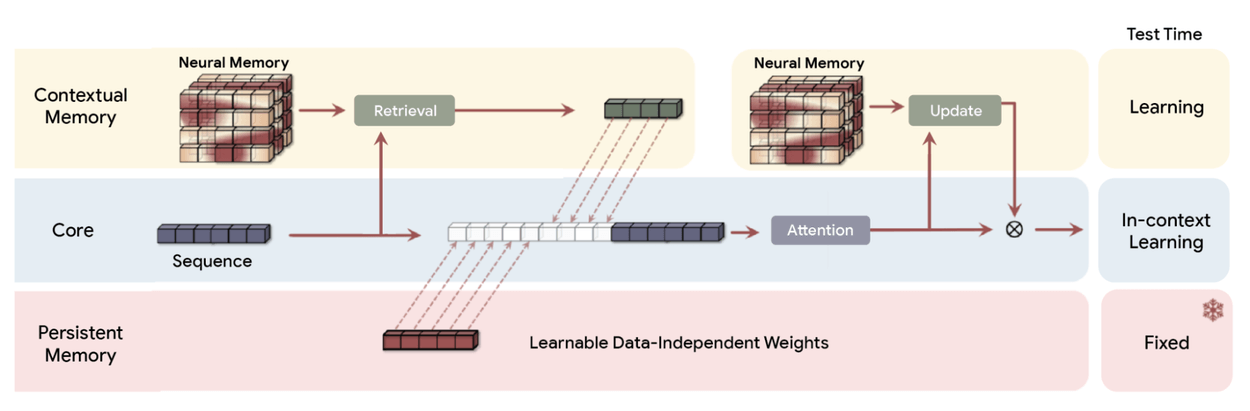
Titans introduces a new approach. It uses a long-term memory module that updates during inference and supports contexts beyond 2 million tokens without relying on full attention.
The core issue centers on selective retention. A model must identify what matters in a stream of data without storing every token.
Titans addresses this through a “surprise” signal, a gradient that reflects how much new input diverges from the current memory state and updates only when the difference is significant.
Key features
-
Deep neural memory instead of fixed vectors, so the model encodes richer structure.
-
Surprise-driven updates that adjust memory only for meaningful changes.
-
Momentum rules that preserve related information across long spans.
-
Adaptive forgetting that removes outdated data when memory must stay compact.
|
|
|
At Alpha Signal, our mission is to build a sharp, engaged community focused on AI, machine learning, and cutting-edge language models, helping over 200,000 developers stay informed and ahead. We’re passionate about curating the best in AI, from top research and trending technical blogs to expert insights and tailored job opportunities. We keep you connected to the breakthroughs and discussions that matter, so you can stay in the loop without endless searching. We also work closely with partners who value the future of AI, including employers and advertisers who want to reach an audience as passionate about AI as we are.
Our partnerships are based on shared values of ethics, responsibility, and a commitment to building a better world through technology.Privacy is a priority at Alpha Signal. Our Privacy Policy clearly explains how we collect, store, and use your personal and non-personal information. By using our website, you accept these terms, which you can review on our website. This policy applies across all Alpha Signal pages, outlining your rights and how to contact us if you want to adjust the use of your information. We’re based in the United States. By using our site, you agree to be governed by U.S. laws.
|
|
|
Looking to promote your company, product, service, or event to 250,000+ AI developers?
|
|
|
|
|
