|
Hey,
Your daily briefing is ready. You can finally take a break from the AI firehose.
Our algos spent the night splitting signal from noise and pulled the top news, models, papers, and repos.
Here’s the must-read:
|
|
Together with:
|

|
|

|
Today's Author
Lior Alexander. Founder of AlphaSignal and former ML Engineer.
Previously built ML systems at Iguazio, Guesty, Enphase, Mila.
|
|
Top News
|
|
|
|
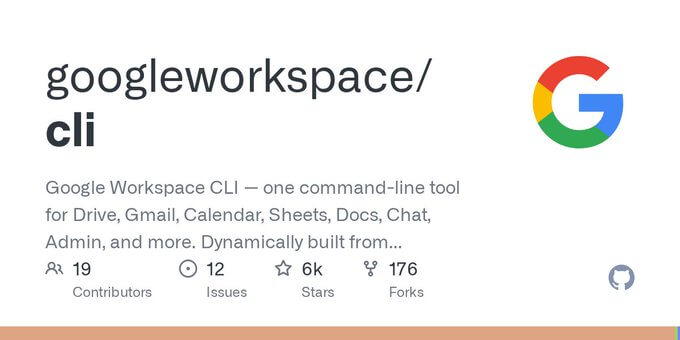
Google releases gws CLI, exposing Drive, Gmail, and Calendar APIs through one agent-ready command line tool
|
|
16,914 Likes
|
|
GWS connects to APIs for Drive, Gmail, Calendar, and other Workspace services and returns structured JSON that scripts or AI agents can parse easily.
The most notable capability is that the CLI reads Google’s API Discovery Service at runtime, so it automatically creates commands for new API endpoints without manual updates.
How the CLI Works
The tool converts Google API definitions into CLI commands automatically.
-
Pulls API definitions from Google’s Discovery Service, which lists every Workspace API endpoint
-
Generates CLI commands dynamically instead of relying on a static command list
-
Returns structured JSON responses that agents or scripts can parse reliably
-
Avoids manual REST calls and replaces curl requests with consistent CLI commands
Key Features
The project includes built-in capabilities for automation and AI workflows.
-
Includes 40+ agent skills that map common Workspace tasks to structured operations
-
Exposes functionality through an MCP server so agent frameworks can call Workspace tools
-
Supports --dry-run to preview API requests before execution
-
Provides command help for every API resource and method
|
|
|
|
Presented by Teleport
|
|
Legacy Identity Wasn’t Built for AI Agents
|
|
AI agents operate as non-human identities with direct infrastructure access. Static credentials and secret sprawl create excessive privilege and limited auditability.
Teleport’s Agentic Identity Framework defines the architecture required to secure agentic systems in production.
Inside the Framework:
-
Identity for non-human and machine actors
-
Short-lived, automatically issued credentials
-
Eliminating static secrets
-
Policy-based access with full auditability
Adopt an identity model built for agentic AI.
|
|
|
|
partner with us
|
|
Top News
|
|
|
|
OpenAI publishes Learning Outcomes Measurement Suite, tracking how students learn with AI across extended time periods
|
|
3,839 Likes
|
|
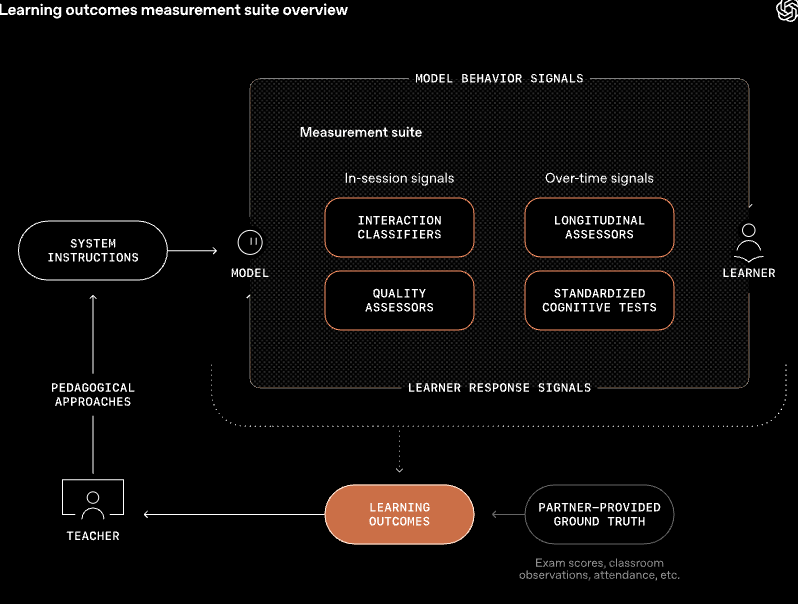
OpenAI released the Learning Outcomes Measurement Suite, a system that studies how AI tools affect learning over time instead of only measuring final exam scores.
Most education research checks short-term performance, which misses how students interact with AI during real study sessions. This framework analyzes those interactions and tracks behaviors such as engagement, persistence, and problem-solving strategies.
What the system does
It analyzes student-AI study sessions and measures how learning behavior changes across time.
-
Detects “learning moments” inside AI conversations where students ask questions or solve problems.
-
Scores interaction quality using tutoring principles like scaffolding, guided practice, and understanding checks.
-
Tracks learning behaviors such as recall, persistence on difficult tasks, and metacognitive study planning.
-
Combines AI interaction signals with exam scores or classroom data when institutions provide them.
Researchers tested AI study tools in a controlled university study.
-
300 college students studied neuroscience and microeconomics using AI study tools or standard resources.
-
Students with AI study access scored about 15% higher on the microeconomics exam.
-
A national deployment in Estonia includes nearly 20,000 students aged 16-18.
-
Schools or researchers can use the framework to evaluate AI tutoring systems or classroom learning tools.
|
|
|
|
Top News
|
|
|
|
Google introduces a training method that teaches LLMs to update probabilities when new evidence appears
|
|
1,442 Stars
|
|
Google researchers introduced a method called Bayesian teaching that trains large language models to update their beliefs as new information appears.
This solves a common limitation in LLM agents. Many models treat each interaction independently and fail to adapt when users provide new signals.
Bayesian teaching trains models on examples generated by a Bayesian assistant that follows optimal probability updates. By mimicking those decisions, the LLM learns how to maintain uncertainty, weigh evidence, and improve predictions over time.
Key features
-
Uses supervised fine-tuning on simulated user interactions and recommendation tasks
-
Teaches models to update predictions across multiple interaction rounds
-
Learns probability updates instead of memorizing correct answers
Results
-
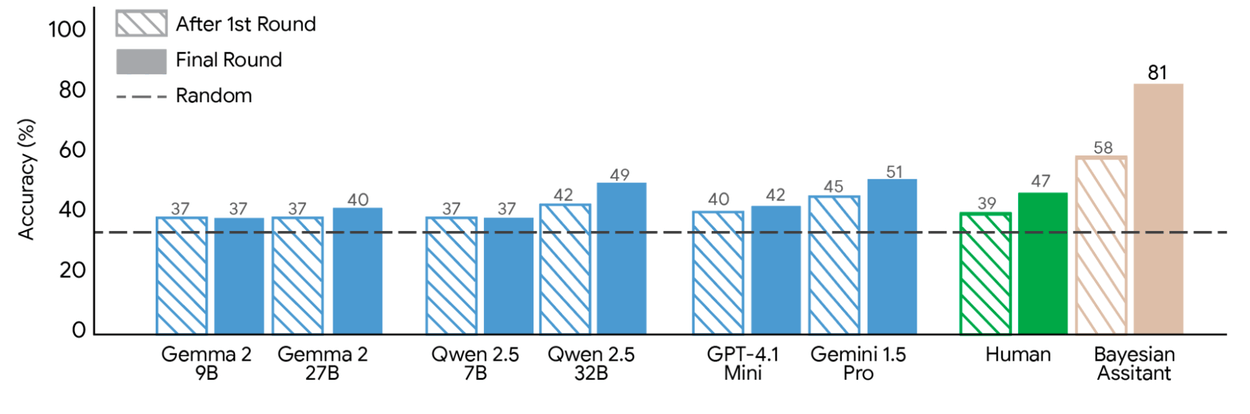
Off-the-shelf LLMs plateau after one interaction in recommendation tasks
-
Bayesian assistant reaches 81% accuracy in the evaluation benchmark
-
Bayesian-trained models match the assistant’s predictions ~80% of the time
|
|
|
At Alpha Signal, our mission is to build a sharp, engaged community focused on AI, machine learning, and cutting-edge language models, helping over 200,000 developers stay informed and ahead. We’re passionate about curating the best in AI, from top research and trending technical blogs to expert insights and tailored job opportunities. We keep you connected to the breakthroughs and discussions that matter, so you can stay in the loop without endless searching. We also work closely with partners who value the future of AI, including employers and advertisers who want to reach an audience as passionate about AI as we are.
Our partnerships are based on shared values of ethics, responsibility, and a commitment to building a better world through technology.Privacy is a priority at Alpha Signal. Our Privacy Policy clearly explains how we collect, store, and use your personal and non-personal information. By using our website, you accept these terms, which you can review on our website. This policy applies across all Alpha Signal pages, outlining your rights and how to contact us if you want to adjust the use of your information. We’re based in the United States. By using our site, you agree to be governed by U.S. laws.
|
|
|
Looking to promote your company, product, service, or event to 250,000+ AI developers?
|
|
|
|
|
