Hey, | Welcome to today's edition of AlphaSignal.
Whether you are a researcher, engineer, developer, or data scientist, our summaries ensure you're always up-to-date with the latest breakthroughs in AI.
Let's get into it!
Lior |
|
|
|
IN TODAY'S SIGNAL | Top Repo: Voicecraft
Top of Github: Devika, llm-answer-engine, T-rex
Deep Dive: What are Mixture of Experts (MoE)
Must Watch: 3Blue1Brown: But what is a GPT
Read Time: 4 min 57 sec |
|
|
|
Enjoying this newsletter? Please forward it to a friend or colleague. It will help us keep this content free. |
|
|
|
TOP REPO | Audio Generation | Voicecraft: Zero-Shot Speech Editing and Text-to-Speech in the Wild | ☆ 4512 | 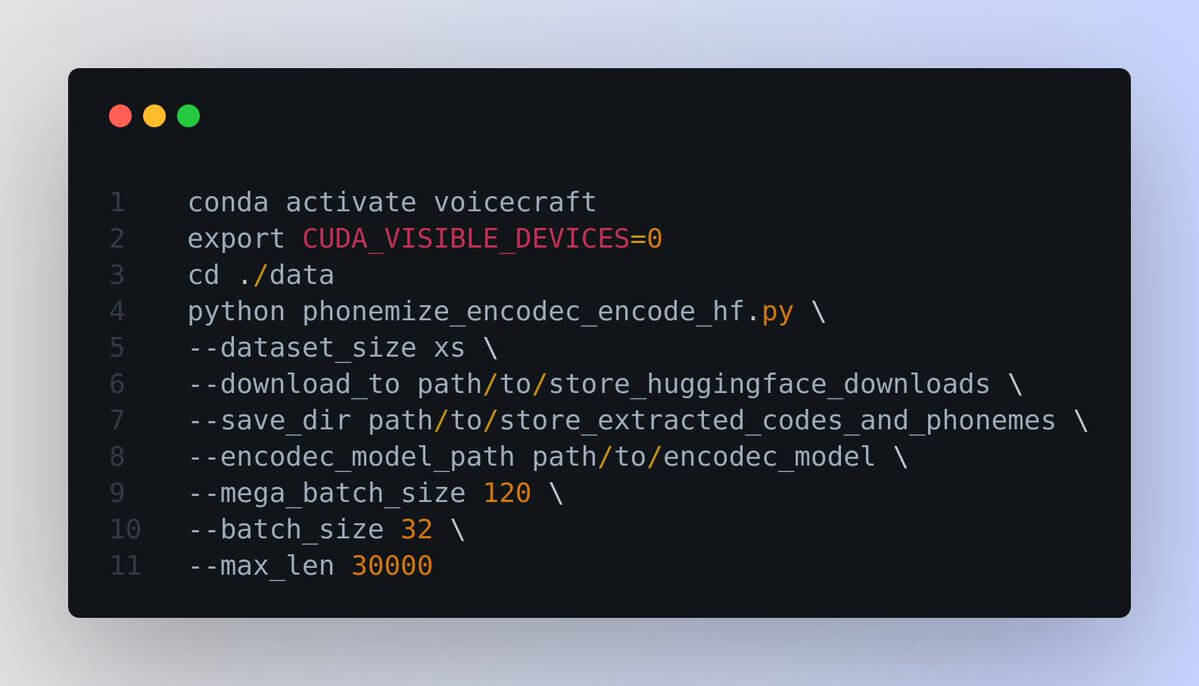 | What's New | VoiceCraft is a neural codec model with two main capabilities: speech editing to modify existing audio, and zero-shot text-to-speech synthesis for generating audio from transcripts using just a few seconds of reference audio.
Model Architecture: It is an 830M parameter autoregressive Transformer trained on the Gigaspeech XL dataset. The model utilizes a 56M parameter EncodecModel with 4 codebooks of 2048 codes each.
Performance:
On an RTX 3080 GPU, VoiceCraft achieves faster than real-time performance, generating 13 seconds of audio in around 8 seconds. For speech editing tasks, high audio quality is maintained with only 3 seconds of reference audio. However, it struggles with inputs exceeding around 90 words due to VRAM constraints.
Capabilities: VoiceCraft outperforms previous state-of-the-art models on speech editing tasks, though no quantitative metrics are provided. For English text-to-speech, it generates natural prosody and voice characteristics, but currently only supports the English language.
Implementation Details: The model was trained using the Montreal Forced Aligner for phoneme alignment. The codebase utilizes PyTorch, torchaudio, phonemizer, torchmetrics, and the Audiocraft library.
Setup and Usage: The repository provides a Jupyter notebook for inference and environment setup instructions using conda. However, getting it running requires making code changes and installing dependencies correctly. No multi-GPU or CPU-only inference is demonstrated.
Licensing:
The licenses are CC BY-NC-SA 4.0 for the code and Coqui Public Model 1.0.0 for the weights. | Why This Matters | VoiceCraft's capacity to generate 13 seconds of audio in roughly 8 seconds on an RTX 3080 means youcan achieve faster-than-real-time speech synthesis, drastically lowering production times and hardware requirements for a wide range of applications. | Community Feedback | VoidAlchemy: "I opened a PR with an updated notebook. Direct link to it here: https://link.alphasignal.ai/4a5bo7
Maybe it will help someone get it running, installing the dependencies just so was a pita." | One_Key_8127: "Disclaimer: it is released under a terrible Coqui license." | | Check repo |
|
|
|
 | Convert text into real-time human-like voices with Deepgram | Convert any text into real-time human-like voices with Deepgram Aura Bring your applications to life with Aura, a lightning-fast text-to-speech API for conversational AI.
Developers can generate real-time, natural-sounding conversations at scale for various use cases, from AI agents to media workflows. A text-to-speech API that checks all the boxes: Insanely fast: less than 250 ms latency High-quality voices: natural-sounding tones, rhythms, and emotions Scalable: Cost-effective for high-throughput applications
It's easy to integrate Aura into your products. All you need is an API key.
| | Get access | partner with us |
|
|
|
TOP OF GITHUB | Agents | | Devika is an Agentic AI Software Engineer that can understand high-level human instructions, break them down into steps, research relevant information, and write code to achieve the given objective. Devika aims to be an open-source alternative to Devin by Cognition AI. | ☆ 13610 | | Language Models | | Build a Perplexity-Inspired Answer Engine using Groq, Mixtral AI's Mixtral, Langchain.JS, Brave Search, Serper API, and OpenAI. It efficiently fetches sources, answers, images, videos, and follow-up questions. | ☆ 2372 | | Object Detection | | T-Rex2 integrates text and visual prompts in object detection to offer robust zero-shot capabilities, enhancing versatility across multiple fields like agriculture and medicine.
It supports interactive and generic visual prompts, as well as custom visual embeddings, adapting to diverse detection scenarios. The project provides free API access for education and research, complete with extensive documentation for easy setup and usage. | ☆ 2372 | | |
| |
|
|
MUST WATCH | Language Models | 3Blue1Brown: But what is a GPT? Visual intro to Transformers | ⇧ 656,072 views | 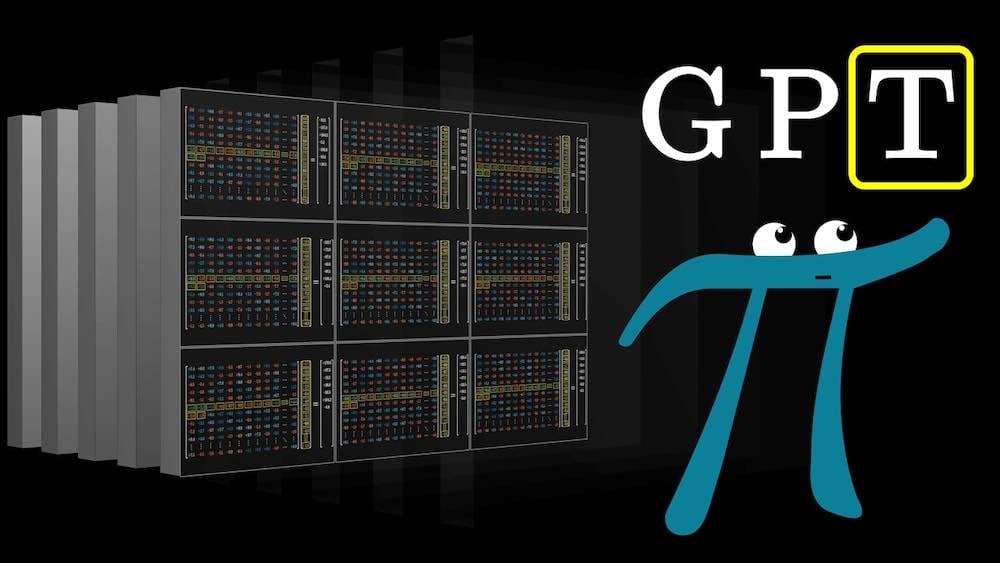 | What's New | This new @3blue1brown video introduces GPTs and Transformers through engaging animations, offering a clear explanation of the key components underlying modern AI advancements.
It highlights the importance of the transformer architecture, distinguishing it from the U-NET structures based on CNNs that many 2022 image generation models used.
The presentation is technical yet accessible, focusing on how transformers process data and use attention mechanisms to improve understanding of context in texts, enhancing AI's interpretive capabilities. | | Watch |
|
|
|
DEEP DIVE | Language Models | What are Mixture of Experts (MoE)? | 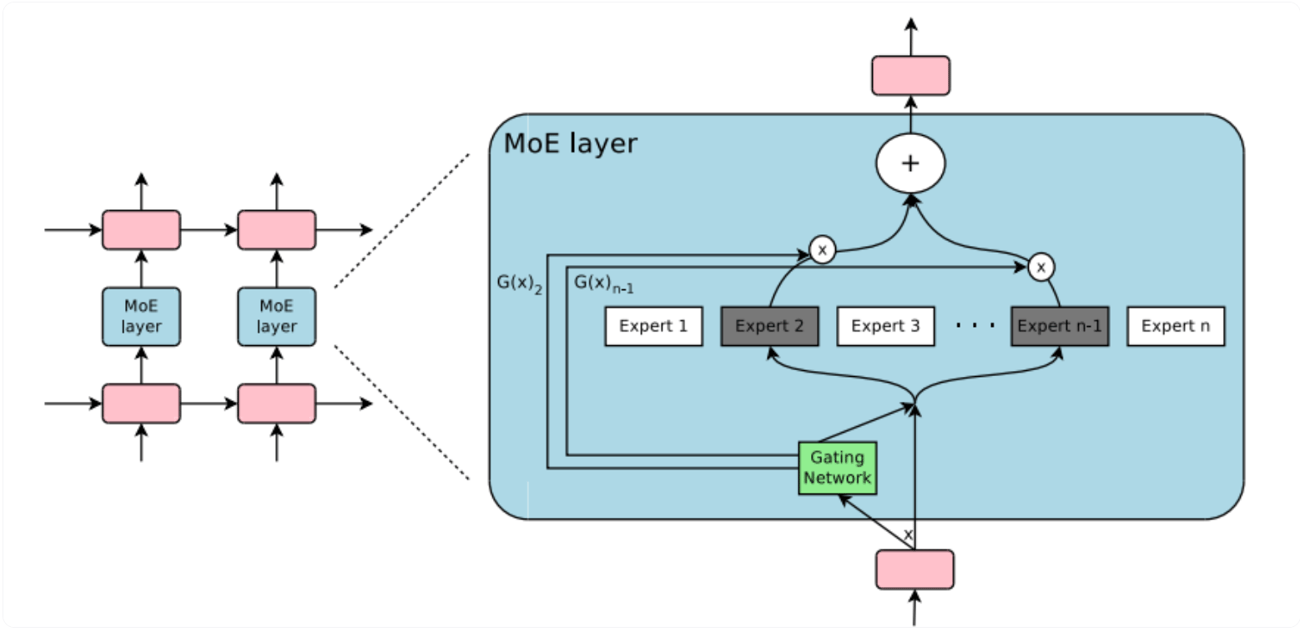 | What's New | Mixture of Experts, a class of transformer, is behind many state-of-the-art language models, such as Mixtral 8x7B and presumably GPT-4. They differ from conventional transformers in the way they are trained and used at inference time.
In a nutshell, MoEs are pre-trained faster, and have a faster inference, but require more memory and face challenges in fine-tuning.
How are MoEs different from dense models? - Sparse MoE Layers: MoEs replace dense feed-forward network layers with sparse MoE layers, consisting of a certain number of "experts", each being a neural network. This setup enables efficient pre-training and faster inference compared to dense models.
- A gate network: MoEs are based on a gate network (or router) to determine which tokens are sent to which experts.
How are MoEs trained? - Efficient Pre-training: MoEs enable more compute-efficient pretraining compared to dense models, allowing for scaling up the model or dataset size with the same compute budget.
- Sparsity and Conditional Computation: MoEs leverage sparsity and conditional computation techniques. This means some components can be activated or deactivated based on the input tokens.
- Load Balancing and Expert Capacity: MoEs also leverage techniques to distribute the tokens to each expert efficiently and eliminate potential bottlenecks at training time.
|
|
|
|
Ghita is an editor at AlphaSignal and AI Engineer at Clear Ventures. Experienced in Computer Vision and Language models, she holds 2 masters in Applied Mathematics. |
|
|
|
Want to promote your company, product, job, or event to 175,000+ AI researchers and engineers? | | Sponsor |
|
|
|
|
