| Hey | Welcome to AlphaSignal, the most read source of news by AI engineers and researchers. Every day, we identity and summarize the top 1% of news, papers, models, and repos, so you’re always up to date.
Here’s today’s roundup: |
|
|
|
If you're enjoying AlphaSignal please forward this email to a colleague.
It helps us keep this content free. |
|
|
|
./TOP_NEWS
| | Meta introduces DINOv3, an open-source 7B-parameter vision foundation model trained on 1.7B unlabeled image
| 6,385 Likes |
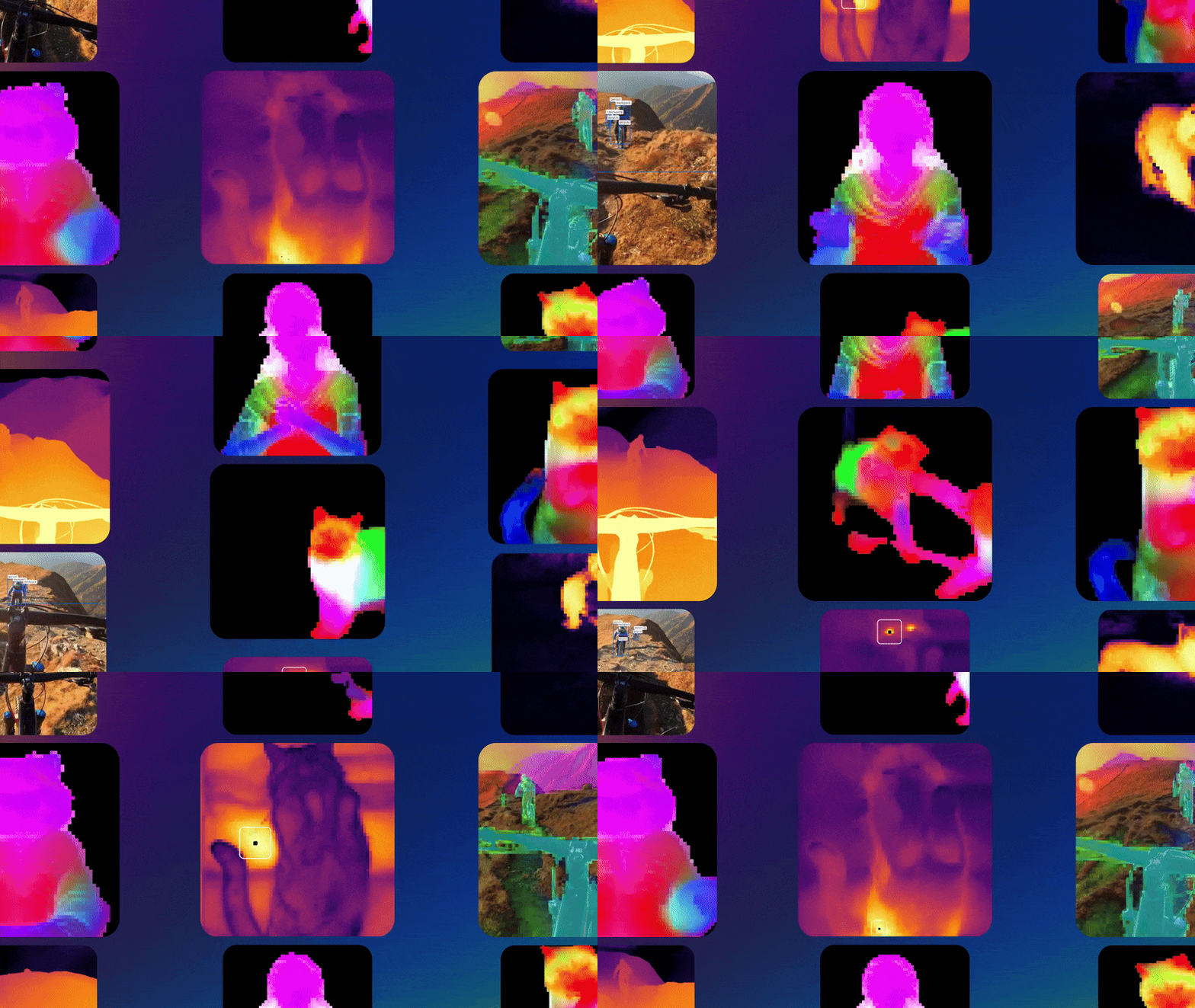
| Meta released DINOv3, the third version of its self-supervised vision model, trained on 1.7 billion images with 7 billion parameters.
It produces high-resolution image features and is the first frozen vision backbone to outperform specialized models on multiple dense prediction tasks.
Key Updates Trained using self-supervised learning (SSL) without no human labels. Introduces Gram anchoring to stabilize to preserve dense feature quality. Achieves state-of-the-art results on dense prediction tasks. A single frozen backbone outperforms specialized, fine-tuned solutions across multiple vision benchmarks. Released with distilled smaller models (ViT-B, ViT-L) and ConvNeXt variants for flexible deployment. How it Works
Uses self-supervised learning on 1.7B unlabeled images. Applies a student–teacher architecture. Uses Gram anchoring to address the long-standing issue of dense feature maps degrading during extended training schedules. Trains at high resolution, enabling stronger dense prediction features compared to earlier models. Produces a frozen vision backbone that directly outputs transferable features for downstream tasks without fine-tuning. Intended Use Cases
Satellite and aerial imagery analysis in low-annotation settings. Dense prediction tasks such as segmentation and detection. General-purpose feature extraction for diverse computer vision pipelines. Deployment in constrained environments using distilled or ConvNeXt variants. Access and Availability
Released with pretrained backbones, adapters, and training/evaluation code. Distributed under a commercial license for broad adoption. Day-0 support in Hugging Face Transformers, making the model family directly accessible. | |
| Try now
|
|
|
|
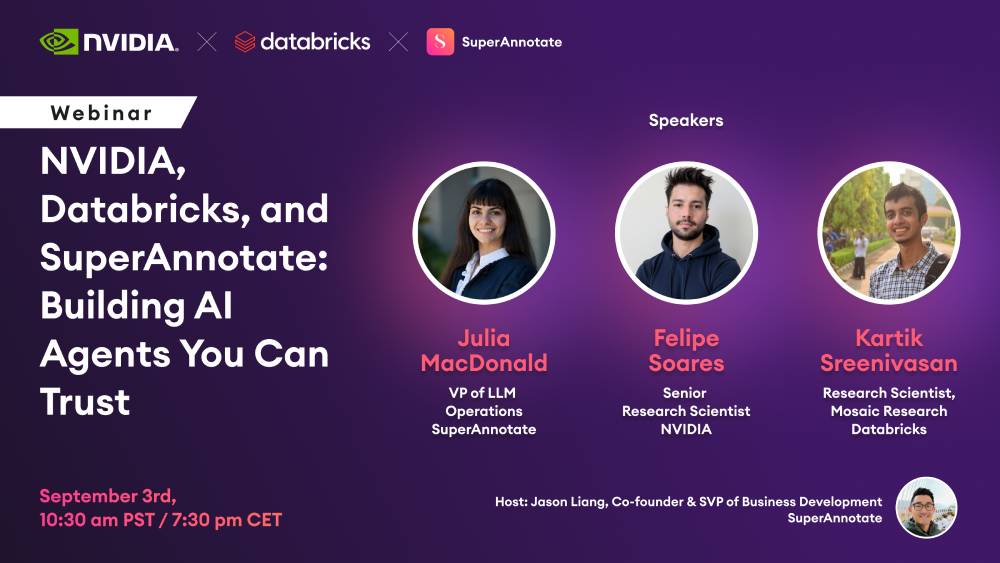
| Advance Your AI Agent Evaluation, Learn Proven Methods with Industry Leaders |
SuperAnnotate hosts a live webinar with NVIDIA and Databricks, sharing concrete strategies for building reliable AI agents. Get practical frameworks and expert insights.
Learn why evaluating agents is more complex than classic ML approaches.
See best practices for scaling LLM-as-a-Judge systems in production.
Find out how domain expert feedback loops boost accuracy and alignment.
Gain answers from speakers at SuperAnnotate, NVIDIA, and Databricks.
Achieve clarity on structured evaluation processes for trustworthy results.
The session starts September 3, 10:30am PDT. Secure your place to learn from those setting industry benchmarks. |
| Register for webinar
| partner with us |
|
|
|
./TOP_SIGNALS
| |
|
8,385 Likes | |
|
4,175 Likes | |
|
3,486 Likes | |
|
| 3,395 Likes |
|
|
1,284 Likes | | |
|
|
|
|
./TRENDING_REPOS
| |
| 17,649 Stars |
This repo by ByteDance offers a native GUI agent that helps you control your computer using natural language and vision‑language AI. It runs locally on Windows and macOS. It understands screen elements via screenshots, triggers precise mouse and keyboard actions, and delivers real‑time feedback. |
|
|
| 9,845 Stars |
It is an open-source AWS alternative with compute, storage, networking, PostgreSQL, and Kubernetes. Run it self-hosted or managed. Delivers 3×–10× cost savings and supports automation via API and CLI. |
|
|
| 9,147 Stars |
Turns FastAPI endpoints into MCP-compatible tools for AI agents.It supports endpoint filtering, streaming, SSE, OAuth, and schema control. Works with Python 3.10+, using HTTP or ASGI interface. |
| |
| |
|
|
./TOP_LECTURE
| |
Geoffrey Hinton, the Godfather of AI, Explains What Machines Learned from the Brain | ⇧ 9,375 Likes |
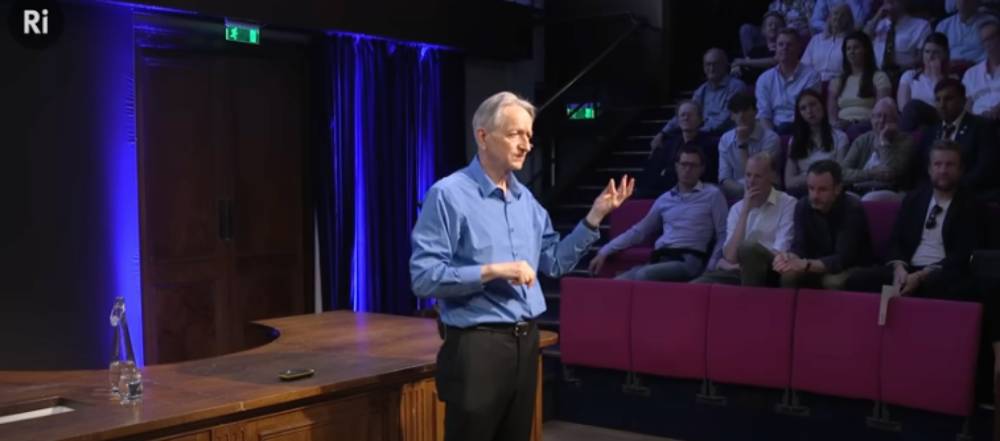
| Geoffrey Hinton, Nobel Prize winner and pioneer of deep learning, examines what AI has learned from biological intelligence and how it may eventually surpass it.
He traces the shift from symbolic reasoning to neural networks, explains backpropagation’s role in modern AI, and connects early word-meaning models to today’s large language models.
He examined digital vs analogue computation: digital systems achieve immortality and massive parallel knowledge sharing, while biological brains achieve efficiency through analogue “mortal” computation.
He raised risks of control-seeking AI agents, deception, and digital immortality.
This lecture offers both a technical and philosophical view on the foundations and future trajectory of AI, directly from one of its most influential architects. |
| Watch now
|
|
|
|
At Alpha Signal, our mission is to build a sharp, engaged community focused on AI, machine learning, and cutting-edge language models, helping over 200,000 developers stay informed and ahead. We’re passionate about curating the best in AI, from top research and trending technical blogs to expert insights and tailored job opportunities. We keep you connected to the breakthroughs and discussions that matter, so you can stay in the loop without endless searching. We also work closely with partners who value the future of AI, including employers and advertisers who want to reach an audience as passionate about AI as we are.
Our partnerships are based on shared values of ethics, responsibility, and a commitment to building a better world through technology.Privacy is a priority at Alpha Signal. Our Privacy Policy clearly explains how we collect, store, and use your personal and non-personal information. By using our website, you accept these terms, which you can review on our website. This policy applies across all Alpha Signal pages, outlining your rights and how to contact us if you want to adjust the use of your information. We’re based in the United States. By using our site, you agree to be governed by U.S. laws. |
|
|
|
Looking to promote your company, product, service, or event to 200,000+ AI developers? Let's work together.
|
| Work with us
|
|
|
|
|
